Digital credentials are increasingly becoming a vital aspect of how modern learning is recognized, but they are often misunderstood. At their core, digital credentials are verifiable records of learning that can be shared, checked, and trusted outside the environment where learning happened.
That last part is where most confusion begins.
This guide is not about how to issue digital credentials or which platform to use. It is about discernment. About knowing which programs genuinely benefit from digital credentials and which ones are better left untouched. Used thoughtfully, credentials amplify trust and opportunity. Used carelessly, they could possibly even dilute both.
If you are here trying to make a deliberate decision, this guide is written for you.
TL;DR: When digital credentials actually make sense
Digital credentials work best when learning needs to be proven beyond your platform.
Programs with clear outcomes, real validation, and external recognition benefit the most.
Online courses, certifications, micro-credentials, corporate training, regulated programs, and vocational learning are all strong fits.
Informal, attendance-only, or exploratory programs usually are not.
Before evaluating programs, clarify why digital credentials exist at all
Digital credential initiatives often begin with good intentions, but the wrong framing. Many educators and institutions start by asking whether issuing credentials is now considered best practice.
A better question is quieter and more revealing:
What problem does this solve for the learner?
If the problem is visibility, verification, credibility, or portability, digital credentials very much belong in this conversation. If the problem is motivation, engagement, or course completion, credentials alone will not solve it.
This distinction matters because credentials are not engagement tools. They are trust mechanisms.
Digital credential programs tend to succeed only when the learning is meant to cross boundaries.
If learning never leaves your LMS, classroom, or internal system, formal credentials often add little value. But when that very same ‘learning’ must move into job applications, compliance reviews, academic admissions, or professional networks, proof becomes essential.
Programs that are well suited for digital credentials usually share three characteristics. -The outcomes can be clearly articulated. -There is a real method of validation. -The learning matters to someone beyond the issuing organization.
Without those conditions, credentials risk becoming decorative rather than meaningful.
Digital credentials for online courses and remote learning programs
Digital credentials for online courses emerged early because remote learning exposed the limits of traditional certificates.
Online learners are rarely passive participants. They enroll with intent. They want to demonstrate capability, not just completion. A PDF certificate hidden in a downloads folder does little to support that goal.
Digital credentials fit naturally into online learning environments because the data already exists. Progress, assessments, and outcomes are tracked digitally from the start. This make the process of issuing a verifiable credential a continuation of the learning journey rather than an administrative add-on.
The real value appears when online courses are tied to professional outcomes. When learning leads to a new job or a new responsibility, credentials act as solid proof in a growing talent pool.
If you are exploring digital credentials seriously, clarity matters more than speed.
Seeing how digital credentials are designed, issued, and verified in practice often answers questions that articles cannot.
If you want to understand how programs like yours translate into verifiable, trusted credentials, schedule a short demo with Hyperstack. It consists of a practical walkthrough by our experts, designed to help you assess your fit before you commit to anything.
Digital credentials for certification programs where trust is non-negotiable
Digital credentials become essential in certification programs because certification is fundamentally about trust.
Employers, regulators, and clients need confidence that a credential is legitimate, current, and unaltered. Manual verification through emails or phone calls does not scale, and paper certificates are understandably fragile by design.
Digital credentials solve these problems quietly. They allow instant verification without contacting the issuer. They clearly show expiration, renewal, or revocation status. And they protect the long-term credibility of the certification body.
For professional certifications, digital credentials are not just a convenience. They are part of maintaining institutional trust when scaling becomes the priority.
Digital credentials in higher education and academic degree programs
Digital credentials in higher education are not replacing degrees. They are extending how academic achievements live in the world.
Graduates move faster than institutional systems were designed for. They apply across borders, industries, and institutions. Employers on one hand expect instant verification. Institutions, on the other, face growing administrative pressure managing transcripts and fraud checks.
Digitally issued diplomas and transcripts reduce friction and hassle for everyone involved.
Alumni gain control over their records.
Employers gain faster clarity.
Institutions reduce manual overhead without weakening standards.
More subtly, digital credentials give visibility to achievements that often disappear inside traditional transcripts. Honors, minors, research work, and skill-based distinctions can now stand on their own without diminishing the degree itself.
Micro-credentials and digital badges as high-impact credential programs
Micro-credentials and digital badges are one of the strongest use cases for digital credentialing.
These programs are designed around precision. They focus on specific skills, short timelines, and clear outcomes. Learners enroll because they want to signal something concrete, often tied to career movement or role readiness.
Digital credentials work well here because they can clearly describe what was learned, how it was assessed, and what the learner can now do. Operationally, they also scale efficiently, especially for programs that run frequently or in cohorts.
Without verifiable digital credentials, micro-credentials lose much of their signaling power. Their value lies in trust, not just completion.
Digital credentials in corporate training and workforce development
Digital credentials in corporate training help organizations bring structure to increasingly decentralized learning environments.
As learning spreads across tools, teams, and geographies; organizations need reliable proof of completion and capability. Credentials support compliance, audits, and internal mobility without relying on fragmented records.
There is also an employee trust dimension that is often overlooked. When learning records remain portable rather than locked into internal systems, employees feel ownership over their development. That sense of agency matters.
Corporate credentials do not need to be public to be valuable. They need to be consistent, verifiable, and respected within the organization.
Digital credentials for government and regulated training programs
Digital credentials play a critical role in government and regulated environments where trust and longevity matter more than convenience.
Training records often need to remain valid for years. Verification must scale. Fraud prevention is non-negotiable. Digital credentials meet these requirements while reducing administrative complexity.
For public sector training, safety certifications, and continuing education mandates, digital credentials function as both proof and compliance documentation. They preserve credibility without adding friction.
Digital credentials for vocational and applied learning programs
Digital credentials for vocational programs help translate hands-on skills into signals employers understand.
Vocational learners may not hold traditional degrees, but employers care deeply about demonstrated capability. Digital credentials allow applied learning to be verified, shared, and trusted without relying on institutional prestige.
In many cases, a well-defined digital credential carries more employment value than a traditional paper certificate ever could.
When short-term programs should and should not use digital credentials
Digital credentials require discipline, especially in accelerated programs like workshops and bootcamps.
When programs include real assessment, project evaluation, or demonstrated skills, credentials add clarity and credibility. When programs measure attendance alone, credentials often dilute trust rather than build it.
Restraint here is a sign of maturity. Not every learning experience needs formal recognition.
Programs not suited for digital credentials
Digital credentials are unnecessary for some forms of learning.
Informal communities, exploratory sessions, internal knowledge sharing, and symbolic experiences often gain little from formal credentialing. In these cases, issuing credentials can weaken their overall meaning.
Sometimes the most responsible decision is not to issue one at all.
A simple framework to evaluate digital credential readiness
Digital credential readiness can be evaluated without overengineering the process.
Ask four questions. Can you clearly explain what was learned? Was there a real method of validation? Will learners need to prove this elsewhere? Will verification matter months or years later?
If the answers lean toward yes, digital credentials are likely appropriate. If not, pause.
Digital credentials work best when intent, design, and verification align.
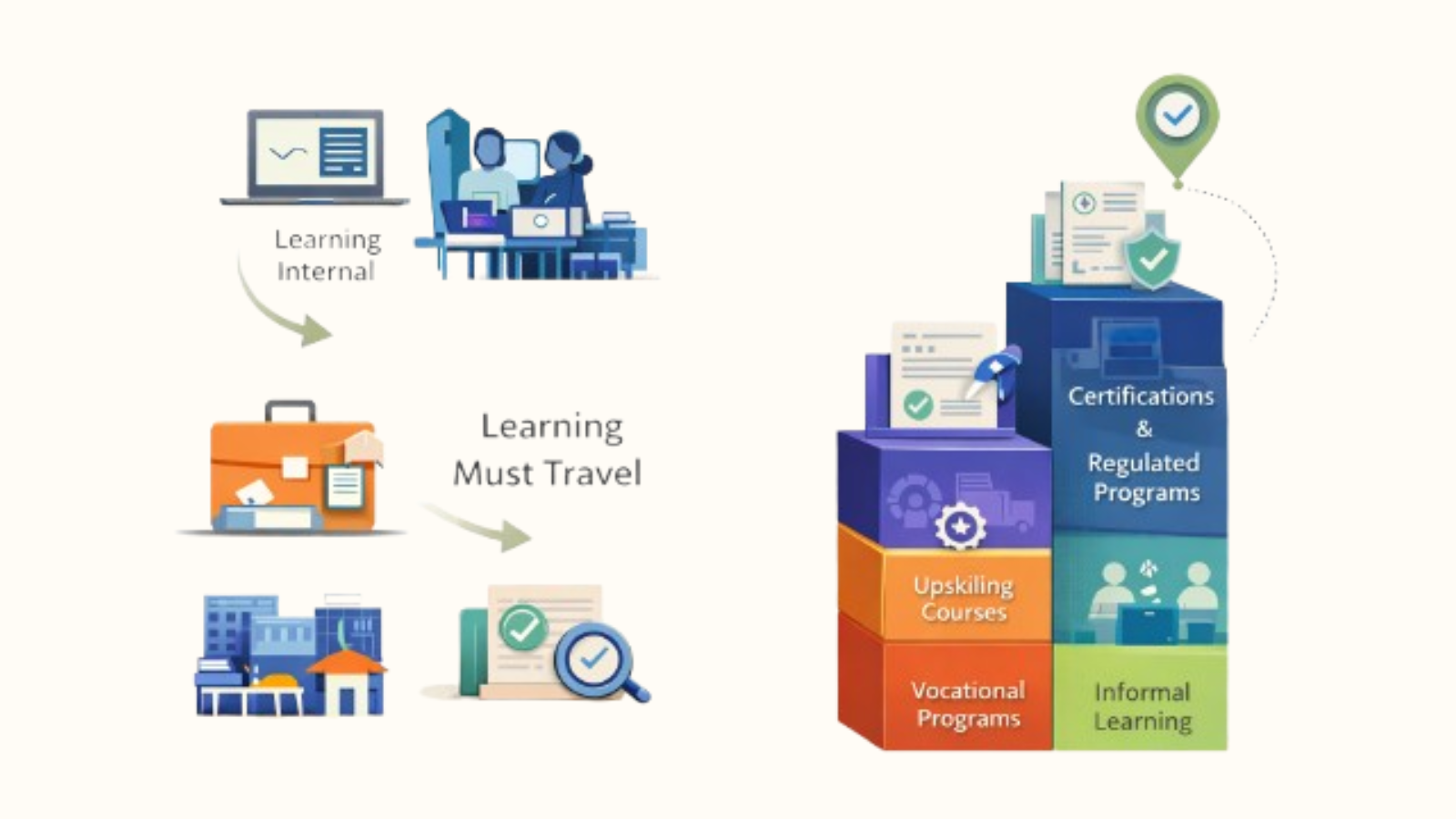 If your programs are built around outcomes that deserve trust beyond your platform, the next step is seeing how that trust is implemented in the real world.
Schedule a demo with Hyperstack to explore how digital credentials can be structured for your specific programs — whether you are issuing certifications, micro-credentials, academic records, or workforce training credentials.
Thoughtful credentialing starts with informed decisions.
The central takeaway
Digital credentials are not a trend to apply universally. They are a strategic commitment to meaning.
Programs built around skills, credibility, compliance, and mobility benefit the most. Programs centered only on participation or internal acknowledgment often do not.
The most important question is not whether digital credentials are the future.
It is whether your program is meant to be trusted beyond your walls.
That question is worth returning to.