Online learning expands it's shores endlessly, yet course completion remains one of its toughest puzzles. You might design a thoughtful curriculum, record clear videos, and offer everything a learner could need. Still, many will slip away somewhere between introduction and conclusion. Not because the content is poor but because motivation behaves unpredictably once a learner is left alone with a long journey.
Digital credentials have quietly become one of the strongest tools for keeping learners engaged. Not because they are shiny rewards, but because they reshape the psychology of progress. They give learners something to hold on to, something that confirms a step forward, and something that feels worth sharing. This is where completion rates begin to shift.
What follows is a deeper look at how digital credentials influence motivation, community, and learner behavior.
Why Learners Drop Off Before Reaching the Finish Line
Online courses lose participants for reasons that have surprisingly little to do with difficulty. Most learners quit because the journey feels endless. Progress is invisible. Life becomes noisy. The final certificate appears too far away to feel relevant.
There are a few recurring patterns.
Most learners struggle when the structure lacks intermediate recognition. A long course without checkpoints becomes a mental marathon that offers little feedback. Without small wins, attention drifts.
The second challenge is emotional. Learners want to feel part of a story, not just consumers of information. When a course does not create that narrative connection, the desire to continue weakens.
Distractions also play a role. A learner may begin with genuine interest, then step away for a day or two. By the time they return, the emotional thread is gone. Completion is no longer a priority.
Digital credentials counter these tendencies by creating visible points of progress. They restore momentum at moments when learners might otherwise pause for too long.
How Digital Credentials Create Tangible Motivation for Learners
A credential is more than an award. It is evidence that something meaningful has been learned. This alone changes motivation. Humans respond strongly to visible progress because it offers clarity. When learners can see the moment they cross a threshold, they understand that the effort is producing value.
A digital badge behaves like a checkpoint along a long road. Instead of waiting for a distant certificate, learners receive confirmations of progress at predictable intervals. This creates a reinforcing cycle. Each credential shows that the previous activity mattered. The next module suddenly feels approachable.
Psychologists refer to this as the progress principle. Visible achievements, even small ones, elevate motivation far more effectively than abstract promises. A well designed badge does not only show that the learner completed something. It shows that they have gained a skill that stands on its own.
This shift in perspective helps learners continue even when the content becomes more complex. They know they have a record of what they have already mastered. The course becomes a rising staircase rather than a flat, endless hallway.
How Micro Credentials Influence Course Completion Rates
Micro-credentials are smaller achievements embedded throughout a course. When implemented well, they consistently improve completion rates because they give learners attainable steps instead of one intimidating final objective.
The impact of micro credentials emerges from several factors.
Learners approach the course with less pressure because each milestone is small. They understand that progress is not a distant event but an ongoing rhythm. The early badges create an immediate sense of success. That early momentum reduces drop off during the initial weeks, when most learners tend to quit.
Micro credentials also make course structure easier to understand. Instead of navigating a large curriculum, learners move through a series of clear stages. Each badge communicates what has been learned and what comes next. This clarity reduces hesitation and makes the entire journey smoother.
There is also a social element. When learners share their micro credentials, they reinforce their commitment. They build a narrative around their learning that encourages continued participation.
Together, these effects explain why micro credentials remain one of the most reliable ways to lift completion rates.
Shareable Digital Credentials Shape Learner Motivation Better
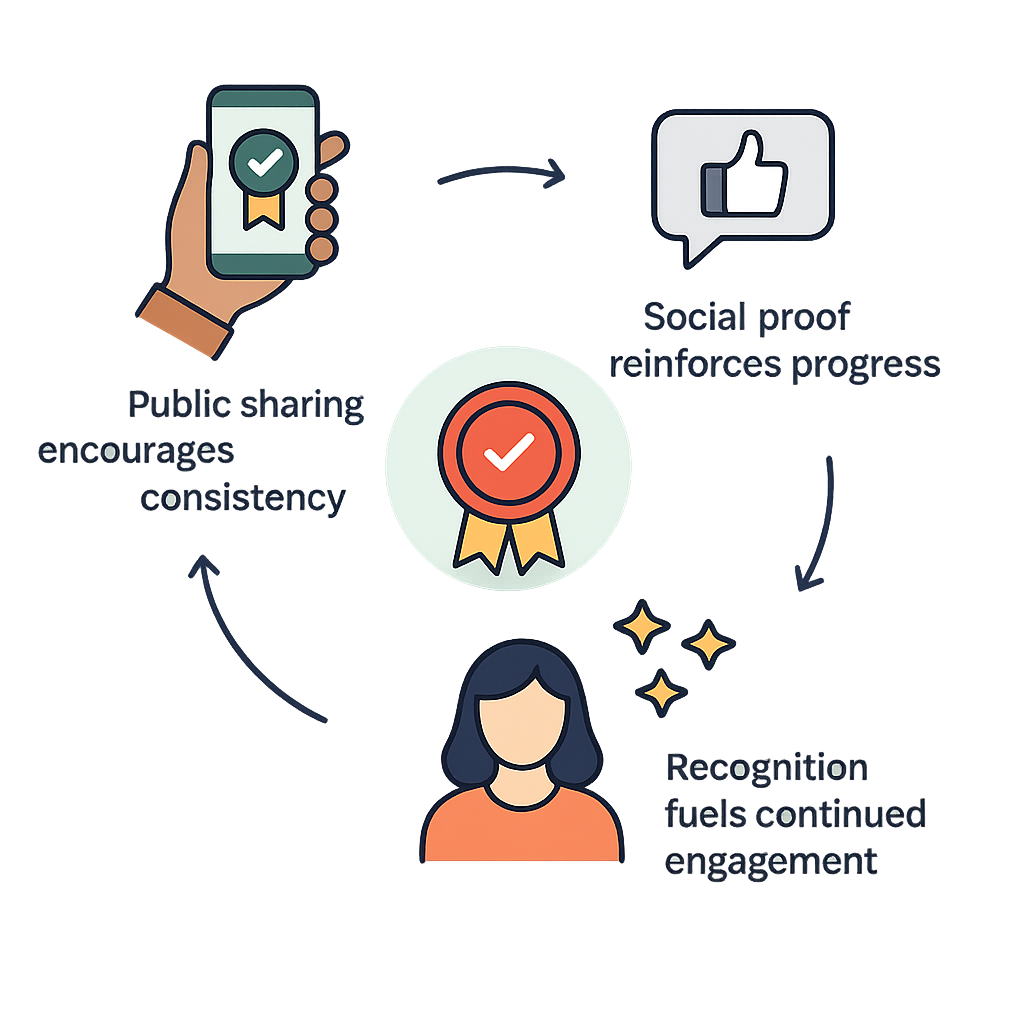
A credential becomes even more powerful when learners can share it publicly. A badge posted on LinkedIn or added to a portfolio changes the way learners think about progress. The course becomes part of their identity rather than an isolated activity.
Once learners make their progress visible, they feel encouraged to continue. They want to complete the series. They want the story to feel whole. This subtle accountability dramatically influences behavior.
There is also a feedback effect. When learners post credentials, their network reacts. A simple congratulatory comment reinforces confidence and enthusiasm. Even a few likes can push a learner to return for the next module. It is encouragement woven into everyday life.
This dynamic turns digital credentials into social proof. It signals professionalism, consistency, and skill acquisition. These signals matter in a world where careers increasingly depend on demonstrable capability.
The important thing is that the credential must be shareable, trustworthy, and visually inviting. Learners want badges that reflect real progress, not decorative icons. And when the design is thoughtful, the motivation becomes sturdier.
How Skills Based Credentials Increase Commitment to Completion
Completion rates improve when learners believe a credential will positively impact their career. Skills based hiring has grown rapidly, and employers now look closely at verified learning records. This shift has made digital credentials more valuable than ever.
When a badge lists concrete, verifiable skills, learners understand exactly what they are earning. They see it as an asset they can use immediately. This sense of utility encourages them to finish each module with more intention.
The final credential becomes a goal with real-world relevance. Not a symbolic certificate but a piece of evidence that hiring managers can evaluate.
This can also influences how learners pace themselves. They commit more strongly to consistent progress because they know the finished result will support their professional growth. Instructors who design credentials with employer relevance in mind tend to see higher completion across the entire cohort.
Digital Credentials Reveal Drop Off Points Within a Course
One of the subtle benefits of digital credentials is the data they generate. Each time a learner earns a badge, it marks a spot in the journey. When you map these points across hundreds of learners, patterns appear.
If most learners earn the first two badges but very few earn the third, you gain immediate insight into where engagement begins to fade. This kind of information is invaluable. It allows instructors to identify sections that may be too dense, too confusing, or simply too long.
Traditional analytics show page views or video watch time, but they do not provide the emotional context. A credential tells you that a learner completed a meaningful learning challenge. When that pattern stops, the problem is clearer.
Course creators who use credential data in this way often revise modules more effectively. They target the precise areas where motivation breaks, which strengthens the overall learning path.
How Digital Credentials Encourage Community, Belonging, and Shared Progress
A digital credential can act as a thread that binds learners into a community. It signals achievement, but it also signals membership. When learners see others earning the same badges, they feel connected. They feel that their progress is part of something broader.
This sense of belonging plays a surprisingly strong role in completion rates. People are more likely to finish when they feel others are finishing along with them. A badge becomes a conversation starter. It can encourage mentoring, peer support, or healthy competition.
 Even small moments of connection can reignite motivation. A learner who has fallen behind might return after seeing others share their achievements. Momentum spreads through the group and lifts everyone.
Read our piece on the effect of "The Mindshare Loop" from our blog series for an in-depth look into the topic.
Communities do not form automatically. They need prompts, celebrations, and shared rituals. Credentials help provide that structure in a way that feels natural rather than forced.
Examples That Show How Credentials Influence Completion
Consider a beginner coding program that introduces digital badges for each major concept. When learners began sharing their first few badges publicly, the classroom atmosphere changed. Students became more active. More completed intermediate modules. Completion for the full program increased because the early badges built confidence.
Now think about a corporate learning environment. Compliance courses are notorious for low engagement. When an organization added stackable badges that reflected practical workplace skills, participation improved. Employees felt they were gaining something useful, not just completing mandatory training.
You can also imagine a creative writing cohort. Each badge represented a writing milestone. Students proudly displayed them within the course community. The badges created a culture of encouragement. Even quieter learners rejoined the process because the environment felt alive and supportive.
These examples highlight how digital credentials influence emotion, behavior, and identity across different learning settings.
How Course Creators Can Design Credentials That Truly Improve Completion
The effectiveness of digital credentials depends on thoughtful design. Several principles make a noticeable difference.
Introduce the first credential early. Learners move forward with greater enthusiasm when they experience an early success. Place this milestone within the first week.
Break the course into stages and assign a meaningful credential to each one. These micro credentials should feel like natural signposts in the curriculum. They should reflect real skill acquisition rather than arbitrary checkpoints.
Design each credential with clarity. A badge should tell learners exactly what they achieved. Verifiable skill tags add weight. A clean, modern visual design enhances pride and shareability.
Encourage learners to share their badges in environments where they feel comfortable and supported. This step increases motivation through social reinforcement.
Finally, ensure that the final certificate feels like the natural culmination of everything earned along the way. If each smaller badge builds toward a larger credential, learners feel that their progress forms a coherent story.
When these principles combine, completion rates rise because the learning journey feels structured, rewarding, and professionally meaningful.
Final Thoughts
Digital credentials shape the emotional landscape of a course. They make progress visible. They offer milestones that create momentum, strengthening identity and community. They help learners imagine the value of what they are working toward.
Completion rates rise not because badges are decorative incentives but because they bring structure and meaning to the learning process. They help learners see themselves growing, step by step, in a way that feels human and achievable.
A course becomes more than information. It becomes a path that learners can actually see under their feet.
So, turn silent drop-offs into steady momentum. Build a credential journey with Hyperstack, one that your learners are proud to complete.
Schedule your free demo today!