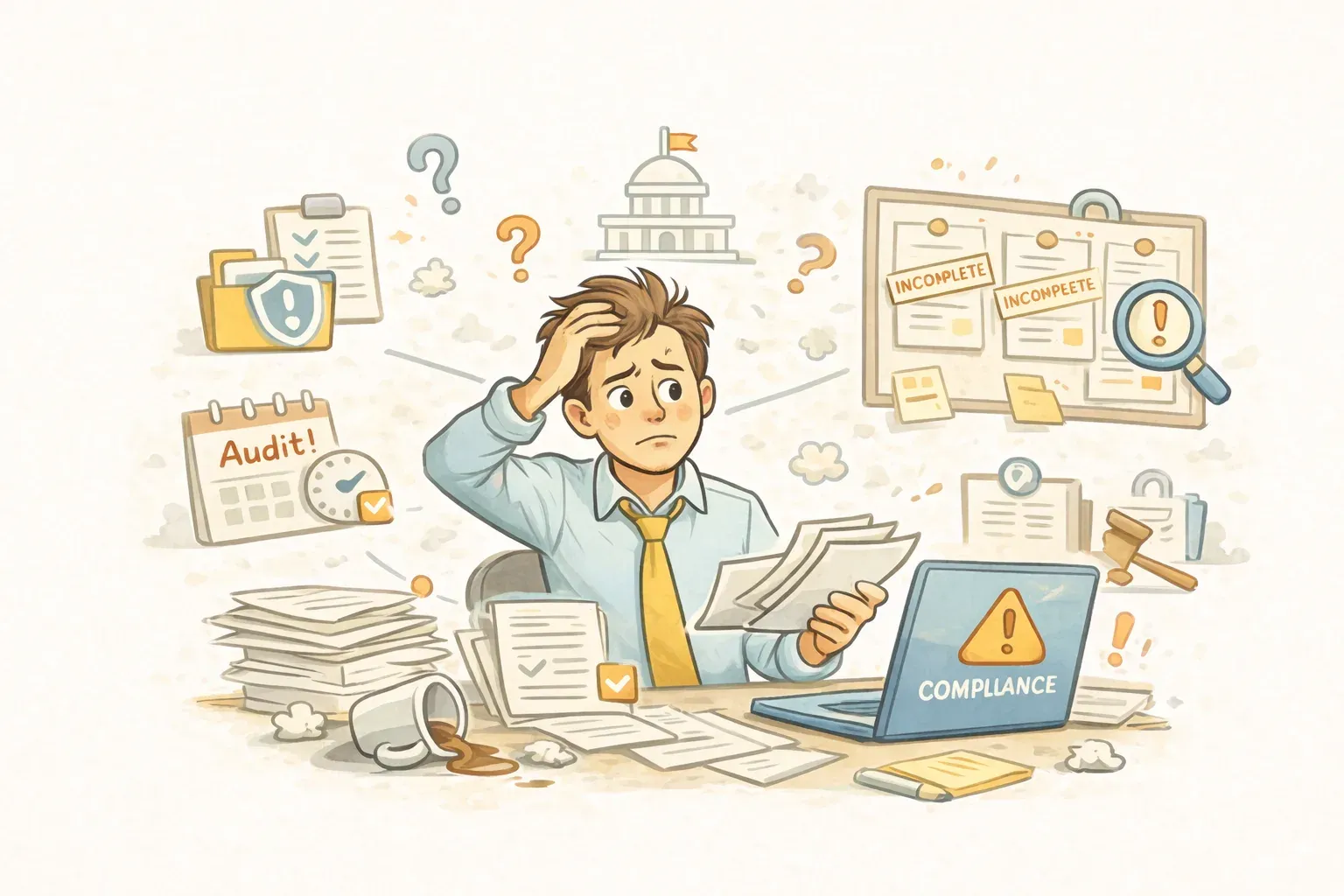
We spent months researching thousands of client stories across learning ecosystems, training platforms, and enterprise L&D teams. What stood out was not minor irritation or occasional pushback. It was a persistent, repeated problem: compliance training often feels like a box-ticking exercise that interrupts real work but does little to actually equip people with the knowledge they need to stay safe, stay legal, and stay effective.
This problem shows up in three places: internal stakeholder feedback, industry reports, and frank conversations in public forums. When employees, instructional designers, and learning professionals speak candidly, the complaints are consistent. We will quote these directly later, but first let’s clarify what compliance training really is and why it exists.
TL;DR
- Most compliance failures are not intentional. They happen because expectations are unclear or poorly communicated.
- Employees regularly say compliance training feels generic, outdated, or disconnected from real work.
- When training is optional, rules feel optional. That creates risk for both people and the business.
- Mandatory compliance training creates shared understanding across teams and roles.
- It protects employees by making boundaries clear and expectations documented.
- It protects businesses by providing verifiable proof during audits or incidents.
- Training works best when it is short, role-relevant, updated regularly, and properly tracked.
- Digital records or credentials turn training completion into defensible evidence.
Bottom line: Mandatory compliance training is not about enforcement. It is about clarity, protection, and trust at scale.
What Compliance Training Means Across Ecosystems
Compliance training refers to programs designed to educate employees about laws, internal policies, regulations, safety standards, ethics, and risk-related procedures that govern their work. Unlike role-based skill training, which helps someone do their job better, compliance training ensures that people do not inadvertently break rules that can hurt themselves, others, or the organization.
It is not optional in many industries. In most regulated markets, failing to train employees can itself become a legal liability.
In highly regulated sectors such as healthcare, finance, aviation, manufacturing, energy, government, and data security, compliance training exists because the stakes are legally and financially high. Regulators and auditors look not just for policy documents, but for verified proof that staff completed appropriate training and understood it. Without that documented proof, a business can face fines, sanctions, litigation, and reputational damage.
Even beyond strict regulation, compliance training builds a shared baseline of risk awareness. It clarifies what constitutes acceptable behavior, how to identify hazards, and where to go for help when in doubt. It is also closely tied to workplace safety protocols, privacy practices, anti-harassment standards, and cybersecurity awareness.
Reality Checks From Real Conversations
To ground this in real-world sentiment, let’s look at what professionals actually say in public forums.
On the r/elearning subreddit, a training professional noted that compliance training completion rates in their organization had dropped to around 20 percent. The discussion that followed focused on how mandatory modules are often ignored until leadership pressure increases. One commenter pointed out that breaking training into smaller, focused segments significantly improved completion.
In another r/elearning discussion, learners and designers highlighted that many compliance courses feel disconnected from actual work. One commenter described compliance eLearning as “information dumping labeled as training,” which explains why learners disengage quickly.
In r/Training, professionals shared frustration that compliance modules feel like homework. Not because the topics are unimportant, but because the delivery feels detached from how people actually learn and work.
A post in r/sysadmin captured another recurring complaint. Mandatory compliance training often includes content that has little relevance to certain roles. One commenter described being required to complete modules on topics that had no practical connection to their responsibilities, which led them to dismiss the training entirely.
Across these discussions, one theme appears again and again. People do not resist compliance itself. They resist irrelevant, poorly designed, or badly timed training.
Here's a quick set of rules or conditions you need to be aware of:
1. Mandatory Training Turns “I Didn’t Know” Into Verifiable Awareness
One of the biggest risks businesses face is not malicious intent. It is the defense that appears after an incident: “I didn’t know this was a violation.”
Informal explanations and tribal knowledge do not hold up when something goes wrong. Auditors, regulators, and legal teams expect documented proof that training was delivered, completed, and understood. Without that proof, businesses face penalties, and employees may be unfairly blamed.
A discussion on r/instructionaldesign illustrated this clearly. One professional described how incomplete training records played a role in a major legal settlement because the organization could not demonstrate that employees had been properly trained.
Mandatory compliance training creates a paper trail of awareness. It protects employees by setting clear boundaries, and it protects businesses by making those boundaries provable.
2. Employees Tune Out When Training Feels Disconnected From Real Work
In a widely discussed r/elearning thread, contributors explained why learners often disengage from compliance courses. The most common reason was lack of relevance. When training does not reflect real situations employees face, it becomes background noise.
People are less likely to retain information that feels abstract or theoretical. When compliance training ignores daily workflows, it trains people to rush through content instead of internalizing it.
Mandatory training forces organizations to confront this issue. If training is required, it must also be meaningful. Scenario-based learning and role-specific examples make compliance knowledge usable instead of forgettable.
3. One-Size-Fits-All Training Undermines Credibility
A recurring complaint in r/sysadmin and similar forums is that compliance training often treats all employees the same, regardless of role. This creates frustration and skepticism.
Compliance training is meant to clarify risk, not dilute attention. When employees are required to complete modules unrelated to their work, the training loses credibility. People begin to assume that all compliance content is generic and can be ignored.
Mandatory training works best when it is modular and role-aware. Employees should only be required to complete training that directly applies to their responsibilities. This improves engagement and ensures that critical knowledge reaches the right people.
4. Long, Poorly Timed Modules Reduce Completion Rates
Another common issue raised in r/Training discussions is timing. Compliance training is often launched during busy periods, with little regard for employee workload.
One professional shared that their quarter-end compliance course had an 11 percent completion rate because it coincided with peak operational demands. The issue was not unwillingness. It was poor planning and excessive length.
Short, focused modules delivered at appropriate times are more likely to be completed and remembered. Mandatory training does not need to be overwhelming. It needs to respect attention and workflow.
5. Outdated Content Creates Silent Risk
Compliance requirements evolve constantly. Laws change, internal policies shift, and new risks emerge. Yet many organizations treat compliance training as static.
Industry analyses consistently point to outdated content as a major weakness in compliance programs. Training that reflects outdated standards can actively mislead employees.
Mandatory training protects organizations only when content is maintained and updated regularly. Treating training as a one-time exercise undermines its purpose and creates exposure instead of protection.
6. Tracking Completion Is Not Optional
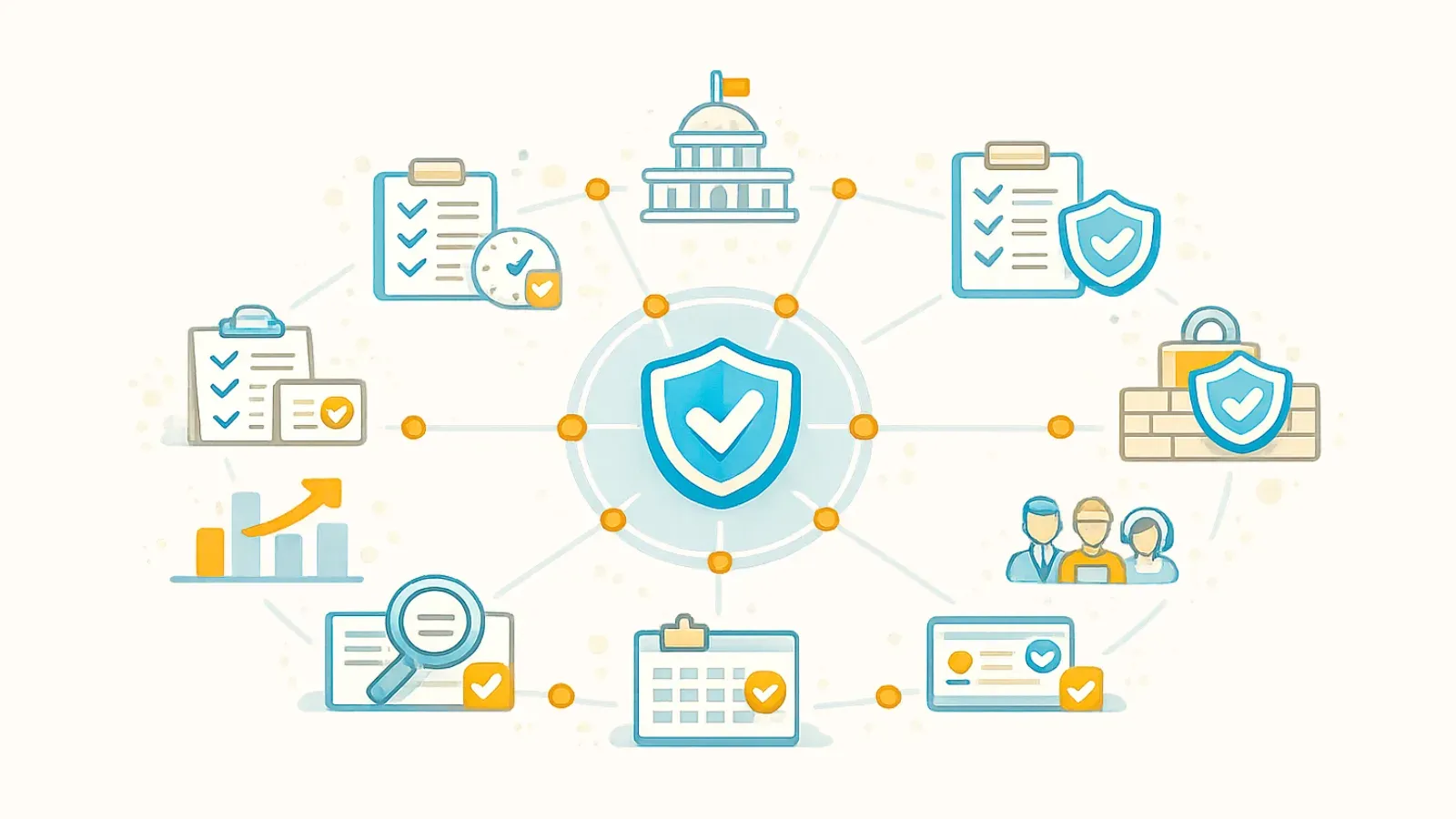
In many organizations, compliance tracking still relies on spreadsheets, email confirmations, or incomplete LMS reports. These systems break down under scrutiny.
When regulators ask for proof, organizations need precise records showing who completed training, when they completed it, and what content was covered. Without this, even well-intentioned programs can fail audits.
Mandatory compliance training must be paired with reliable tracking and verification. Completion without records offers little protection to employees or the business.
7. Mandatory Training Establishes a Shared Compliance Culture
One of the least discussed benefits of mandatory compliance training is cultural alignment. When training is optional, rules feel optional. When training is required, expectations become shared.
Mandatory training signals that compliance is part of how work gets done, not an afterthought. It builds consistency, reduces confusion, and supports fair enforcement across teams.
Over time, this shared baseline strengthens trust. Employees know what is expected of them, and organizations can enforce standards with clarity and confidence.
Where Digital Credentials Fit In
As compliance training modernizes, digital credentials play an increasingly important role.
A digital credential issued after compliance training serves as verifiable proof of completion. It creates a portable, timestamped record that can be audited, referenced, and trusted.
Hyperstack approaches compliance training as part of a broader credentialing system. Instead of treating training as a checkbox, it treats completion as an asset. Digital credentials link training outcomes to verifiable records, strengthening accountability without adding friction.
For regulated industries and growing organizations alike, this approach aligns training, proof, and governance in a single system.
Making Mandatory Compliance Training Work
Based on real feedback and industry patterns, effective compliance training follows a few principles:
- Training is relevant to specific roles
- Content is delivered in short, focused modules
- Programs are updated as standards change
- Completion is tracked with verifiable records
- Learning design emphasizes real scenarios over legal text
When these conditions are met, mandatory compliance training stops feeling punitive and starts functioning as protection.
Final Thoughts
Mandatory compliance training exists to prevent avoidable harm. It protects employees by clarifying expectations and boundaries. It protects businesses by creating documented proof of awareness and due diligence.
When grounded in real work, supported by strong systems, and reinforced with verifiable credentials, compliance training becomes infrastructure rather than interruption.
If compliance matters to your organization, how it is delivered matters just as much.
If you'd like to speak to an expert at your convenience to setup your compliance strategy or training, schedule a free demo and we'll get back to you in no time!
Tags
- Mandatory compliance training
- Workplace compliance training
- Employee compliance training
- Corporate compliance training
- Compliance training benefits
- Compliance training programs
- Compliance training for employees
- Compliance training best practices
- Compliance training certification
- Digital compliance credentials
- Compliance training records
- Audit ready compliance training
- Regulatory compliance training
- Online compliance training
- Compliance training platform