Diwali certificate templates and badges
3 free designs. A set is one design as a badge, a landscape or a portrait certificate, or all three.
Free for up to 20 recipients a year
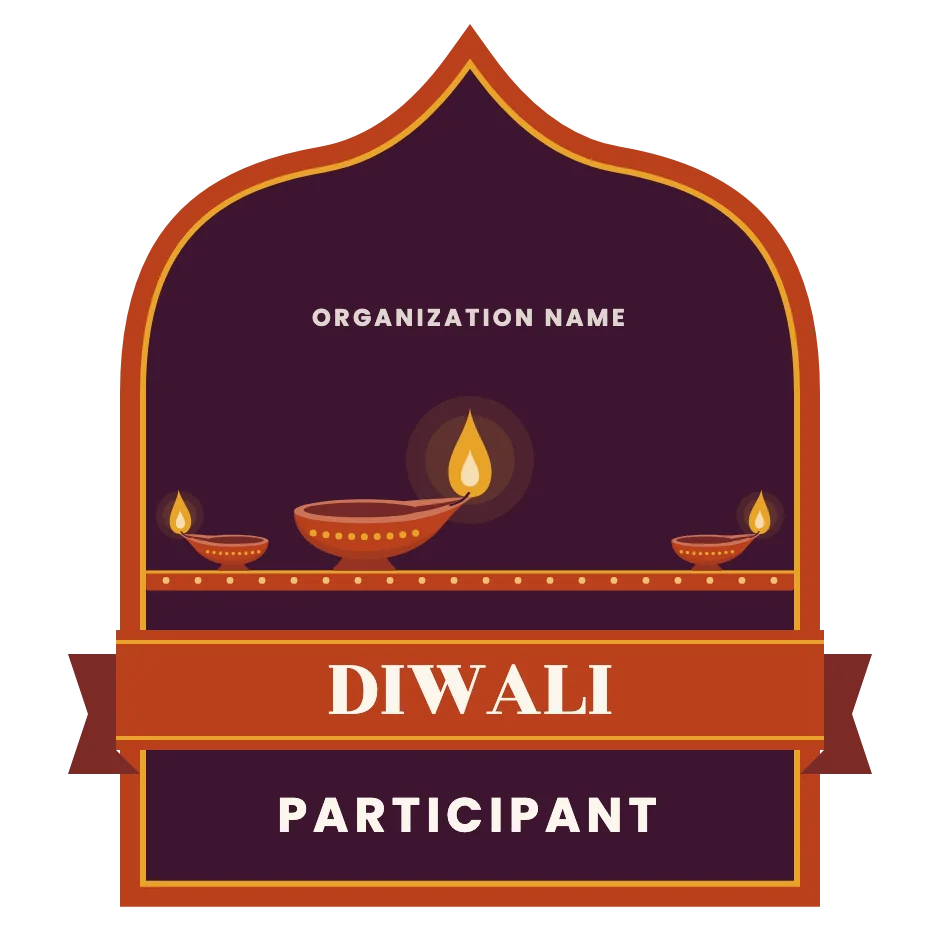
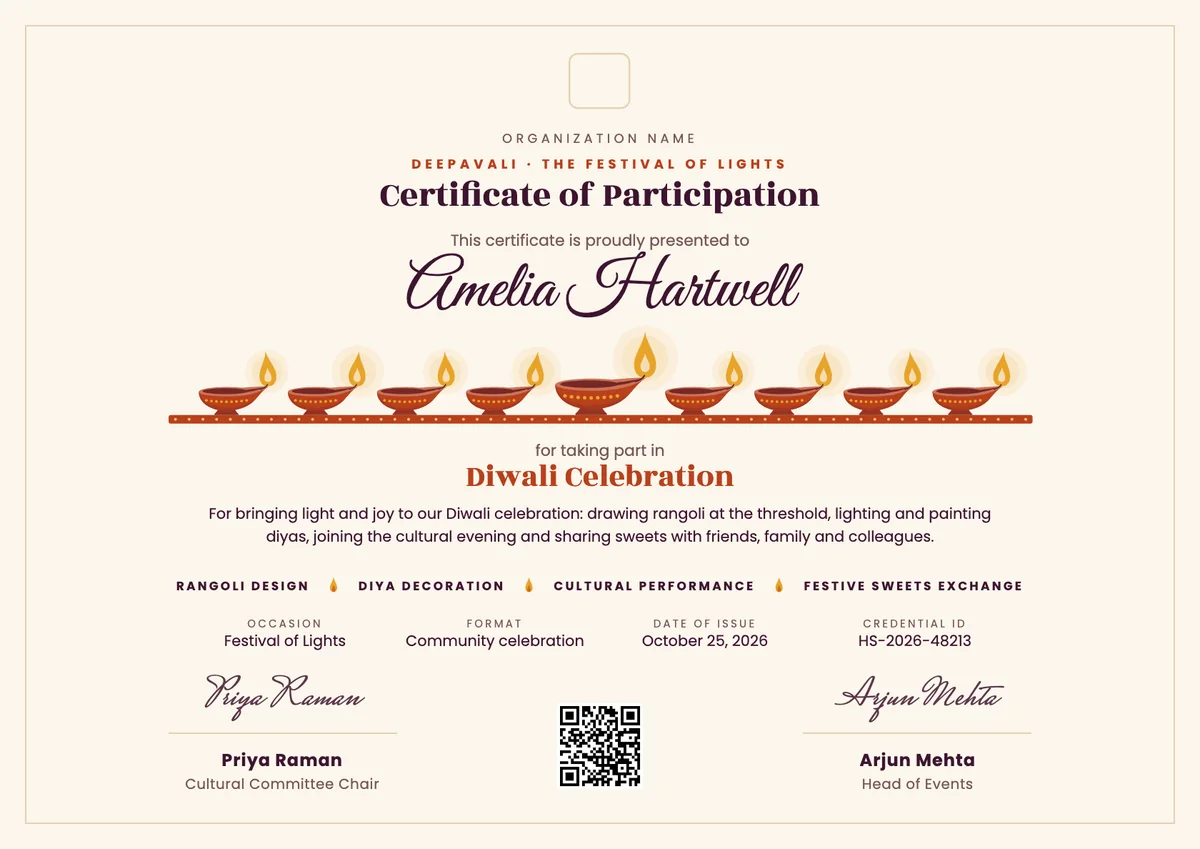
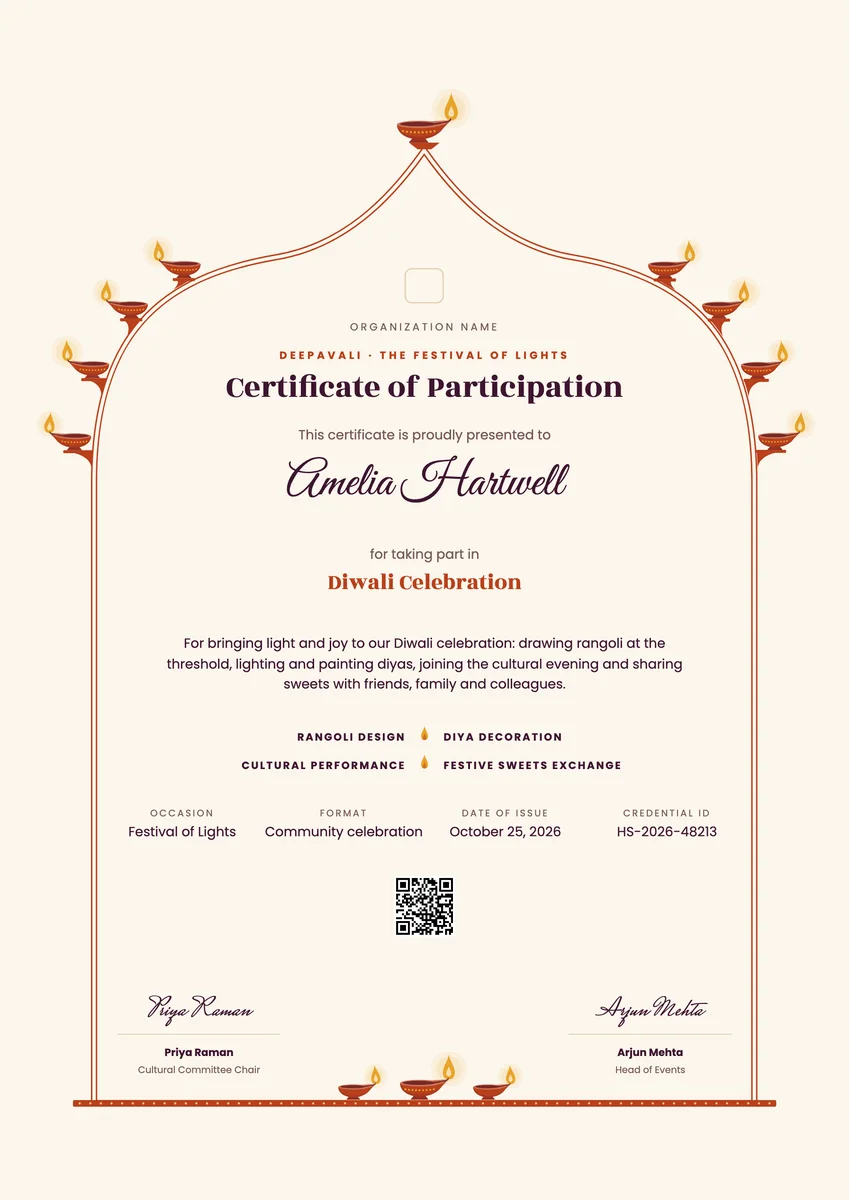
A Diwali certificate template lets you thank everyone who made your Festival of Lights celebration happen: the children who drew rangoli at the school gate, the colleagues who painted diyas for the office party, the dancers and singers at the cultural evening, and the volunteers who set out the sweets. Schools, workplaces, temples and community associations hand these out in October or November, around the new-moon night of Lakshmi Puja.
A good Diwali certificate names the person, the event and what they did, in a line or two, and carries a date and the signature of a teacher, an organiser or a committee chair. For a contest, a rangoli certificate can also name the place won or the theme of the design.
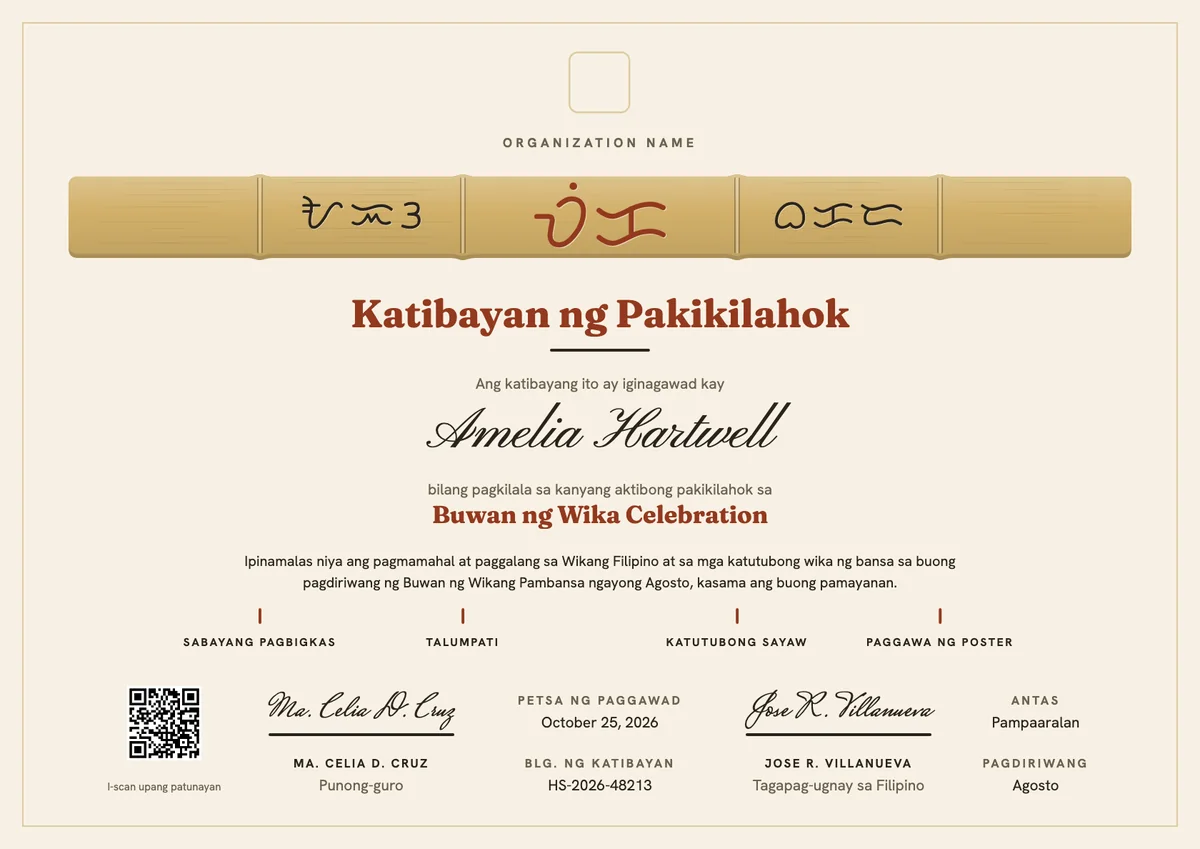
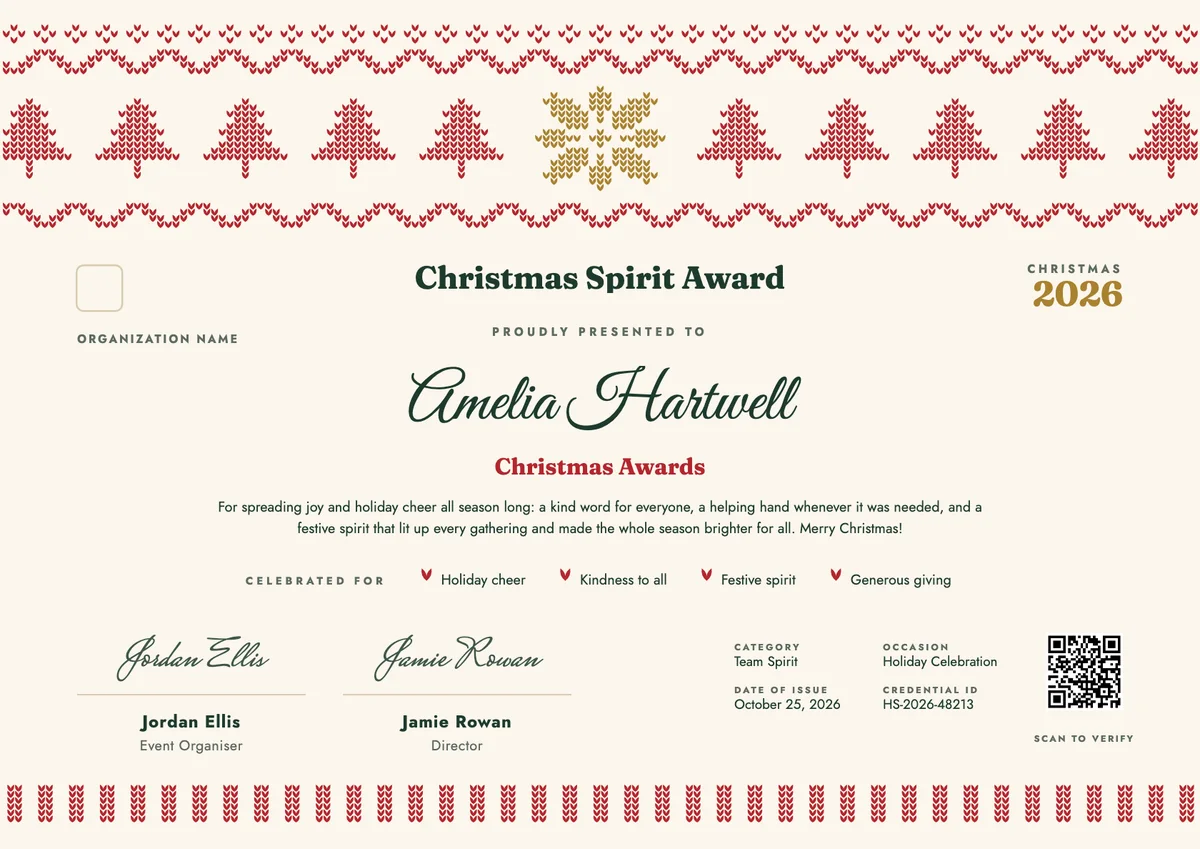
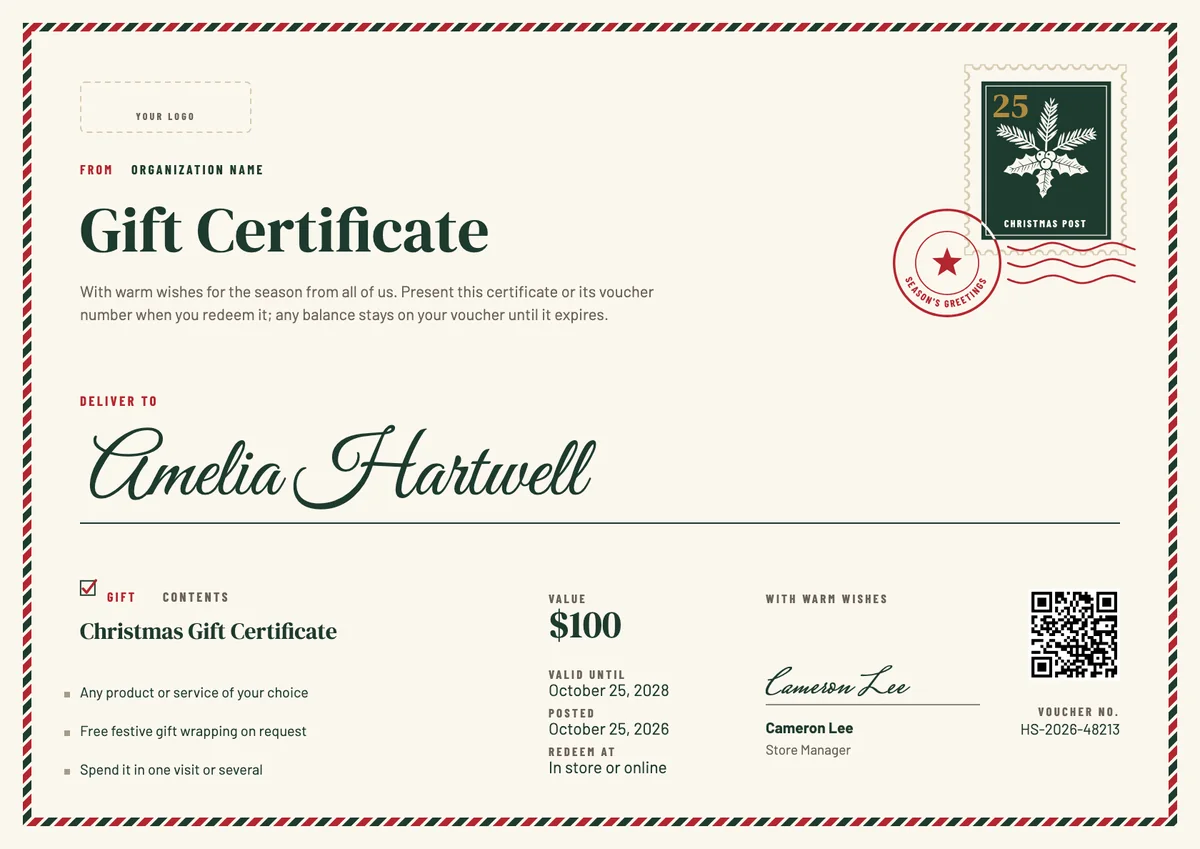
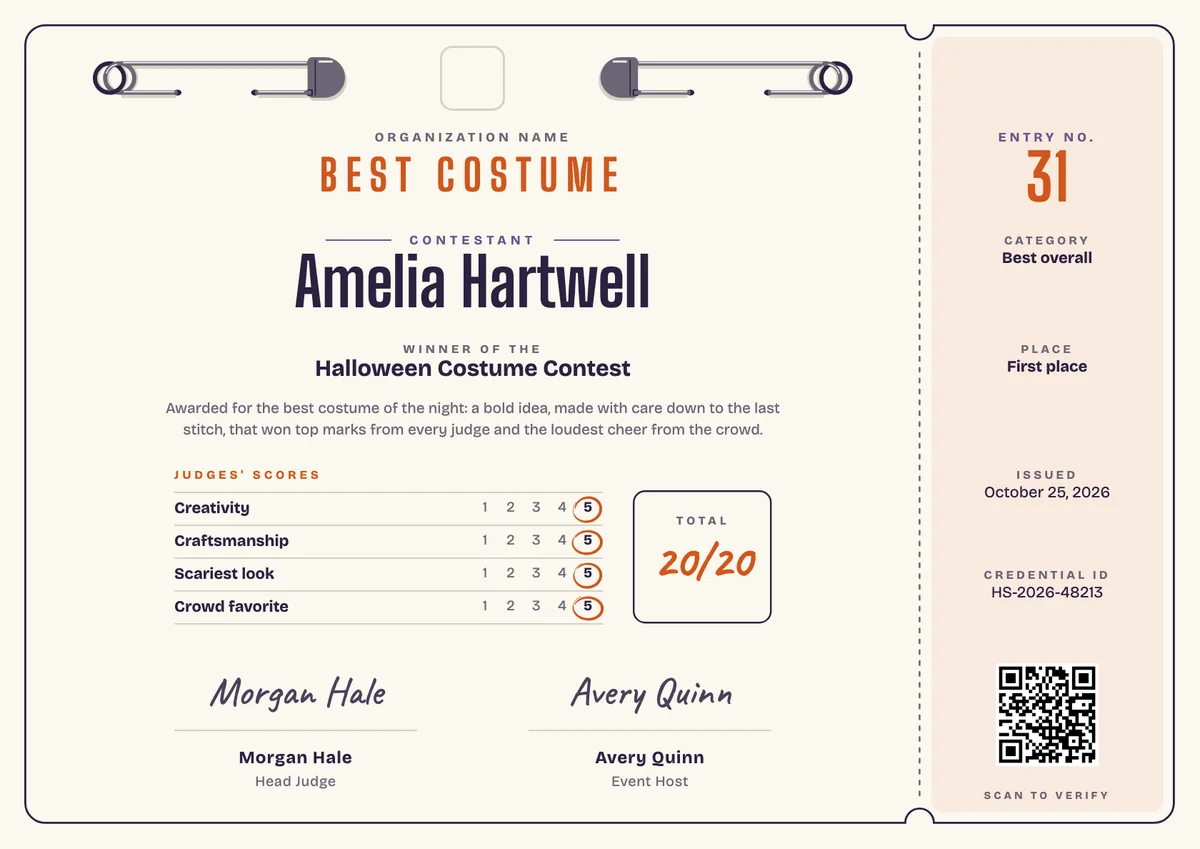
The designs here come as certificates in A4 and US Letter and as badges, so you can print one for the classroom wall and send the same award by email to share online.
Wording
What to write on a diwali certificate
Use these lines as they are, or as a start for your own. Every template comes with wording you can change in the studio.
Wording for a Diwali certificate of participation
- “For joining our Diwali celebration and spreading light and joy.”
- “With thanks for lighting up our Festival of Lights with your time, colour and kindness.”
- “For taking part in our Deepavali cultural evening with music, dance and good cheer.”
Rangoli certificate wording for a contest
- “First place in the Diwali rangoli competition, for a design of rare colour and balance.”
- “For a beautiful rangoli that welcomed every guest at our door.”
- “Awarded for the most creative use of flowers and colour in this year's rangoli contest.”
Short lines for the badge or the card
- “A row of lamps, a year of light.”
- “Thank you for making our Diwali shine.”
- “Diya decorator, Diwali 2026.”
Why send it with Hyperstack
More than a PDF
Customize the template free. When it is ready, send it to everyone at once.
One design, every name
Upload a spreadsheet and Hyperstack makes a certificate of participation for each person on it, in one go.
Sent by email
Each recipient gets their own email and link. You see who opened it, downloaded it and shared it.
Anyone can verify it
The QR code opens a page that proves the certificate is real. Recipients add it to LinkedIn in one click.
FAQ
Questions, answered
Diwali falls in October or November. Its main night, Lakshmi Puja, is the new moon (amavasya) of the Hindu month of Kartika, so the date moves each year. Many schools and offices hold their celebration on the working day closest to it.
Deepavali comes from Sanskrit and means a row of lamps (deepa, lamp, and avali, row). That is why homes set out lines of small clay oil lamps, called diyas, along doorsteps, windows and balconies during the festival.
In much of India they are Dhanteras, Naraka Chaturdashi (also called Choti Diwali), Lakshmi Puja, Govardhan Puja and Bhai Dooj. Customs and names differ by region, and some communities mark fewer days.
Sikhs mark Bandi Chhor Divas at the same time, Jains remember the nirvana of Mahavira, and some Buddhists, such as the Newar community in Nepal, also celebrate. A certificate wording that speaks of light, joy and community suits all of these groups.
The entrant's name, the competition and the place won or a category such as Best Use of Colour, the date, and the signature of a judge or the organiser. A short line on the design itself makes it more personal.
Common ones are rangoli drawing, diya painting, lantern making, a cultural programme of dance and music, a sweets or food stall, and charity drives. One certificate of participation can list the activities each student joined.
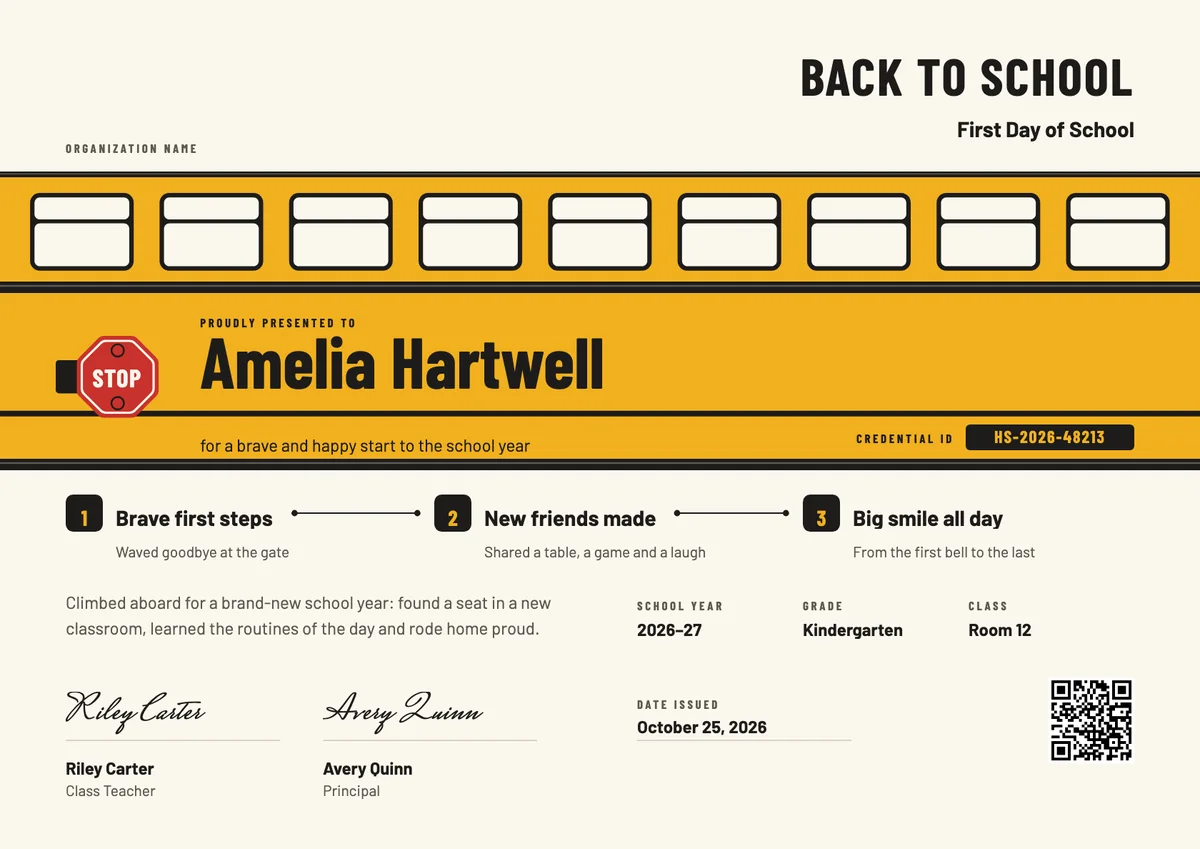
Your next cohort deserves better than a PDF
Set up in minutes, send your first credentials today, and only pay once you grow past 20 recipients a year.
Or open a live sample credential