German certificate templates and badges
3 free designs. A set is one design as a badge, a landscape or a portrait certificate, or all three.
Free for up to 20 recipients a year
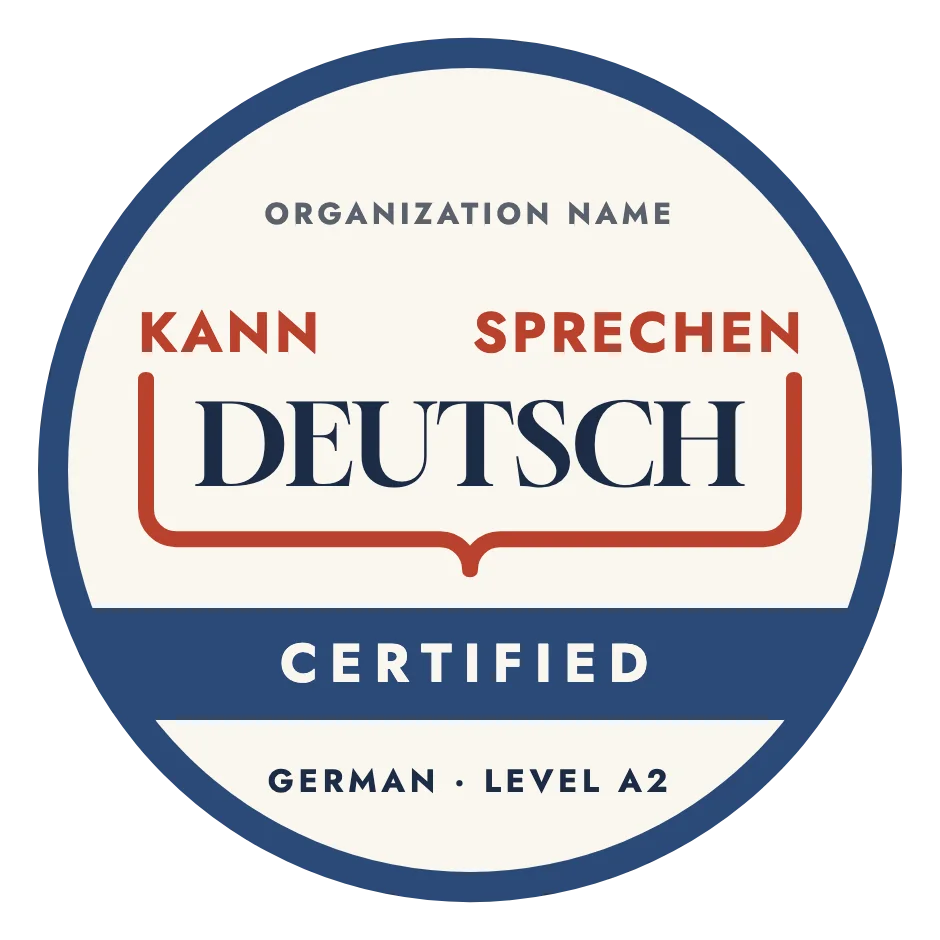
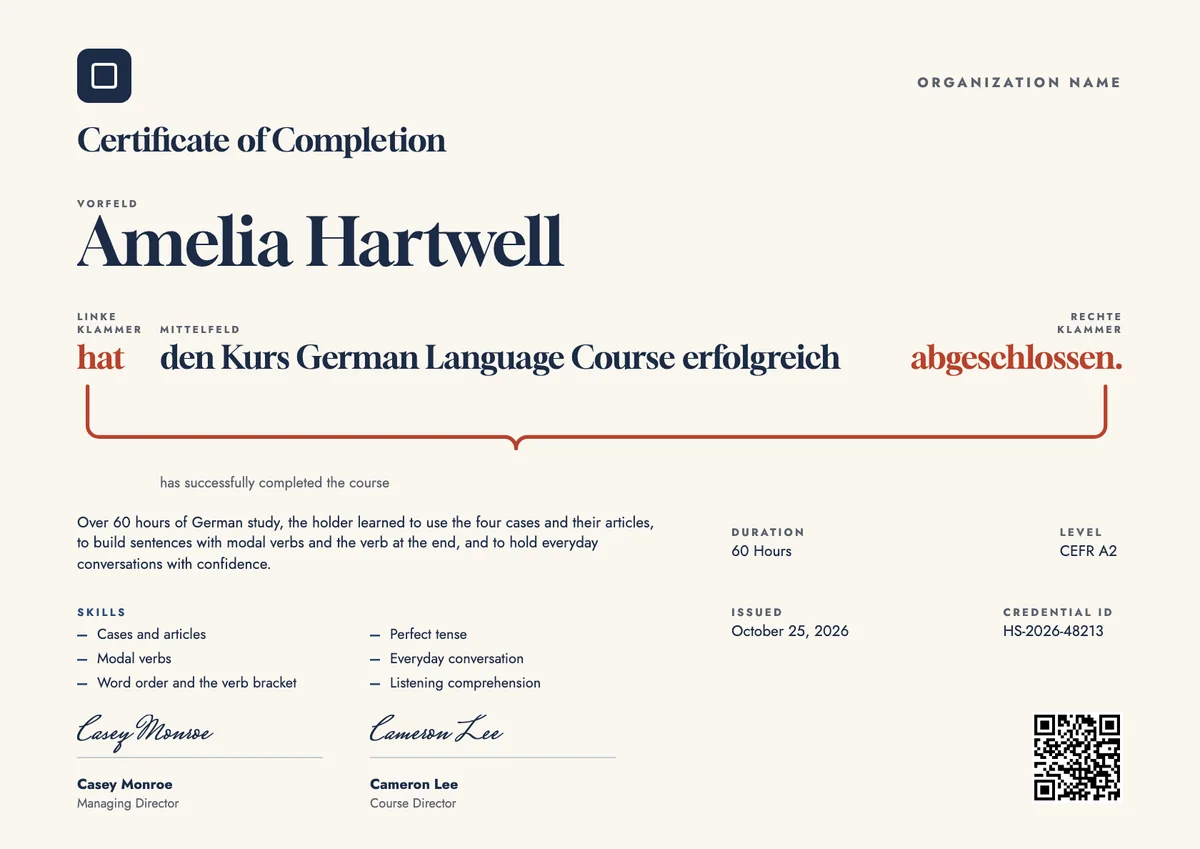
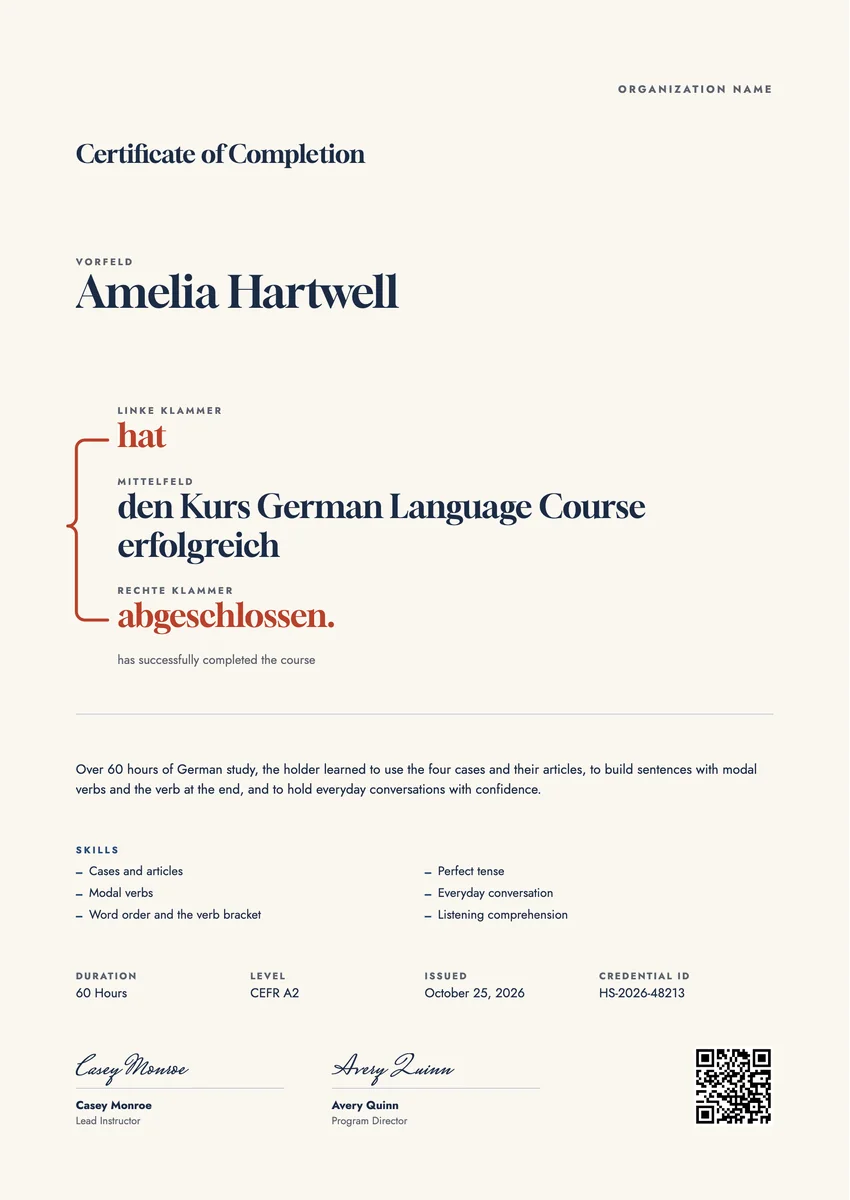
A German course certificate closes a stretch of study in the language: a term of evening classes at an adult education centre, an intensive month in Munich, weekly online lessons, or company training before a move to a German-speaking office. Language schools, universities and employers hand one out when a learner finishes a level. Every german course certificate template on this page is made for that moment.
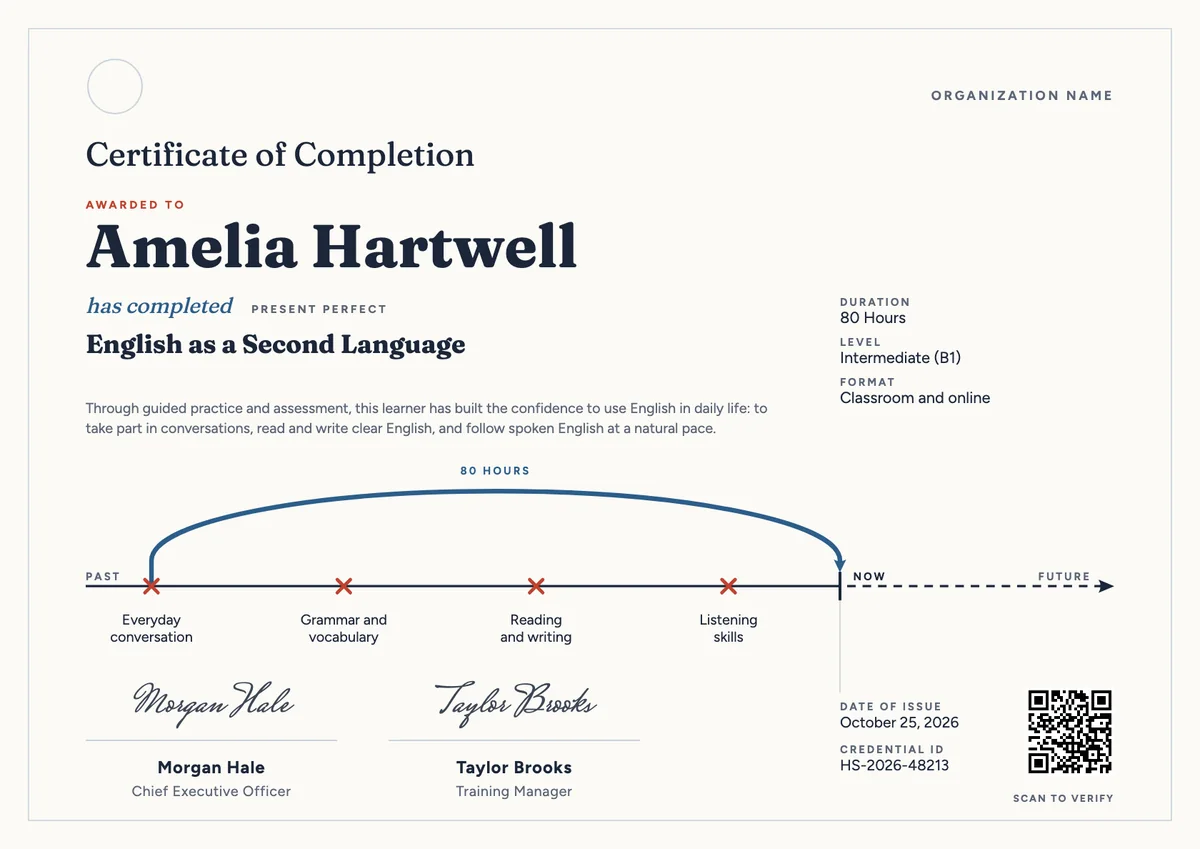
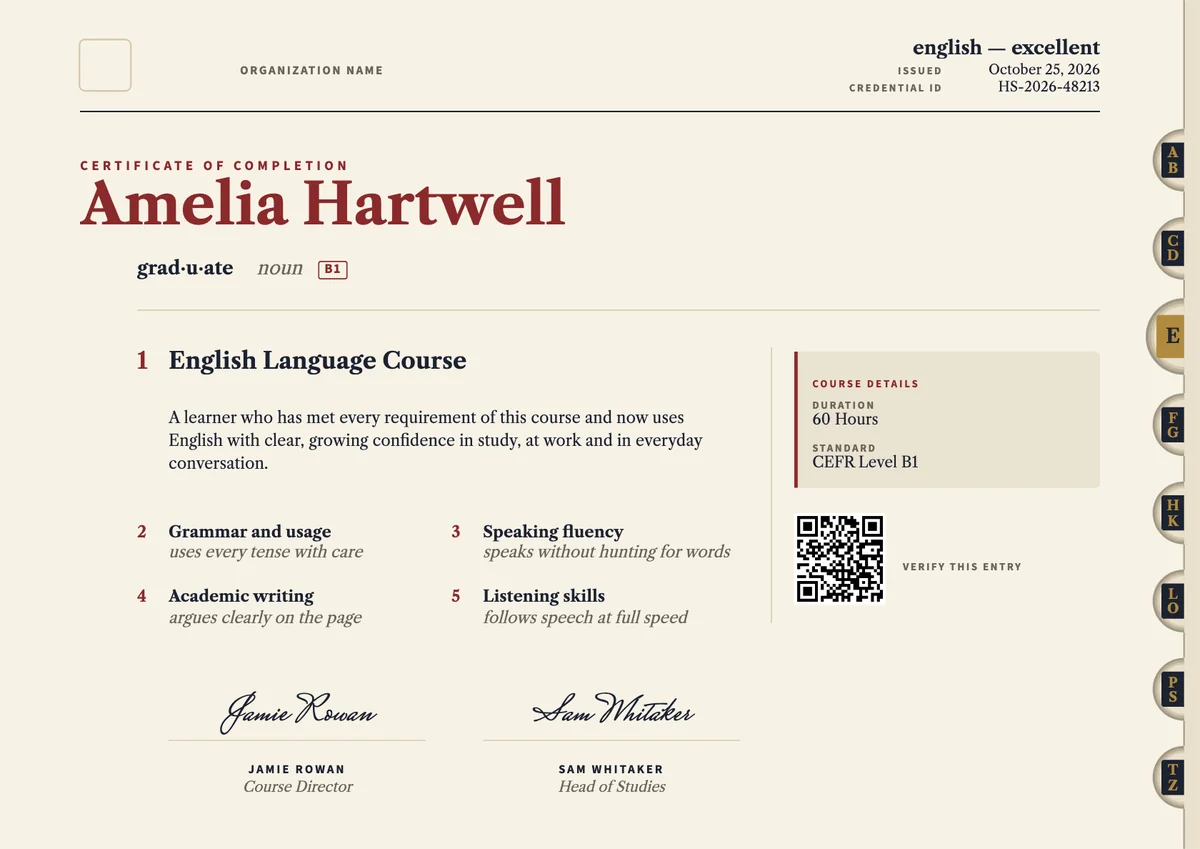
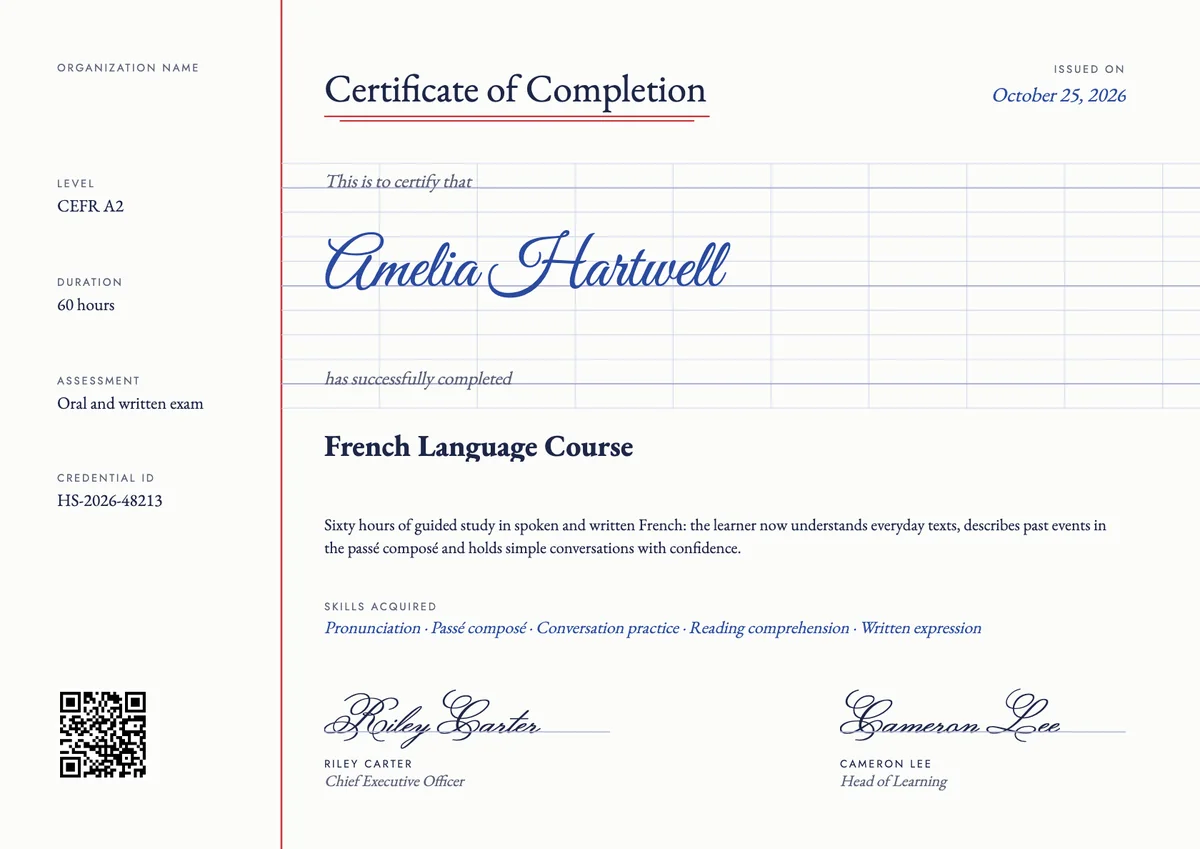
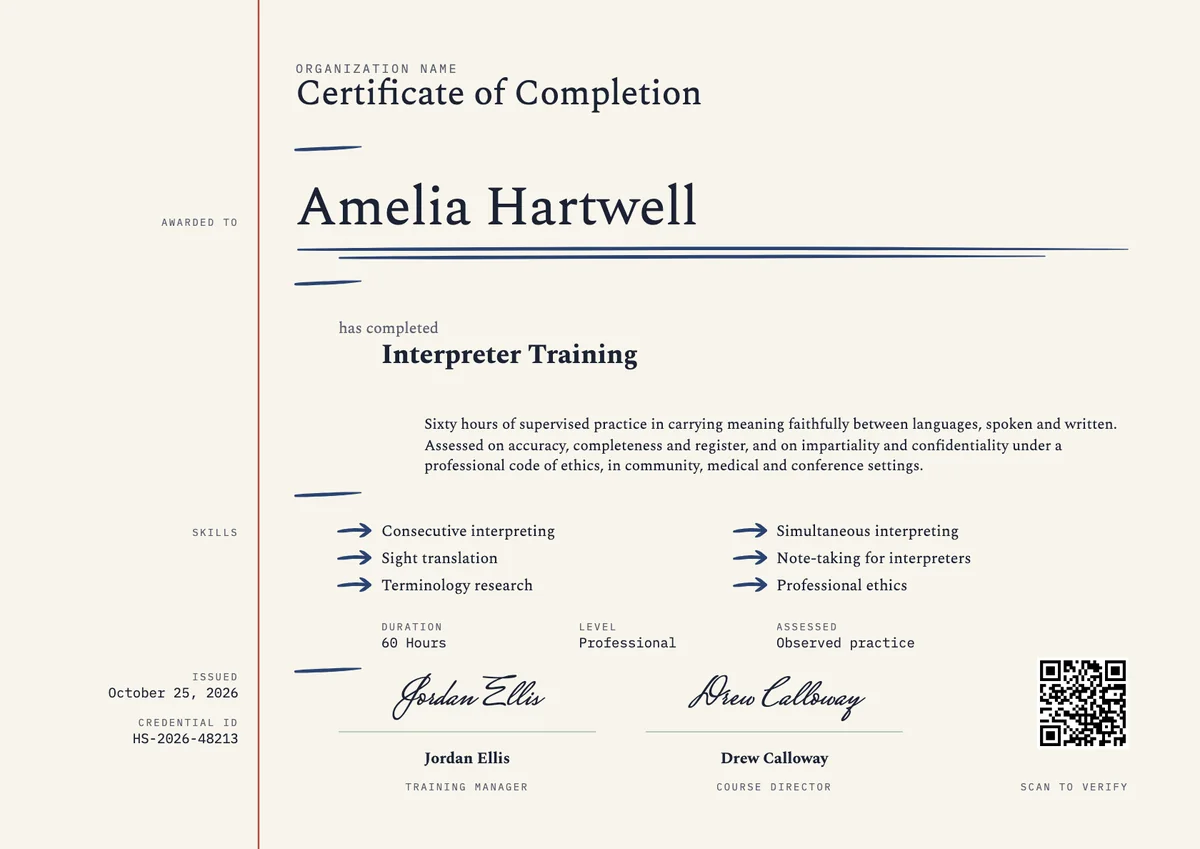
A useful certificate for German language study says which level was reached, usually on the CEFR scale from A1 to C2, how many hours the course ran and what the learner can now do: use der, die and das with the right case, put the verb in second place, and talk about the past in the perfect tense. A date, a credential ID and the signature of a teacher or course director make it a record others can trust.
The designs come as certificates in A4 and US Letter and as digital badges that learners can share online and anyone can verify.
Wording
What to write on a german certificate
Use these lines as they are, or as a start for your own. Every template comes with wording you can change in the studio.
Wording for a German course completion certificate
- “For successfully completing 60 hours of German language study at CEFR level A2.”
- “Has completed our German for Beginners course, from the alphabet and the articles to ordering in a café and giving directions.”
- “In recognition of completing the four-week Intensive German programme with a written and an oral assessment.”
Level statements for a certificate for German language
- “Can introduce themselves, ask and answer simple personal questions and fill in a form in German (A1).”
- “Can talk about work, family and recent events in the perfect tense and understand short everyday texts (A2).”
- “Can follow the main points of clear speech on familiar topics and write a short connected text in German (B1).”
Wording in German for the certificate or the badge
- “[Name] hat den Kurs Deutsch A2 erfolgreich abgeschlossen.”
- “Herzlichen Glückwunsch zum bestandenen Kurs!”
- “Kann Deutsch sprechen: Niveau A2.”
Why send it with Hyperstack
More than a PDF
Customize the template free. When it is ready, send it to everyone at once.
One design, every name
Upload a spreadsheet and Hyperstack makes a certificate of completion for each person on it, in one go.
Sent by email
Each recipient gets their own email and link. You see who opened it, downloaded it and shared it.
Anyone can verify it
The QR code opens a page that proves the certificate is real. Recipients add it to LinkedIn in one click.
FAQ
Questions, answered
Usually not. German embassies, the immigration offices and universities ask for the result of a recognised exam, such as the Goethe-Zertifikat, telc, ÖSD, TestDaF or the DSH, taken at an approved centre. A course certificate shows the study behind that result and is a good addition to a job application, but it does not take the place of the exam.
It means "has successfully completed the course", and it is the usual formula on German certificates. The verb is split in two: "hat" comes second and "abgeschlossen" goes to the end, with the course name between them. You can use it as the main line, with an English line under it for readers who do not know German.
Pick the ones the course really taught and tested. At A1 and A2 these are often the articles der, die and das, the nominative, accusative and dative cases, modal verbs such as können and müssen, separable verbs, verb-second word order and the perfect tense with haben and sein. Four to six items read better than a long list.
Many schools split each CEFR level into two parts, so write the part that was completed, for example "Level A1.1 (first half of A1)". Give the full level only when the learner has finished both parts, so the certificate never claims more than the course covered.
Most courses teach standard German, which is understood in Germany, Austria and Switzerland, so no note is needed. If the course trained learners for life in one country, for example with Austrian words for food and offices, or with an introduction to Swiss German dialect, say so in the program name or the skills.
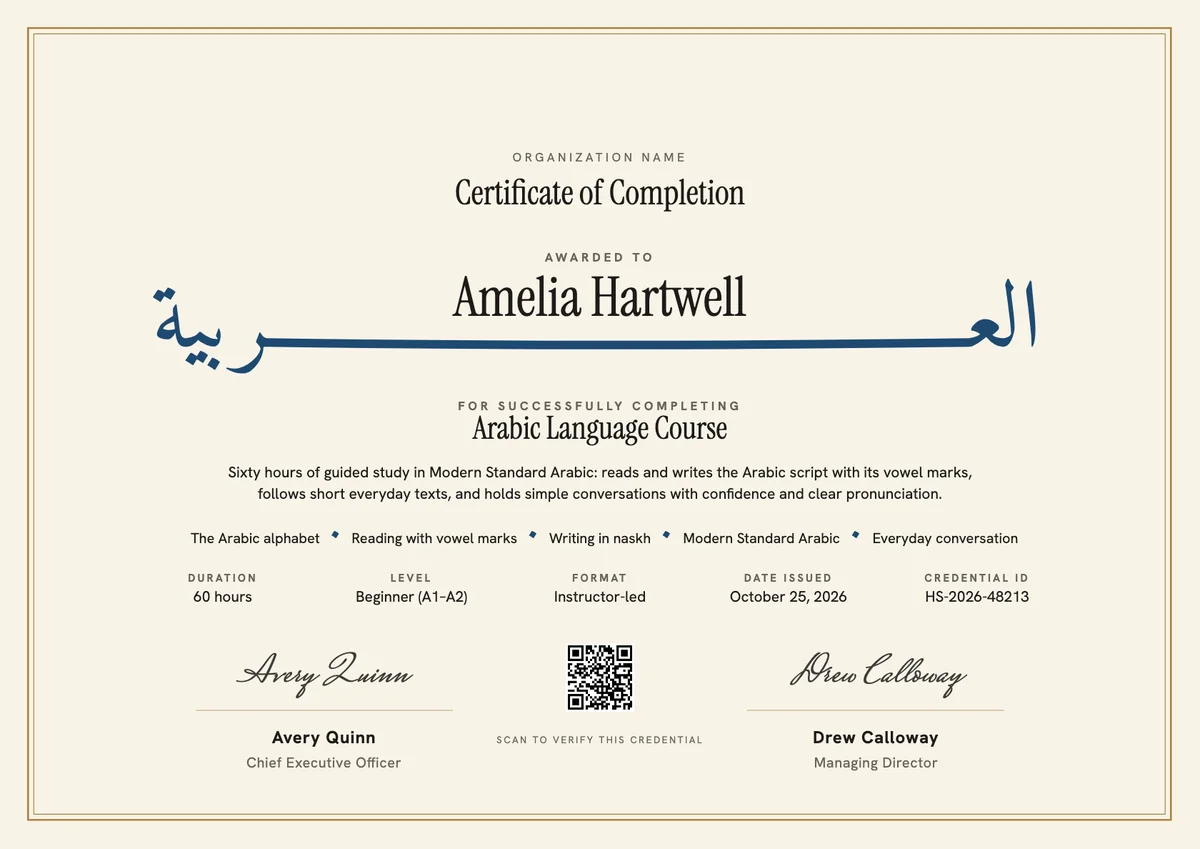
Your next cohort deserves better than a PDF
Set up in minutes, send your first credentials today, and only pay once you grow past 20 recipients a year.
Or open a live sample credential