Pet First Aid certificate templates and badges
3 free designs. A set is one design as a badge, a landscape or a portrait certificate, or all three.
Free for up to 20 recipients a year
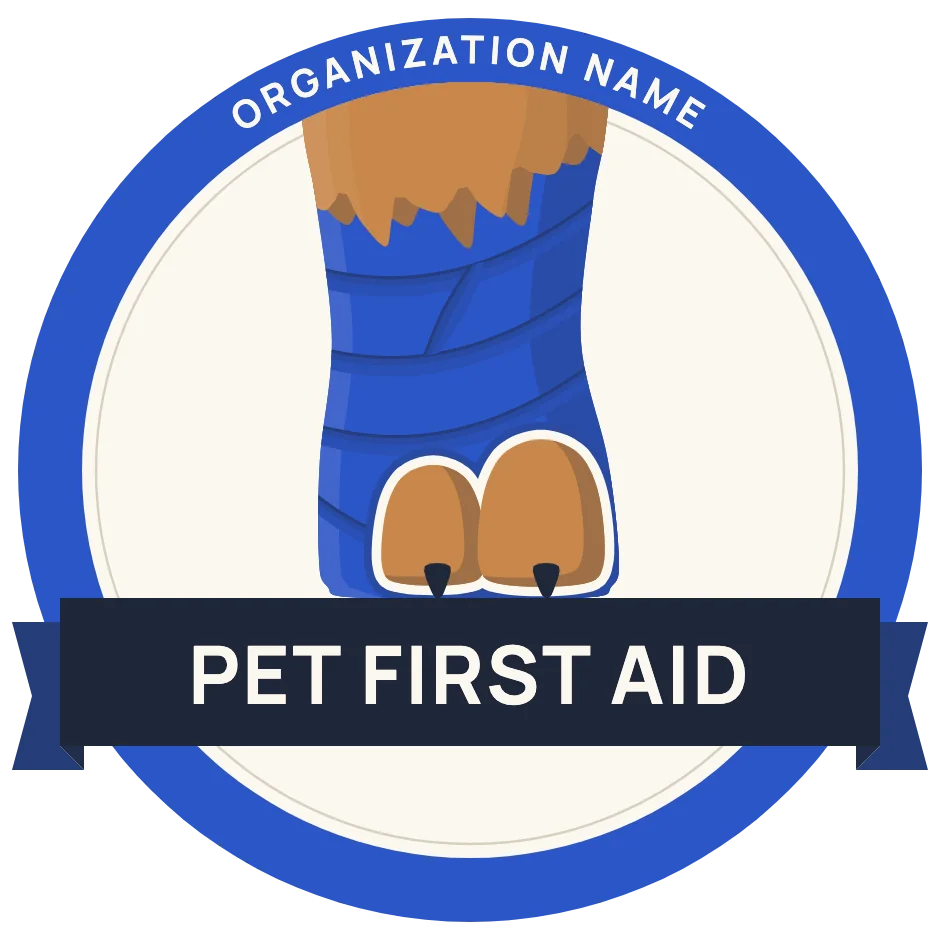
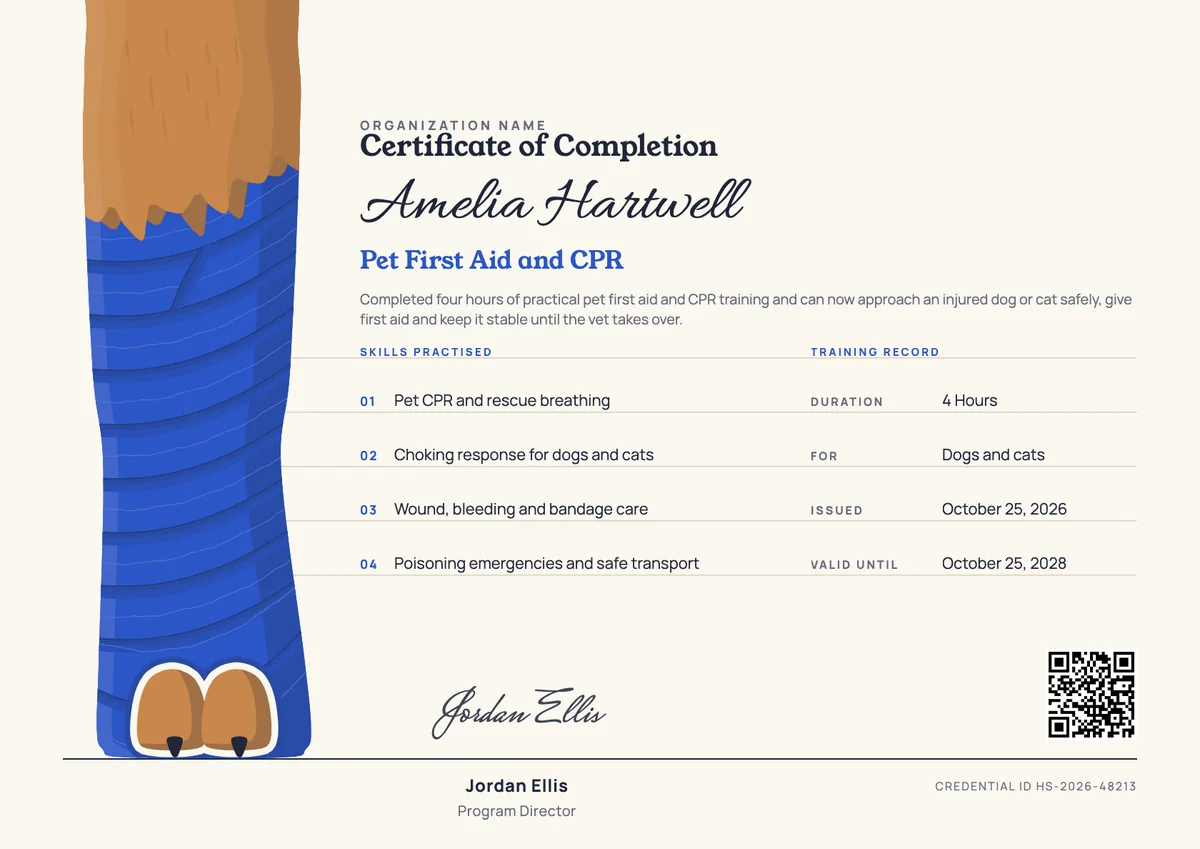
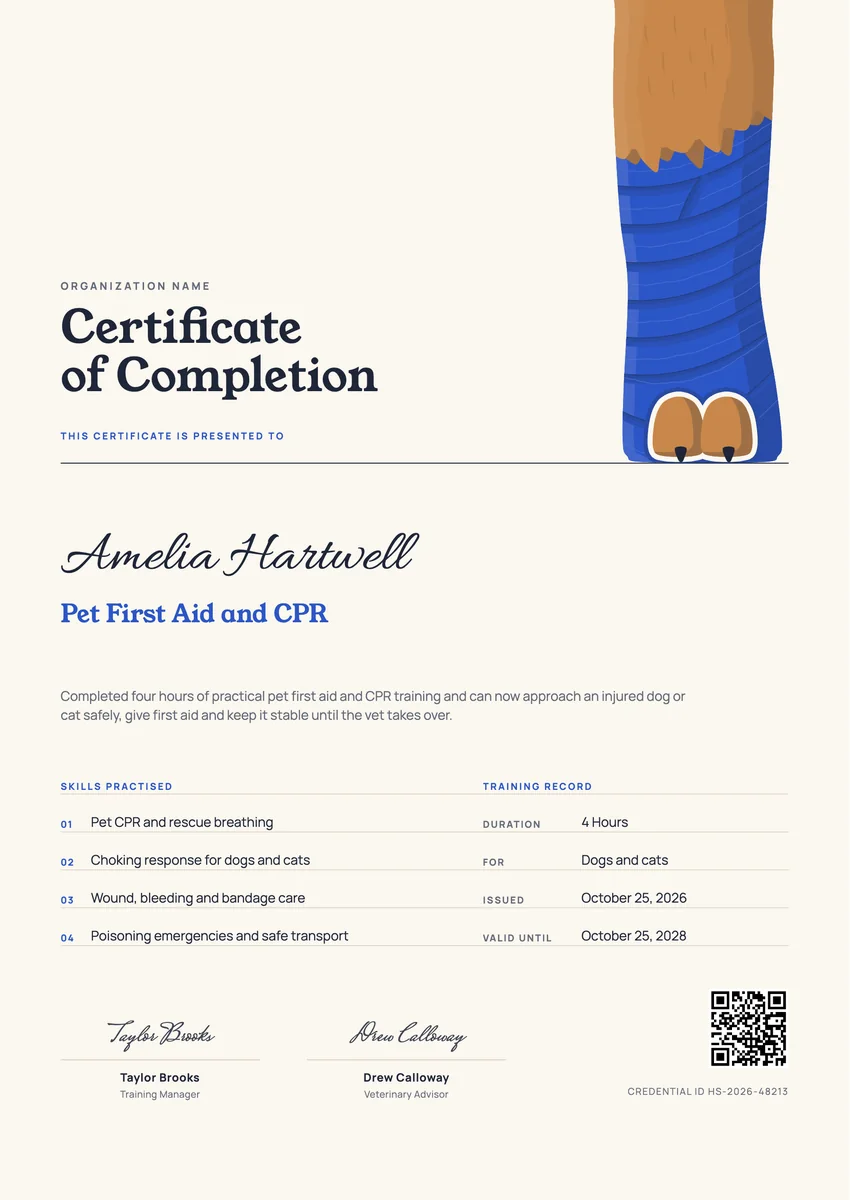
A pet first aid certificate template gives veterinary clinics, animal welfare charities, pet care academies and first aid trainers a clear way to record that someone learned what to do for an injured or sick animal in the minutes before a vet can take over. It goes to dog walkers, groomers, pet sitters, kennel and daycare staff, shelter volunteers and owners at the end of the course.
A good certificate in pet first aid says exactly what was practised: checking breathing and pulse, CPR for dogs and cats, choking, bleeding and bandaging, poisoning, heatstroke and safe transport. It names the course, its hours, the date, the trainer or vet who signed it and, when the provider asks for refreshers, a valid-until date.
The designs here come as certificates in A4 and US Letter and as badges that pet professionals can add to a booking profile, a website or an email signature.
Wording
What to write on a pet first aid certificate
Use these lines as they are, or as a start for your own. Every template comes with wording you can change in the studio.
Wording for a pet first aid and CPR certificate
- “Has successfully completed 4 hours of pet first aid and CPR training.”
- “For learning to assess an injured dog or cat, give CPR, control bleeding and keep the animal stable until a vet takes over.”
- “Awarded on passing the practical assessment of our pet first aid course.”
Lines for staff and volunteer training
- “Has completed pet first aid training as part of our team's animal care standards.”
- “For being ready to act calmly and safely when a pet in our care is hurt or unwell.”
- “Trained in canine and feline first aid for grooming, boarding and daycare settings.”
Short lines for the badge or a profile
- “Pet first aid trained. Ready when it matters.”
- “Certified in dog and cat first aid and CPR.”
Why send it with Hyperstack
More than a PDF
Customize the template free. When it is ready, send it to everyone at once.
One design, every name
Upload a spreadsheet and Hyperstack makes a certificate of completion for each person on it, in one go.
Sent by email
Each recipient gets their own email and link. You see who opened it, downloaded it and shared it.
Anyone can verify it
The QR code opens a page that proves the certificate is real. Recipients add it to LinkedIn in one click.
FAQ
Questions, answered
Most courses teach how to approach and handle an injured animal safely, check breathing, pulse and gum colour, perform CPR on dogs and cats, help a choking pet, control bleeding and apply a bandage, and respond to poisoning, heatstroke, seizures and burns. Many end with how to move the animal and get it to a vet.
Many training providers and employers ask for a refresher every two or three years, because CPR skills fade without practice. When your course has a renewal period, put a valid-until date on the certificate so an employer or client can see at a glance that the training is current.
An online course can teach the theory and earn a certificate of completion. Hands-on skills such as CPR and bandaging are best practised on a training model with an instructor, so say on the certificate whether the course included a practical assessment.
Yes. The animal usually lies on its side, the hand position depends on its size and chest shape, and rescue breaths go into the nose with the mouth held closed. A certificate for pet first aid should name the species the course covered, such as dogs and cats, so it is clear what was practised.
It depends on where they work. Some licensing schemes and many insurers, agencies and clients expect it, and in places where it is not required it still shows owners that the person knows what to do in an emergency.
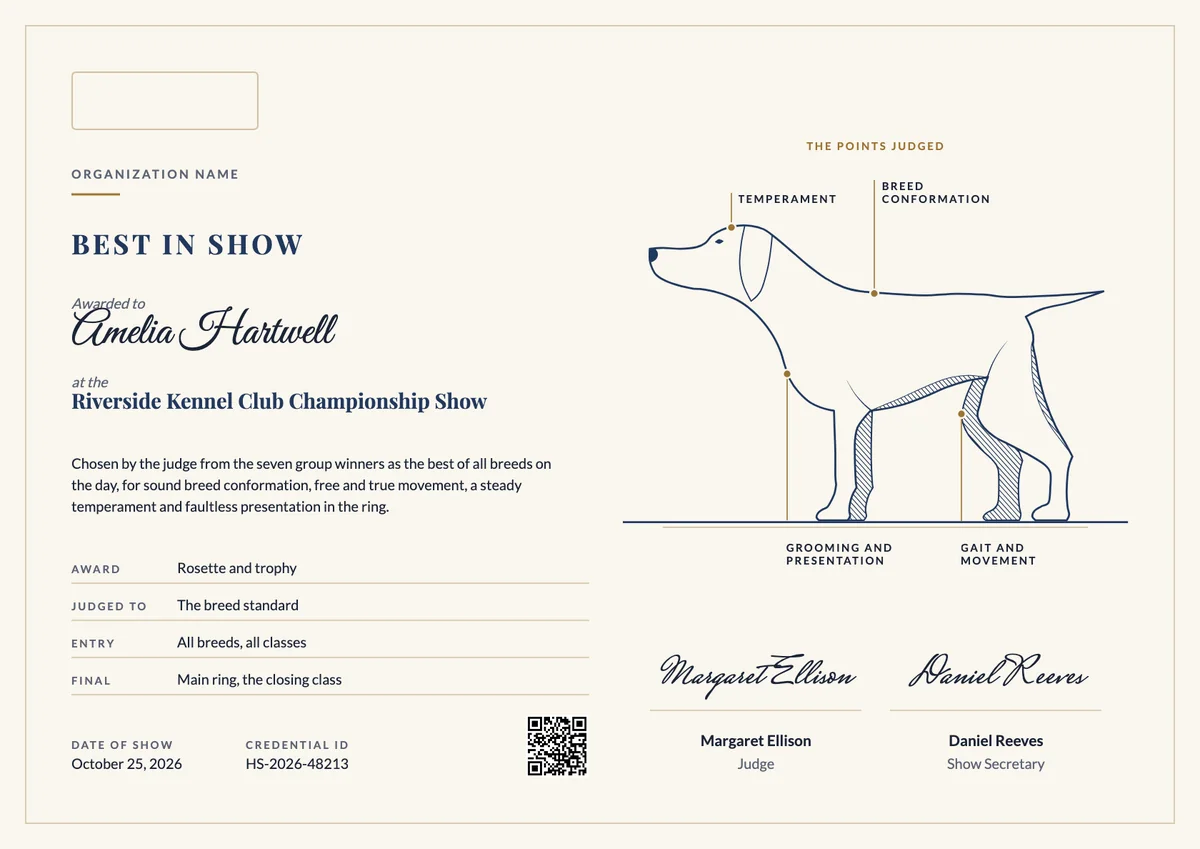

Your next cohort deserves better than a PDF
Set up in minutes, send your first credentials today, and only pay once you grow past 20 recipients a year.
Or open a live sample credential