Safeguarding certificate templates and badges
3 free designs. A set is one design as a badge, a landscape or a portrait certificate, or all three.
Free for up to 20 recipients a year
Circle Of Care set
Badge · Landscape · Portrait
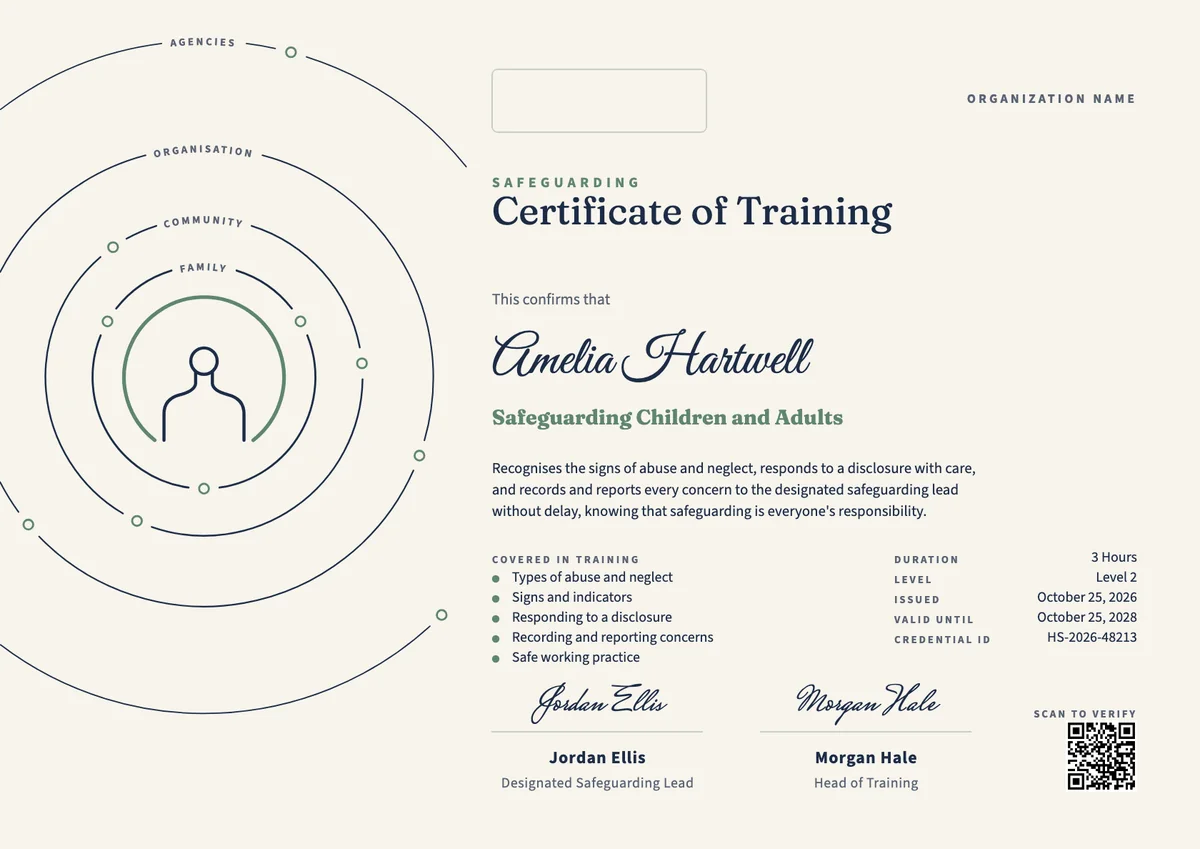
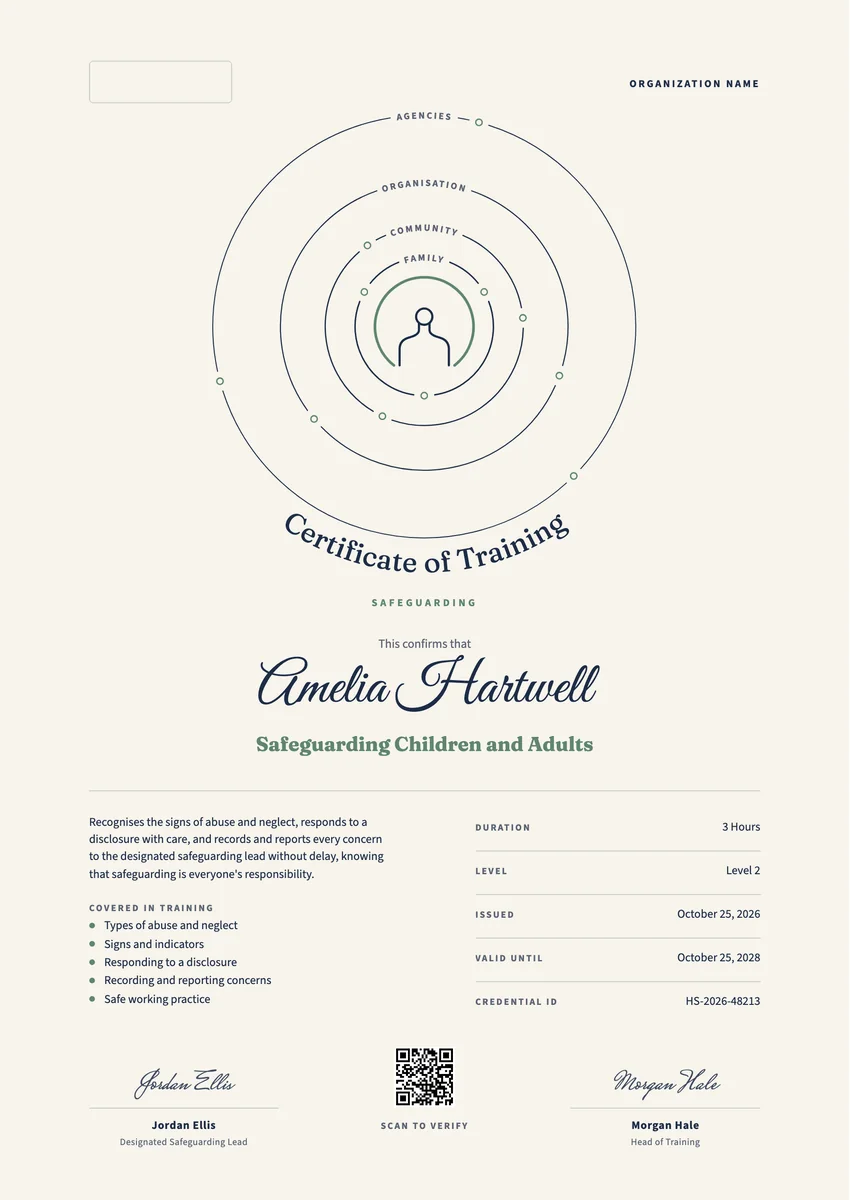
A safeguarding certificate template gives schools, nurseries, care providers, charities, sports clubs and faith groups a clear record that a member of staff or a volunteer has finished their safeguarding training. It is usually given at induction and again after each refresher, and it is one of the first documents an inspector, a funder or a parent may ask to see.
A good certificate says which course was completed and at what level, what it covered (the types of abuse and neglect, the signs to look for, how to respond to a disclosure and how to report a concern), how long it took, when it was issued and when it should be renewed. It carries a signature from the designated safeguarding lead or the head of training.
The designs come as certificates in A4 and US Letter and as badges that staff can show on their profiles.
Wording
What to write on a safeguarding certificate
Use these lines as they are, or as a start for your own. Every template comes with wording you can change in the studio.
Wording for a safeguarding training certificate
- “This confirms that the above has completed Safeguarding Children and Adults training at Level 2.”
- “Has completed training in recognising, responding to and reporting safeguarding concerns.”
- “For completing safeguarding and child protection training as part of staff induction.”
Statements for a child protection certificate
- “Recognises the signs of abuse and neglect and knows how to pass a concern to the designated safeguarding lead without delay.”
- “Understands that keeping children safe is everyone's responsibility and follows safe working practice at all times.”
- “Can respond to a disclosure calmly, listen without leading, and record exactly what was said.”
Short lines for the badge or the email
- “Safeguarding trained, Level 2.”
- “Trained to keep children and adults safe.”
Why send it with Hyperstack
More than a PDF
Customize the template free. When it is ready, send it to everyone at once.
One design, every name
Upload a spreadsheet and Hyperstack makes a training certificate for each person on it, in one go.
Sent by email
Each recipient gets their own email and link. You see who opened it, downloaded it and shared it.
Anyone can verify it
The QR code opens a page that proves the certificate is real. Recipients add it to LinkedIn in one click.
FAQ
Questions, answered
Many organisations use three levels. Level 1 is basic awareness for everyone, Level 2 is for staff and volunteers who work directly with children or adults at risk, and Level 3 is for designated safeguarding leads and those who coordinate a response. Stating the level helps a manager or inspector see which course was done.
It depends on the sector and the role. Many employers ask for a refresher every two to three years, and designated safeguarding leads in English schools update their training at least every two years. A valid-until date on the certificate makes the renewal easy to track.
It is common for in-house training. The designated safeguarding lead signs, often with the trainer or the head of training. For an external course, the training provider signs and the employer keeps a copy in the staff file.
No. A DBS check, or a background check in other countries, looks at a person's criminal record. A safeguarding certificate shows that they have been trained to recognise and report concerns. Roles with children or adults at risk usually need both.
Yes, when they work with children or adults at risk. Clubs, charities and churches usually ask volunteers to complete the same training as paid staff, and a certificate gives both the volunteer and the organisation a record of it.
More certificate templates
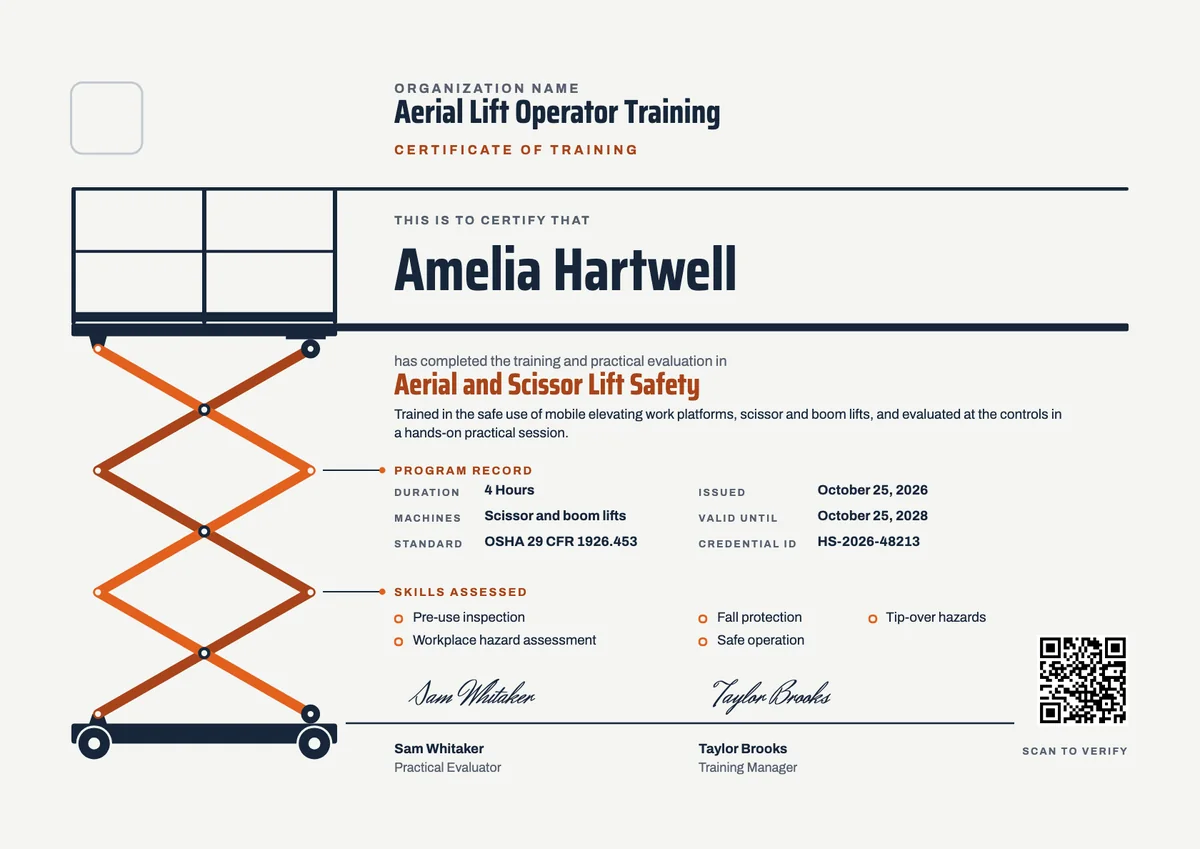
Your next cohort deserves better than a PDF
Set up in minutes, send your first credentials today, and only pay once you grow past 20 recipients a year.
Or open a live sample credential