Scaffolding Safety certificate templates and badges
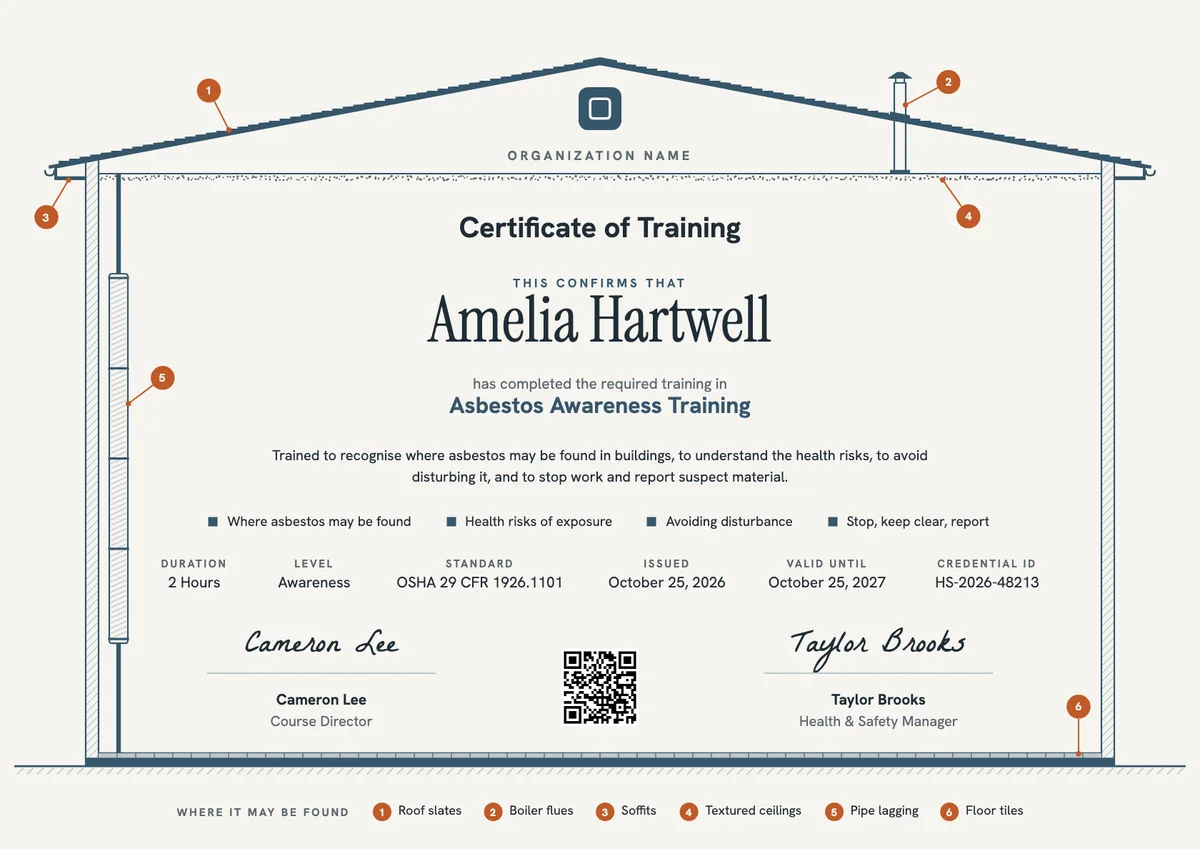
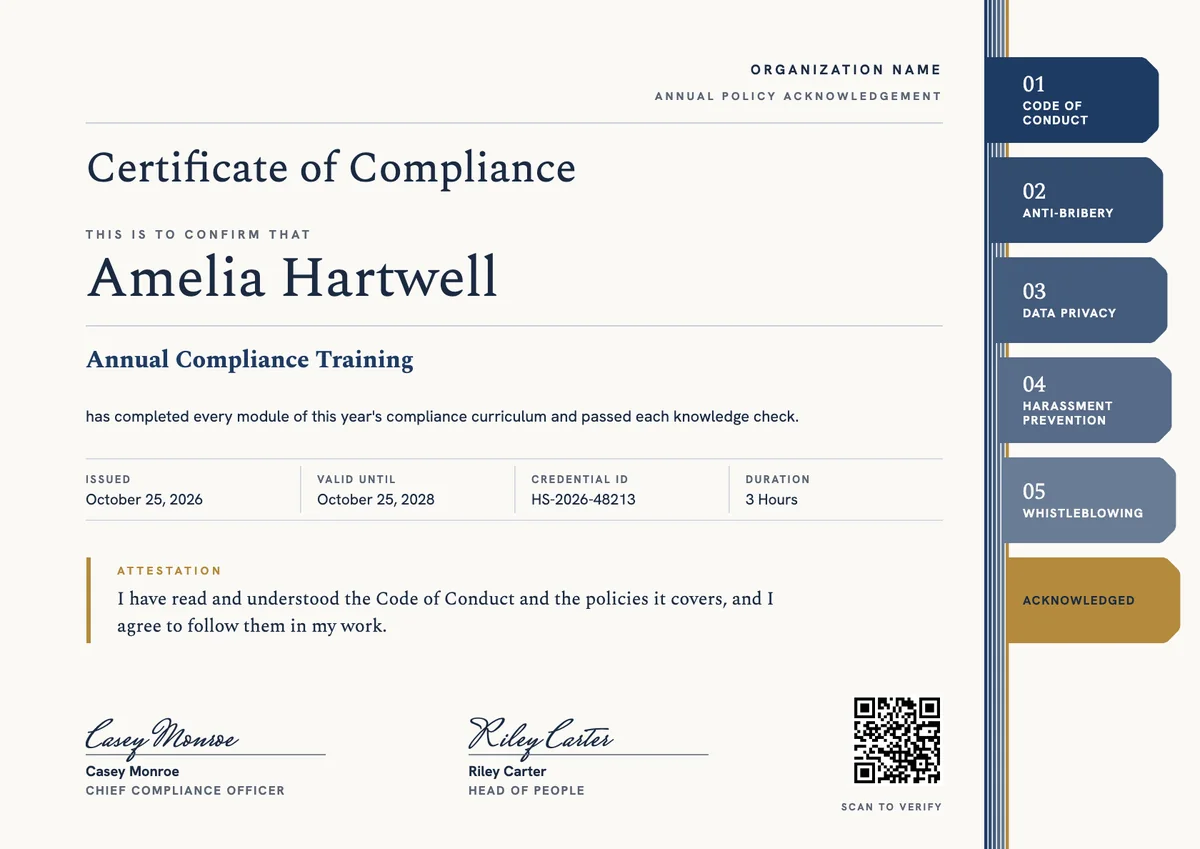
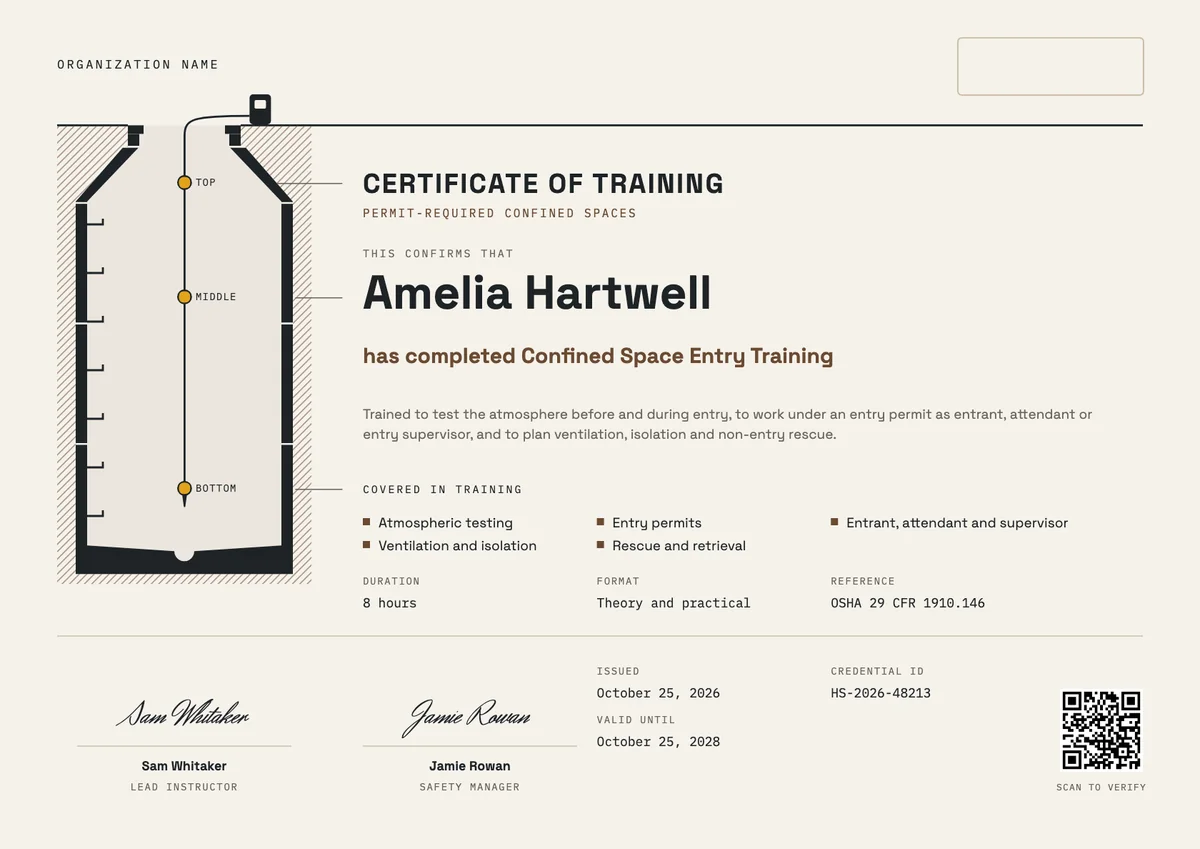
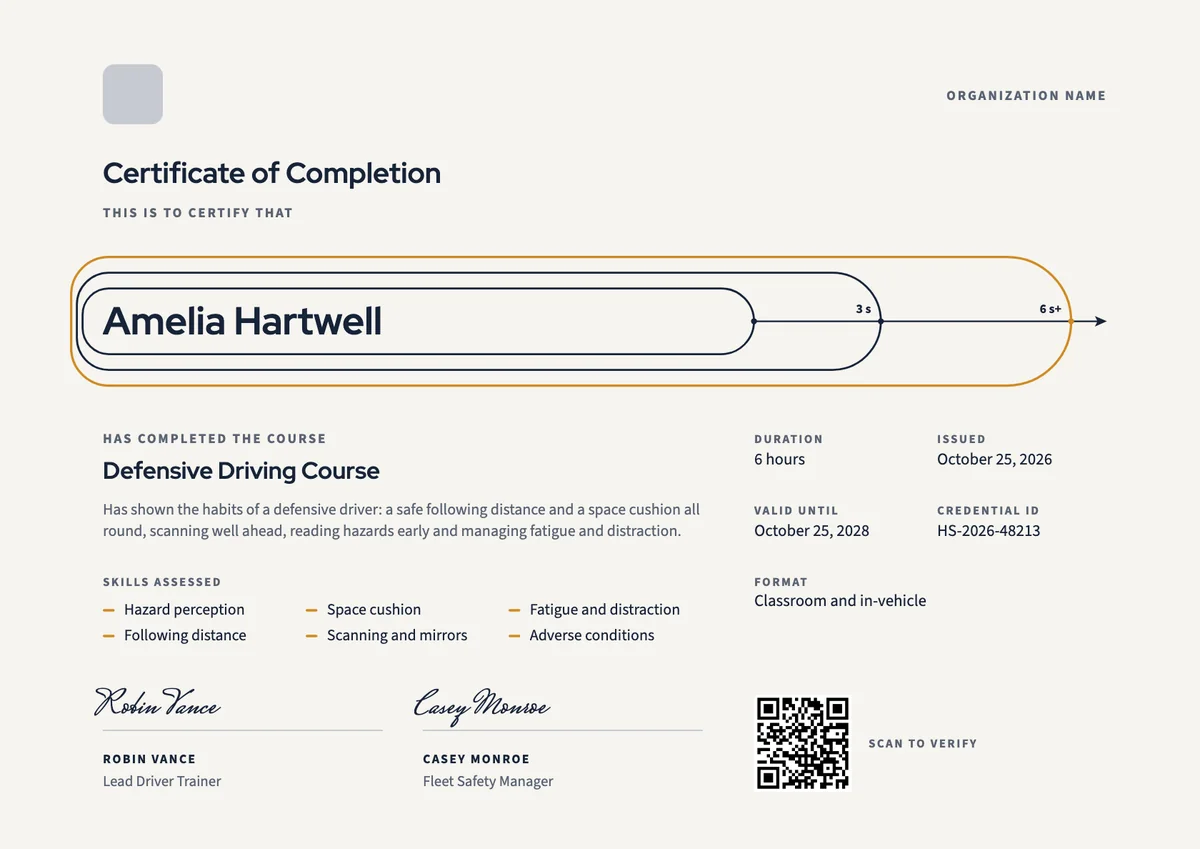
3 free designs. A set is one design as a badge, a landscape or a portrait certificate, or all three.
Free for up to 20 recipients a year
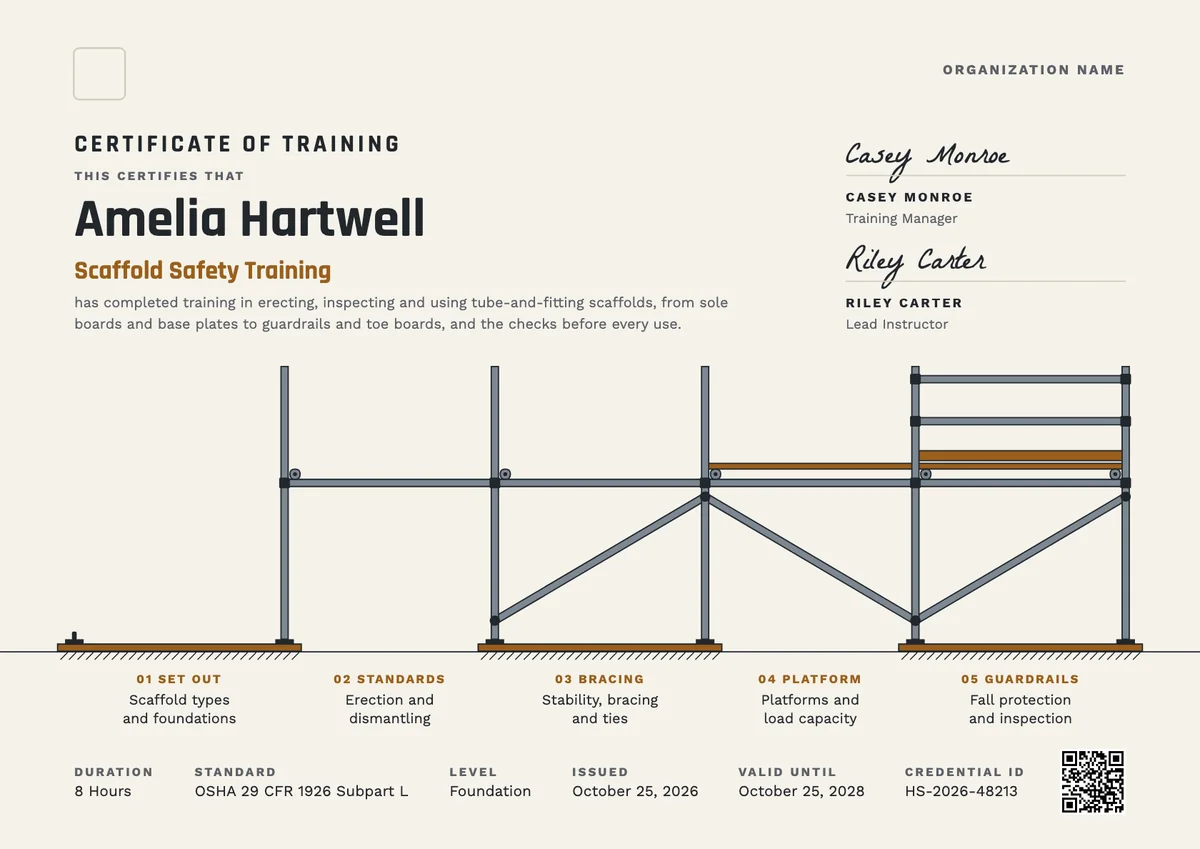
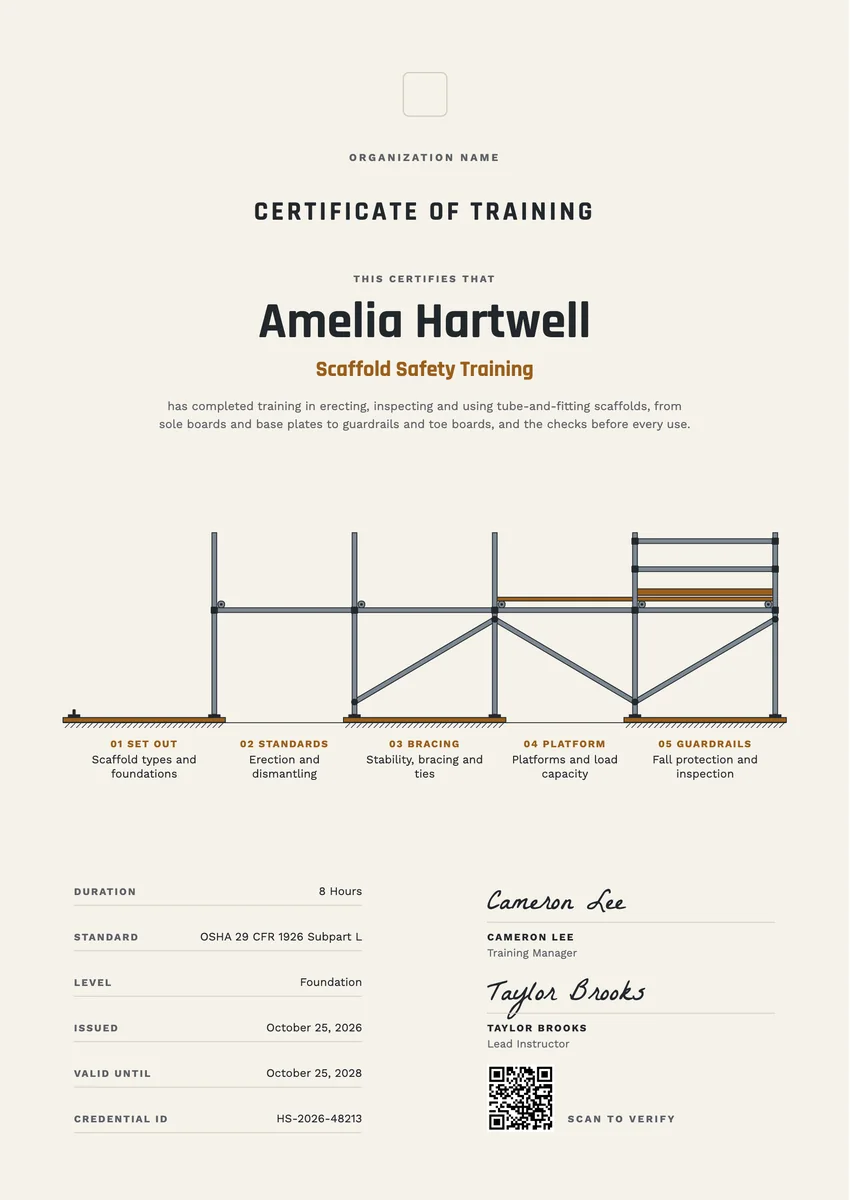
A scaffolding certificate template gives an employer or a training provider a clear record that a worker has finished scaffold safety training. Construction contractors, scaffolding firms, plant maintenance and shutdown teams, and facilities departments give one to erectors, to the trades who work from the platforms and to the supervisors who inspect them, after the first course and after each refresher.
A good certificate for scaffolding names the worker, the course and who ran it, and says what the training covered: scaffold types and foundations, erection and dismantling, bracing and ties, platforms and load capacity, guardrails and toe boards, and the inspection before use. Add the duration, the issue date, a valid-until date and the trainer's signature. It records training; it is not a scaffolder's card, a licence or a scaffold tag.
The designs come as certificates in A4 and US Letter and as digital badges for a worker's profile.
Wording
What to write on a scaffolding safety certificate
Use these lines as they are, or as a start for your own. Every template comes with wording you can change in the studio.
Wording for a scaffold safety training certificate
- “Has completed scaffold safety training and can check a scaffold before use, work within its load rating and report a defect.”
- “For completing training in erecting, inspecting and using tube-and-fitting scaffolds, from sole boards to guardrails.”
- “Has completed the scaffold safety refresher course.”
Wording for a scaffold certificate by role
- “Has completed scaffold user training and can safely access, work from and check a scaffold before each use.”
- “Has completed scaffold inspection training and can inspect a scaffold, record the result and take it out of use when it is unsafe.”
- “Has completed training in the erection, alteration and dismantling of system scaffolds under supervision.”
Short lines for the badge or the email
- “Scaffold safety trained. Check the tag, the boards and the rails before you climb.”
- “Trained to work from a scaffold, and to know when not to.”
Why send it with Hyperstack
More than a PDF
Customize the template free. When it is ready, send it to everyone at once.
One design, every name
Upload a spreadsheet and Hyperstack makes a training certificate for each person on it, in one go.
Sent by email
Each recipient gets their own email and link. You see who opened it, downloaded it and shared it.
Anyone can verify it
The QR code opens a page that proves the certificate is real. Recipients add it to LinkedIn in one click.
FAQ
Questions, answered
Only workers who are trained for that type of scaffold, working under the supervision of a competent person who plans the job and checks the result. They follow the scaffold's design or the maker's instructions for system scaffolds. A course for scaffold users teaches people to work from a scaffold safely; it does not qualify them to put one up or change it, so the certificate should say which course the person took.
It is inspected before first use, after any alteration and after anything that could weaken it, such as high winds, heavy rain or an impact. Many rules also set a routine interval: in the US, a competent person inspects it before each work shift, and in the UK at least every seven days. Each inspection is recorded, and a scaffold with a defect is taken out of use until it is put right.
Many sites hang a tag at each access point to show the result of the last inspection. In a common system, green means inspected and safe to use, red means do not use, and yellow means use only with stated conditions, such as wearing a harness. The tag usually shows the date, the inspector's name and the scaffold's duty. Colours and rules differ between companies and countries, so training should teach the system your site uses.
Look for a current tag or inspection record, safe access by a ladder or stair, platforms that are fully boarded and not damaged, and guardrails and toe boards on every open side. Check that the base plates sit on firm sole boards, that braces and ties are still in place, and that nothing has been removed or added. If anything is wrong, do not use the scaffold or try to fix it yourself: report it.
It is the load each platform is designed to carry: the people, their tools and the materials stored on it. A light duty scaffold suits inspection or painting, while bricklaying with stacked blocks needs a heavier duty. Workers should know the rating of the scaffold they use, spread materials out rather than stacking them in one place, and never load a platform beyond its rating.
No. A scaffold tag belongs to one scaffold and shows its last inspection. A scaffolder's card is issued by an industry card scheme after its own training and assessment. This certificate is your organisation's record that a person completed your course, with what it covered and when a refresher is due.
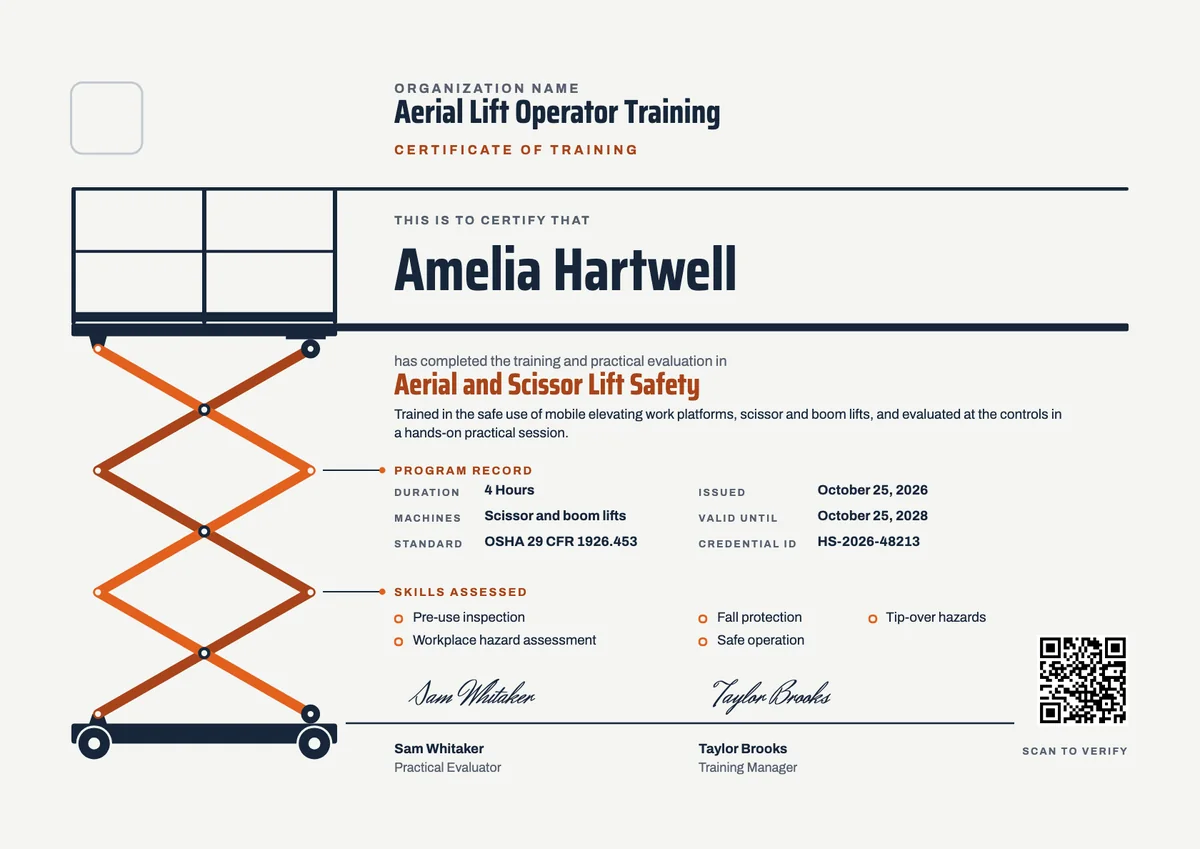
Your next cohort deserves better than a PDF
Set up in minutes, send your first credentials today, and only pay once you grow past 20 recipients a year.
Or open a live sample credential