Institutions rarely decide to build a credential system.
They decide to issue a certificate. Then another. Then a digital version. Then someone asks how it can be verified. Then an employer asks again, but faster this time. Then a learner returns years later asking where their credential went.
That is when the quiet shift happens.
Issuing credentials stops being an administrative step and becomes infrastructure.
By 2026, the real decision institutions face is not whether to issue digital credentials. It is whether they are prepared to own the long-term responsibility that comes with managing a digital credential system over time.
For most institutions, that responsibility narrows to two paths.
Build and manage an internal credential system, or use a dedicated digital credential platform.
This article is not here to explain what each option is. It is here to help you decide which one is more likely to fail under real-world pressure, and what to do next once that decision can no longer be postponed.
Before looking at systems and platforms, it helps to understand why this choice carries more weight than it appears at first.
Why this decision matters more than institutions expect
Digital credentials are no longer just proof of completion. They are proof of legitimacy.
Employers rely on them to filter candidates. Universities rely on them for admissions and articulation. Governments and regulators increasingly expect them to be verifiable, auditable, and durable.
Digital credential systems now sit at the intersection of trust, compliance, and reputation.
The wrong choice rarely breaks immediately. It breaks quietly, years later, when reversing course is expensive and politically difficult.
That is why this decision deserves more than a feature comparison.
What institutions usually mean by an Internal or In-house credential system
An internal or in-house credential system is rarely a single, well-defined product. It is usually a collection of decisions made over time.
A database holds credential records. A template generates certificates. Emails deliver them. Verification happens through a web page, a contact email, or manual confirmation. Integrations tie credentials closely to an LMS or student information system. From the inside, this feels controlled and efficient.
Teams know how it works, and changes feel manageable.
What is easy to miss is that the system’s reliability depends entirely on internal continuity. People, infrastructure, and priorities must stay aligned long after the credential is issued.
A wise credential issuer once said, “Credentials do not expire when systems change; they fade the first time a learner returns, years later, seeking proof.”
But that observation captures the hidden risk most institutions only see after it is too late.
A digital credential platform starts from a different assumption.
Credentials are long-lived records that will be accessed, shared, and verified by people who have no relationship with your institution. They must survive system upgrades, staff turnover, and changing policies.
Because of that, platforms focus on the full credential lifecycle. Issuance, hosting, verification, metadata integrity, revocation, reissuance, learner access, and long-term availability are treated as one continuous responsibility.
The institution remains the issuer. The digital credentialing platform carries the operational weight.
That difference becomes visible only when things start to go wrong.
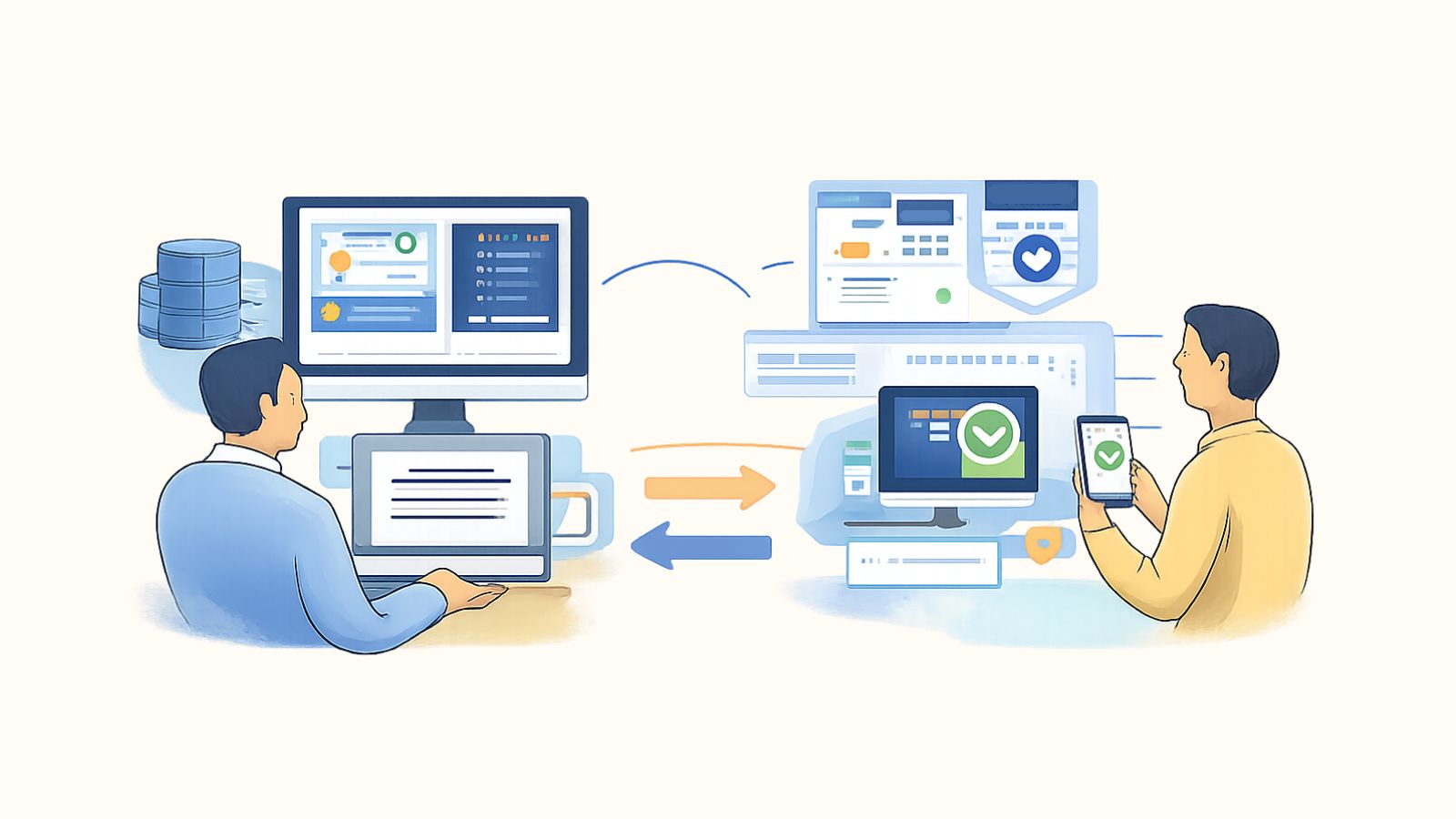 If your institution is ready to evaluate how credential verification, access, and long-term continuity would work in practice, you can schedule a quick free demo with Hyperstack to see how a digital credential platform supports these decisions without disrupting your existing systems.
Our experts will be happy to answer your queries and propose the right credential strategy for your organization.
Digital credential verification is where trust is won or lost
Digital credential verification is the first real stress test.
Verification is almost never performed by the issuing institution. It is performed by employers, admissions teams, background check agencies, or government bodies.
These verifiers usually do not want explanations but certainty.
In-house verification often relies on static documents, internal URLs, or manual confirmation. Even when credentials are legitimate, the process introduces friction and doubt.
Platform-based verification on the other hand, removes interpretation. Credentials can be verified instantly, issuer identity is clear, status is visible, and changes are reflected in real time.
Trust is not built through reassurance. It is built when nothing feels questionable.
How scalability quietly turns convenience into operational drag
Our blog on Digital credential scalability is a great place to start before we take a deep dive into this aspect of credentials.
Like all complex infrastructure with multiple moving parts, issuing credentials at scale rarely fails loudly.
In-house systems tend to work well at low volume. As issuance grows, the cost appears in maintenance, not in budget lines.
Engineering time is spent maintaining certificate logic. Security updates become recurring. Support requests for access, corrections, and verification accumulate. Each task feels small. Together, they compete with core institutional priorities.
Digital credential platforms are designed for scale by default. Infrastructure adapts automatically. Updates are centralized. Standards alignment continues without internal intervention.
The difference shows up in daily workload and long-term sustainability, not in initial setup effort.
Credential security and compliance are no longer edge concerns
Credential security is no longer optional in 2026.
Digital credentials now intersect with data protection regulations, audits, and external scrutiny. Institutions are increasingly asked to demonstrate not just issuance, but governance.
In-house systems rely entirely on internal practices. Audit trails, access controls, revocation history, and data retention must all be designed and maintained deliberately.
Gaps often surface only when questioned externally.
Digital credential platforms typically embed these requirements into their architecture. Role-based access, activity logs, and secure hosting are standard expectations.
This does not remove responsibility. It aligns it with realistic institutional capacity.
If credential security and compliance are topics that interest you, here's an interesting read:
How Secure Are Digital Credentials? A Practical Guide for EDU and Enterprise from our blog series.
The learner experience is part of credential value
Credentials do not live in institutional systems. They live with learners.
In-house systems often bind credentials to a single email address or portal. Years later, access becomes difficult. Recovery requires support. Sharing feels awkward.
Each friction point reduces usage. Reduced usage reduces visibility. Reduced visibility weakens perceived value.
Digital credential platforms treat learners as long-term holders. Credentials remain accessible, portable, and easy to share. Status is always clear.
When learners use credentials confidently, institutions benefit indirectly through wider recognition and trust.
Cost comparisons that mislead institutions
Cost is often where this decision gets oversimplified.
In-house systems appear cheaper upfront because costs are spread across internal teams. Platform costs are visible and explicit.
Over time, the equation reverses.
In-house costs accumulate through maintenance, infrastructure, security management, and support. These costs are uneven and difficult to forecast.
Platform costs are predictable. Infrastructure, updates, security, and support are bundled into a known commitment.
For institutions planning beyond a single budget cycle, predictability often matters more than perceived savings.
Take a minute to look at our in-depth analysis into the Top 15 Digital Credential Software tools in 2025, from our blog series.
How to know which option fits your institution
Most institutions are not choosing in theory. They are choosing under constraints. Before deciding, it helps to answer a few direct questions.
If most of the following are true, an in-house system is likely to become a burden within two to three years:
- Credentials must be verified by employers or external bodies.
- More than one department issues credentials.
- Learners return after completion asking for access.
- Credential volume is expected to grow year over year.
- Compliance or audits are part of the environment.
If more than any three of these apply to your organization, the issue is not whether your in-house system can work today. It is whether it will remain credible when pressure increases, say 5 or 10 years down the line.
In-house systems tend to remain viable when credentials are few, rarely verified externally, and tightly controlled within a single program.
This reframes the decision from preference to fit.
 Where institutions regret in-house decisions
Institutions that move away from in-house systems often do so for the same reasons.
The first is verification fatigue. What starts as occasional confirmation requests becomes an ongoing operational task.
The second is credential decay. Links break, systems change, and older credentials quietly become unverifiable. Learners notice first. Employers notice later.
The third is compliance pressure. When asked to demonstrate audit trails or revocation history, institutions realize their system was never designed for scrutiny.
These issues rarely appear in year one. They appear when reversing course is costly.
A practical transition path institutions actually follow
Very few institutions switch systems overnight.
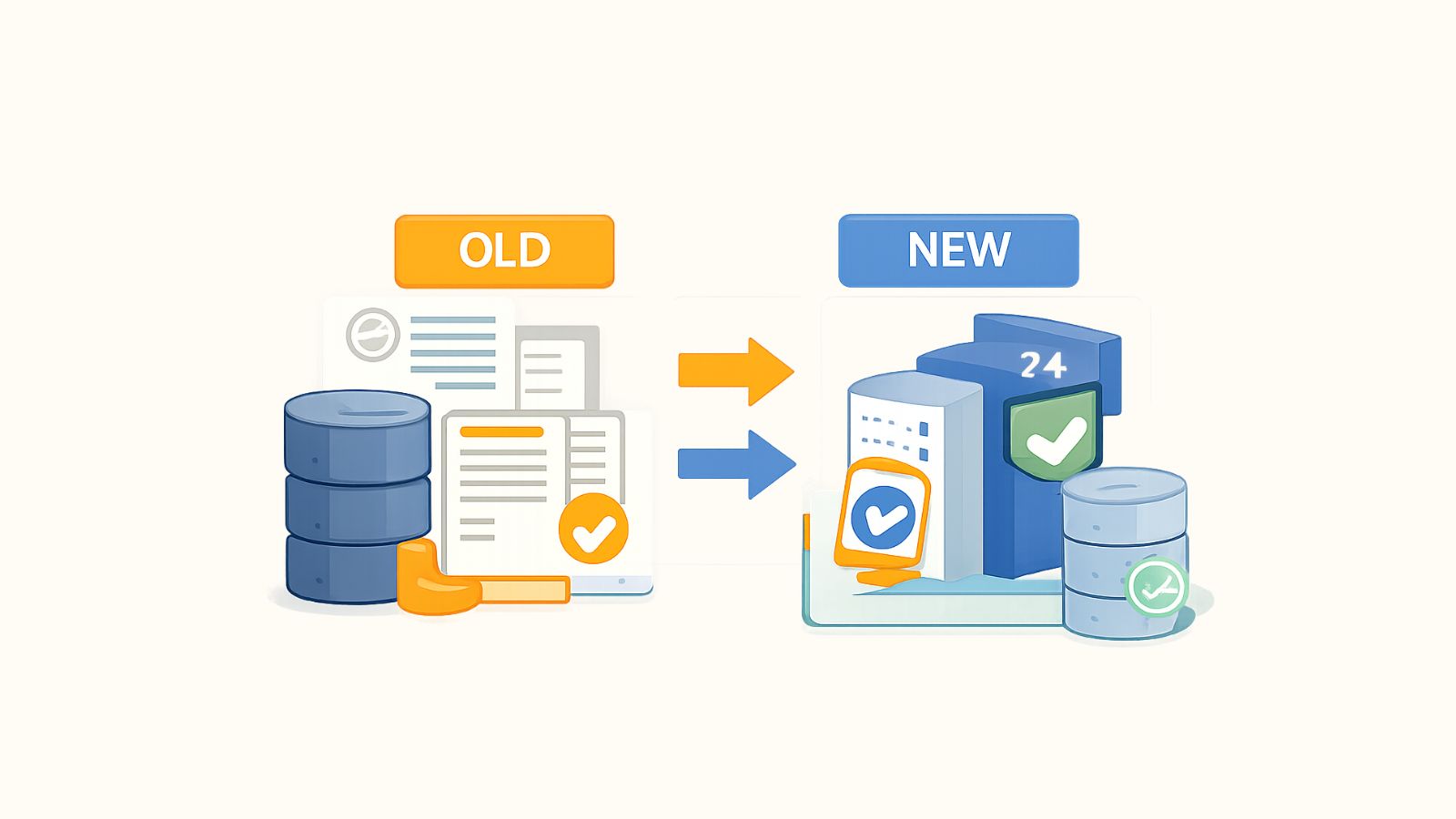
Most begin by issuing new credentials on a digital credential platform while leaving legacy credentials untouched. Verification is redirected gradually. Older credentials are migrated selectively based on demand.
This phased approach avoids disruption, reduces internal resistance, and allows teams to learn platform workflows before scaling.
Institutions that attempt immediate full migration often struggle. Those that transition gradually preserve trust and momentum.
Making the right credential decision with a five-year lens
The most useful way to decide is not to compare features. It is to project responsibility.
Ask which option you are prepared to maintain when teams change, systems evolve, credential volume doubles, and external scrutiny increases.
If maintaining verification, access, and compliance internally still feels realistic, an in-house system may work.
If not, the platform decision becomes less about convenience and more about risk containment.
This is the lens institutions return to when leadership revisits the question again.
The wrong reasons institutions make this choice
Institutions choose in-house systems because they appear cheaper. That is rarely the full cost.
Institutions choose platforms because they want speed. That can backfire if governance is ignored.
Understanding why not to choose an option often prevents regret more effectively than understanding why to choose it.
Final guidance for institutions planning for 2026
Digital credentials are no longer documents. They are signals of trust.
The systems behind them will be judged quietly, through ease of verification, continuity of access, and absence of friction.
Choosing between a digital credential platform and an in-house system is not a technical fork. It is a stewardship decision. And a stewardship tends to last longer than any implementation.
When the next step is to move from theory to clarity, taking a closer look at how credential platforms handle issuance, verification, and long-term access can be priceless. Schedule a free demo with Hyperstack for a short walkthrough of how to manage your credential lifecycle, access, and verification at your convenience.
Our experts will be glad to assist you and translate your credential strategy into practical next steps!
Frequently Asked Questions
1.Is a digital credential platform mandatory?
No, but it significantly reduces long-term operational and trust risk.
2.Can institutions switch systems later?
Yes, though migration becomes more complex as credential volume grows.
3.Do platforms reduce internal workload?
In most cases, yes, by removing ongoing maintenance and verification tasks.
4.Will employers trust platform-issued credentials more?
Generally, yes, because verification is simpler and clearer.
5.Can an institution run both an in-house system and a digital credential platform at the same time?
Yes, and many institutions do.
A hybrid approach is often used during transition periods. New credentials are issued through a platform, while legacy credentials continue to live in the in-house system. Over time, high-demand or frequently verified credentials are migrated first. This reduces disruption and avoids forcing a rushed decision.
6.What happens to credentials if a digital credential platform is discontinued?
Reputable platforms design credentials to remain verifiable even if the issuing institution changes systems. The critical factor is data portability and standards alignment. Institutions should confirm upfront how credential data can be exported, preserved, or rehosted if needed. This is less about the platform and more about governance choices made early.
7.Are digital credential platforms suitable for regulated or government-linked programs?
In many cases, they are better suited than in-house systems. Platforms are typically built with audit trails, access controls, and verification logs that regulators expect. In-house systems can meet these requirements, but doing so consistently requires sustained internal investment and oversight.
8.How do digital credentials impact employer trust compared to traditional certificates?
Employers tend to trust credentials that are easy to verify without explanation. When verification is instant, consistent, and clearly tied to the issuer, confidence increases. Traditional certificates often require follow-up or interpretation, which weakens trust even when the credential itself is legitimate.
9.When is the worst time to switch credential systems?
The worst time is usually during peak issuance periods or immediately after a compliance issue surfaces. Switching under pressure leads to rushed decisions and incomplete migrations. Institutions that plan transitions during stable periods retain control and minimize risk.