Ethical Hacking certificate templates and badges
3 free designs. A set is one design as a badge, a landscape or a portrait certificate, or all three.
Free for up to 20 recipients a year
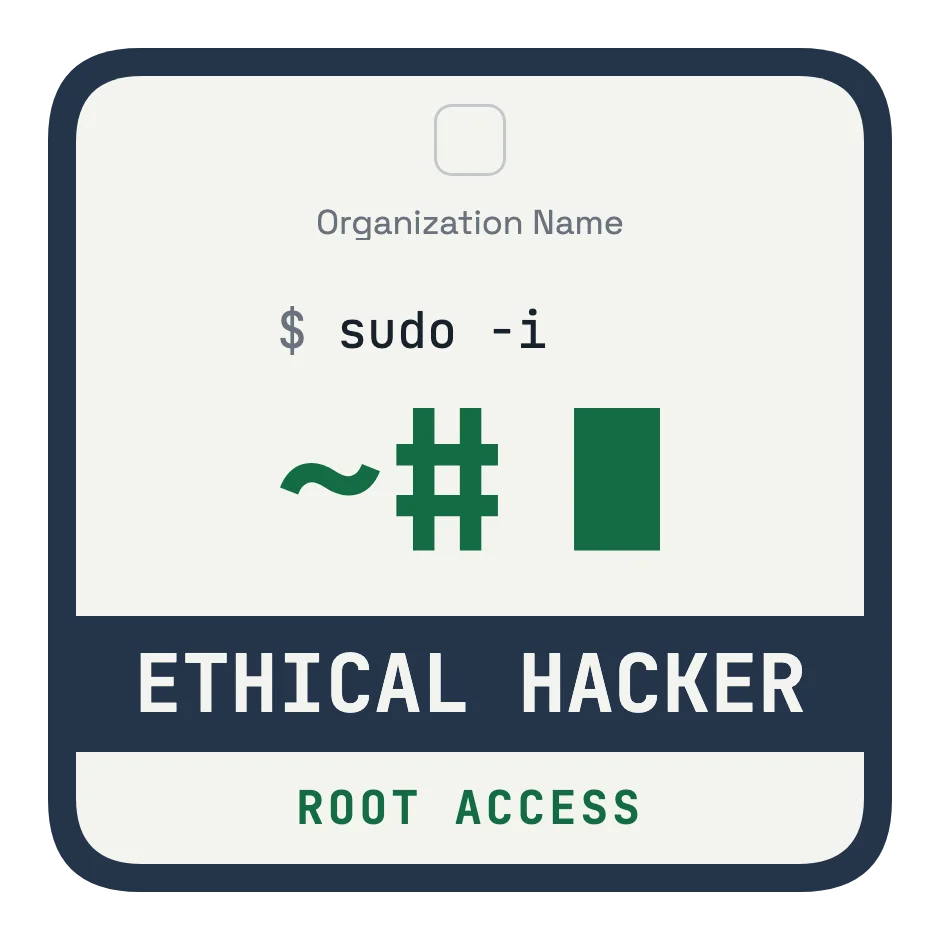
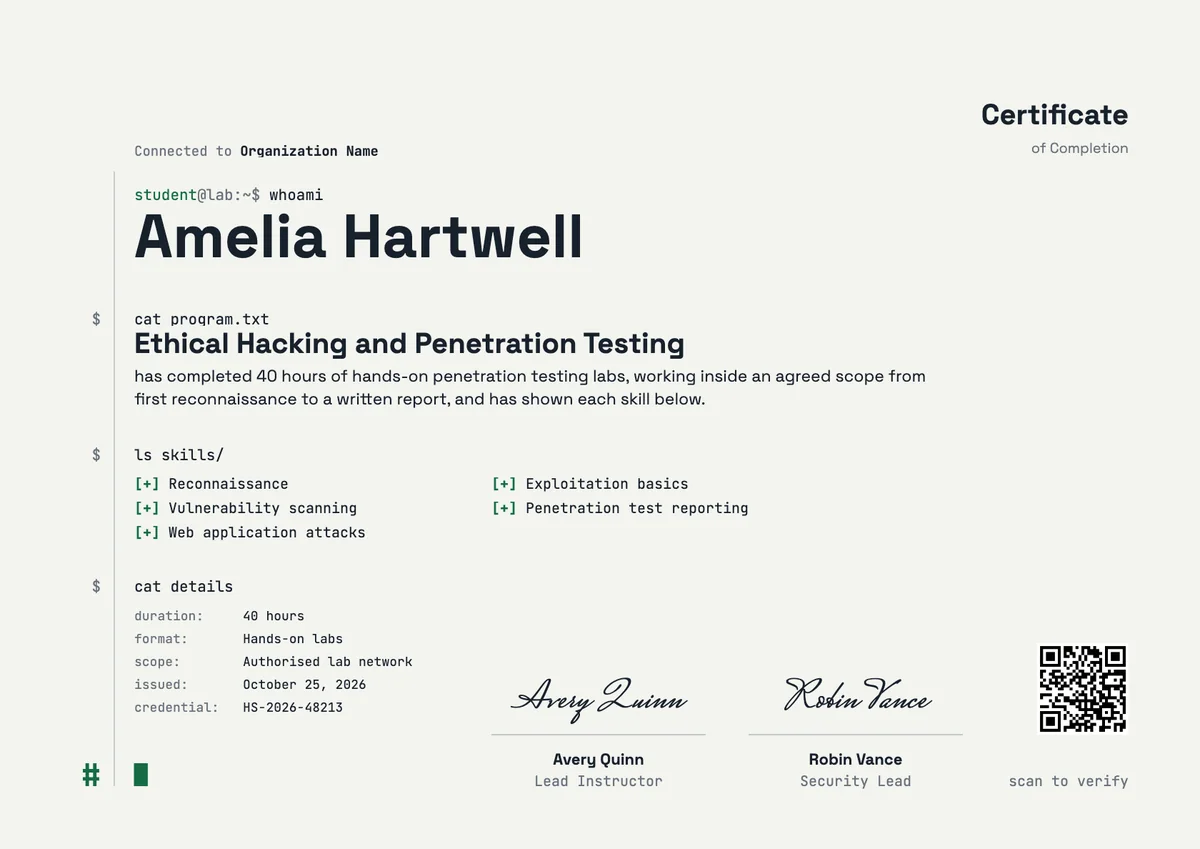
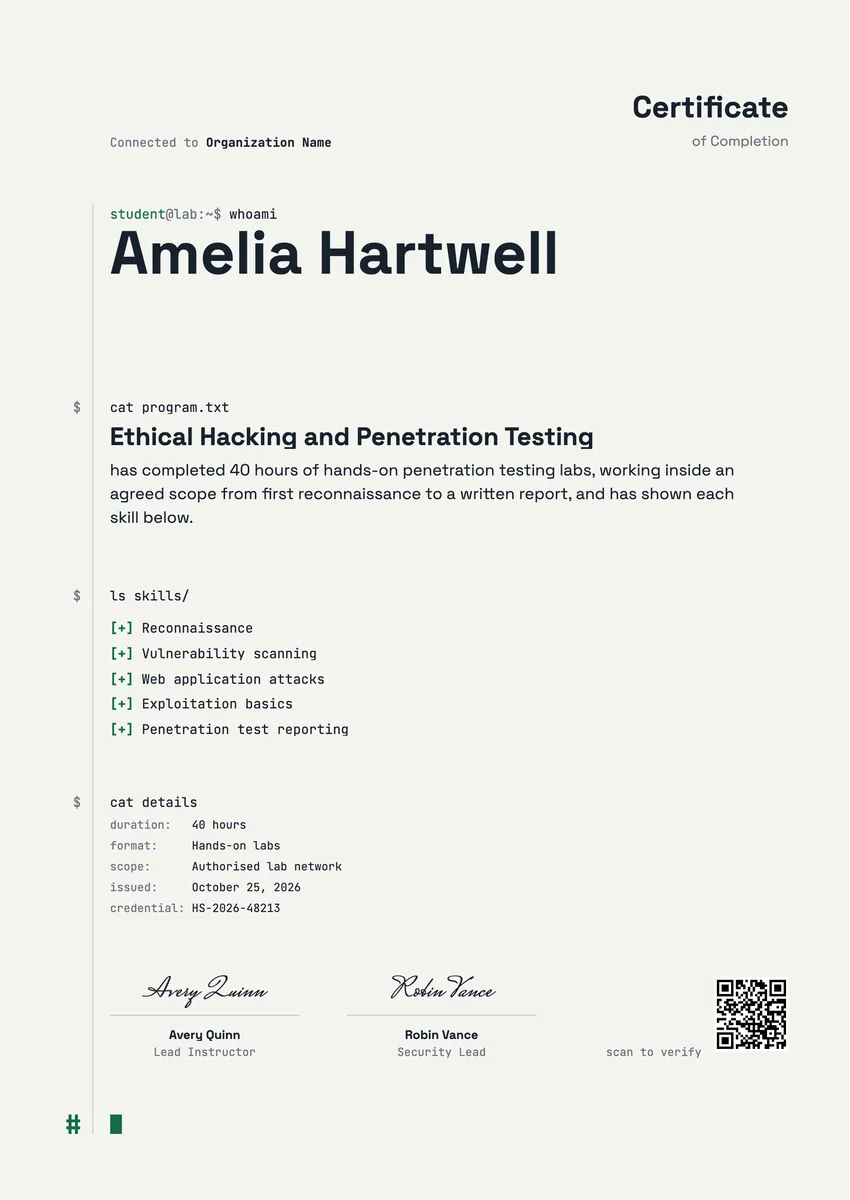
An ethical hacking certificate template gives security trainers a ready layout for the day a learner finishes their labs. Cybersecurity academies, universities, bootcamps and company red teams award it at the end of an ethical hacking course, once the learner has tested systems with permission, inside an agreed scope, and written up what they found.
A good certificate shows what the person can actually do: reconnaissance, vulnerability scanning, web application attacks, basic exploitation and a clear penetration test report. It also gives the course length, the issue date, a credential ID and the signature of an instructor or security lead, so an employer can check it.
The designs come as certificates in A4 and US Letter and as digital badges that learners can add to LinkedIn, a CV or a capture-the-flag profile.
Wording
What to write on a ethical hacking certificate
Use these lines as they are, or as a start for your own. Every template comes with wording you can change in the studio.
Wording for a certificate for ethical hacking training
- “For completing 40 hours of hands-on penetration testing labs, from first reconnaissance to a written report.”
- “Has shown the skills to find, exploit and report security weaknesses within an authorised scope.”
- “In recognition of completing the Ethical Hacking and Penetration Testing program and its final lab assessment.”
Statements for a penetration testing certificate
- “Has completed a full test of a lab network: scoping, scanning, exploitation and a client-ready findings report.”
- “For responsible, permission-based testing of web applications and network services.”
- “Has escalated privileges on the lab targets and documented every step for remediation.”
Short lines for the badge or the email
- “Got root. Course complete.”
- “Ethical Hacking and Penetration Testing: passed.”
Why send it with Hyperstack
More than a PDF
Customize the template free. When it is ready, send it to everyone at once.
One design, every name
Upload a spreadsheet and Hyperstack makes a certificate of completion for each person on it, in one go.
Sent by email
Each recipient gets their own email and link. You see who opened it, downloaded it and shared it.
Anyone can verify it
The QR code opens a page that proves the certificate is real. Recipients add it to LinkedIn in one click.
FAQ
Questions, answered
Most courses follow the phases of a real penetration test: reconnaissance, scanning and enumeration, gaining access, privilege escalation and reporting. Many add web application testing and a short module on law and rules of engagement. The certificate is normally issued after the learner completes the labs or a practical exam.
No. A course certificate records that someone finished your training and met its requirements. Industry certifications such as CEH or OSCP come from their own bodies, with their own exams. Word your certificate so it names your program and does not suggest it is one of those credentials.
It helps. A line such as working inside an agreed scope or on an authorised lab network shows that the skills were practised legally and with permission, which is the core of ethical hacking. Employers and clients look for that point.
List the skills on the certificate, such as scanning, web application testing and exploitation, and name tools only in the statement if the course was built around them. Tools change and are replaced, while the skills stay meaningful. An employer reads the skill list first.
Introductory courses often run 20 to 40 hours. Longer programs with a capstone engagement can run for several weeks. Put the real number of hours on the certificate so the reader can judge the depth of the training.
More certificate templates
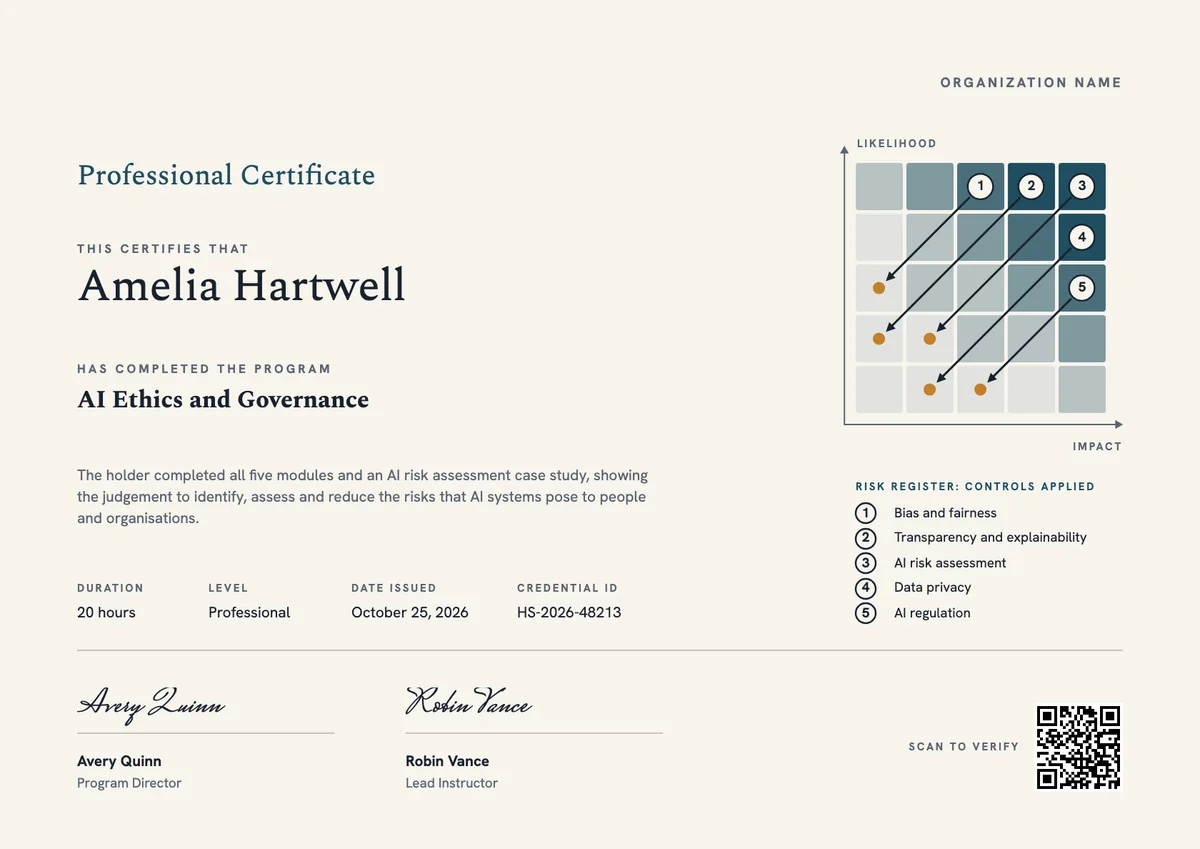
Your next cohort deserves better than a PDF
Set up in minutes, send your first credentials today, and only pay once you grow past 20 recipients a year.
Or open a live sample credential