JavaScript certificate templates and badges
3 free designs. A set is one design as a badge, a landscape or a portrait certificate, or all three.
Free for up to 20 recipients a year
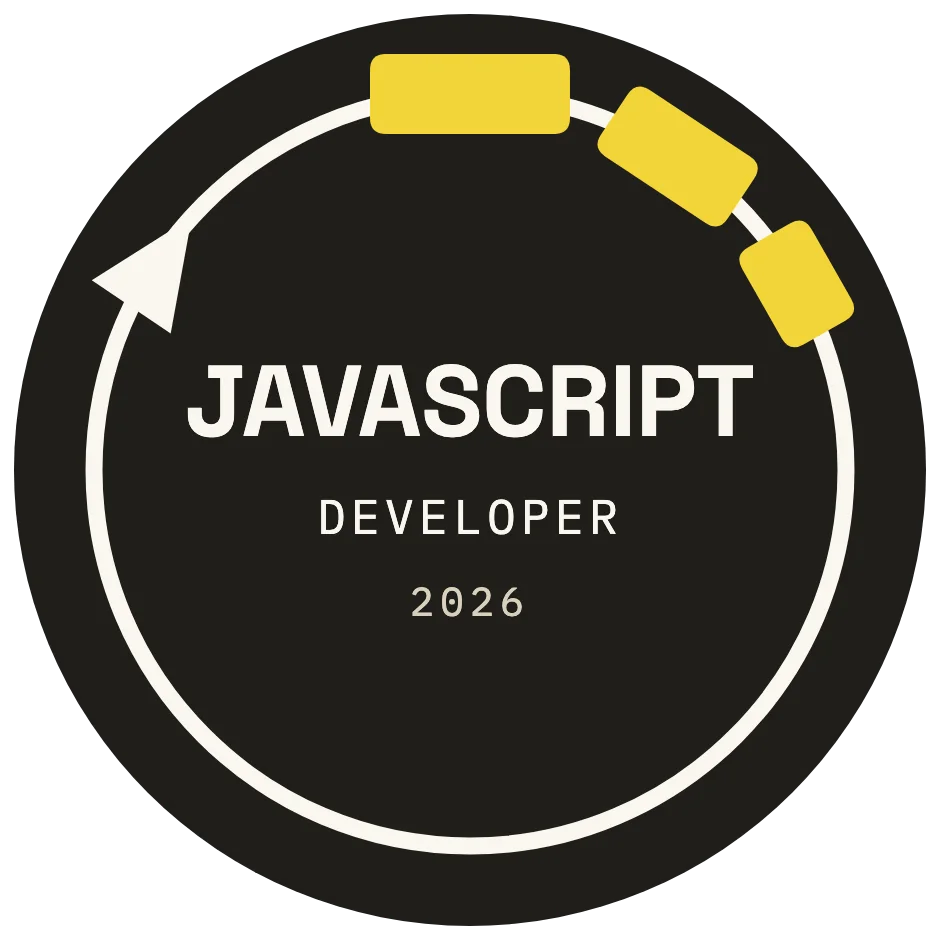
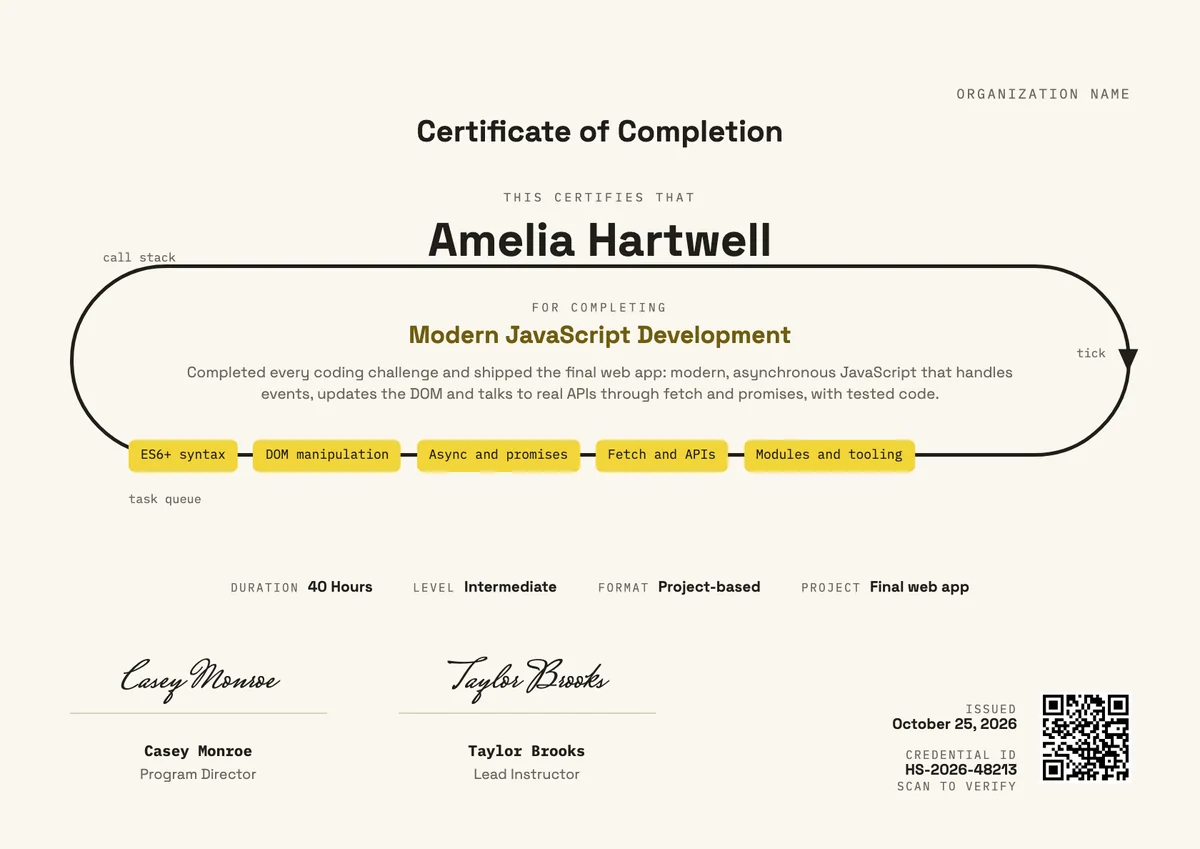
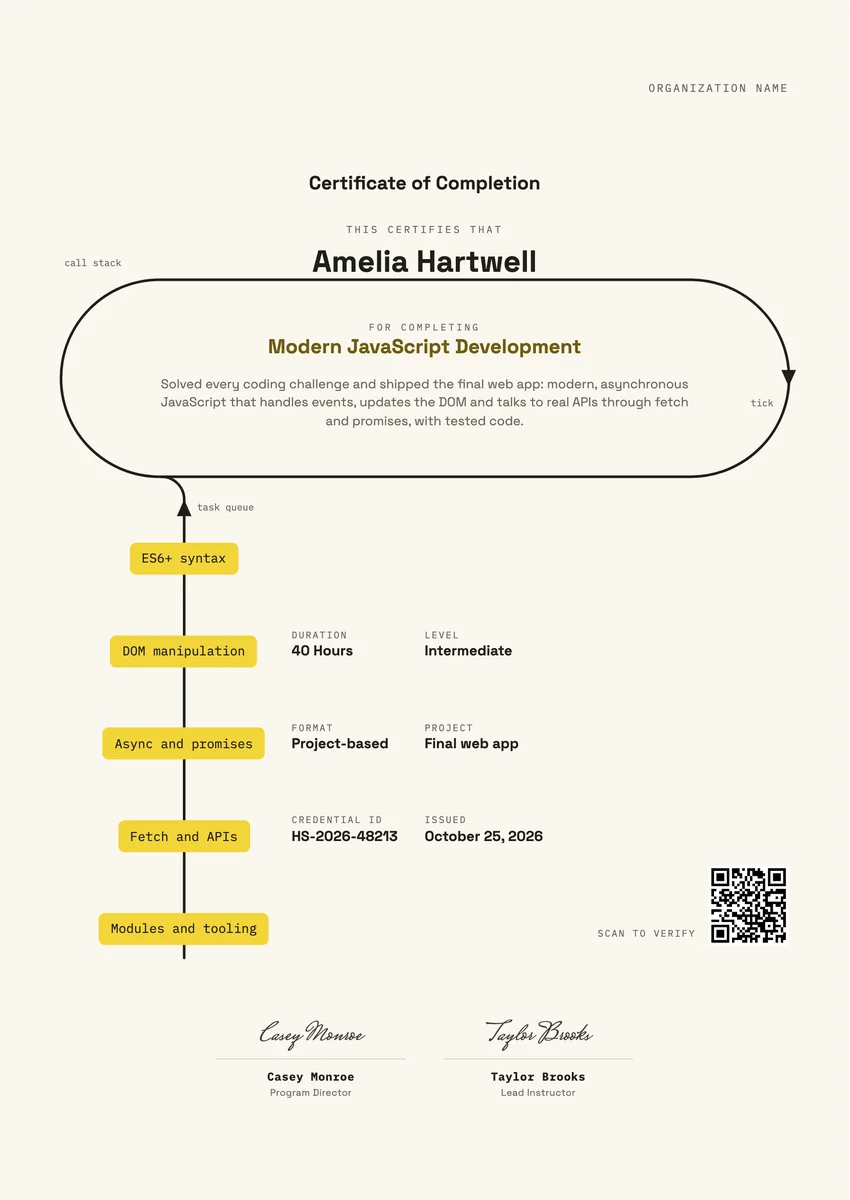
A JavaScript certificate template helps a course provider close out a JavaScript program with a record the learner can keep. Online academies, coding schools, colleges and company training teams issue it when a learner finishes the lessons and passes the practical work, often a small web app that uses the DOM, async code and a public API.
A good JavaScript certificate says which program was completed and how long it ran, lists the skills covered (modern syntax, DOM work, promises, fetch, modules and tooling), and shows the date, a credential ID and the instructor's signature. The designs come as printable certificates in A4 and US Letter and as digital badges that learners can add to LinkedIn, a portfolio or a GitHub profile.
Wording
What to write on a javascript certificate
Use these lines as they are, or as a start for your own. Every template comes with wording you can change in the studio.
Wording for a certificate of JavaScript completion
- “For completing the 40-hour Modern JavaScript Development course and its final web app.”
- “Awarded for finishing every coding challenge in the JavaScript Fundamentals program.”
- “In recognition of building and shipping a working single-page application in JavaScript.”
Skills lines for a certificate for JavaScript
- “ES6+ syntax, DOM manipulation, async and promises, fetch and APIs, modules and tooling.”
- “Wrote event-driven browser code and tested it against real API data.”
- “Handled asynchronous code with promises and async/await.”
Short lines for a JavaScript badge
- “JavaScript Developer. Ships code that runs in the browser.”
- “Modern JavaScript, completed 2026.”
Why send it with Hyperstack
More than a PDF
Customize the template free. When it is ready, send it to everyone at once.
One design, every name
Upload a spreadsheet and Hyperstack makes a certificate of completion for each person on it, in one go.
Sent by email
Each recipient gets their own email and link. You see who opened it, downloaded it and shared it.
Anyone can verify it
The QR code opens a page that proves the certificate is real. Recipients add it to LinkedIn in one click.
FAQ
Questions, answered
Short introductions run 10 to 20 hours, and a fuller course with a final project often takes 40 to 80 hours. Put the real hours on the certificate so readers can judge the depth.
Yes. A short skills list tells an employer what the learner can do, for example DOM manipulation or async code, which a course title alone does not show.
It is not required, but a graded project such as a small web app makes the certificate more credible. Name the project on the certificate so the learner can link to it.
A digital badge can carry a link to evidence, such as the final project's repository or a live demo. That lets an employer check the code behind the credential.
It shows structured training, but hiring teams also look at projects. Learners usually show the certificate together with a portfolio and a GitHub profile.
More certificate templates
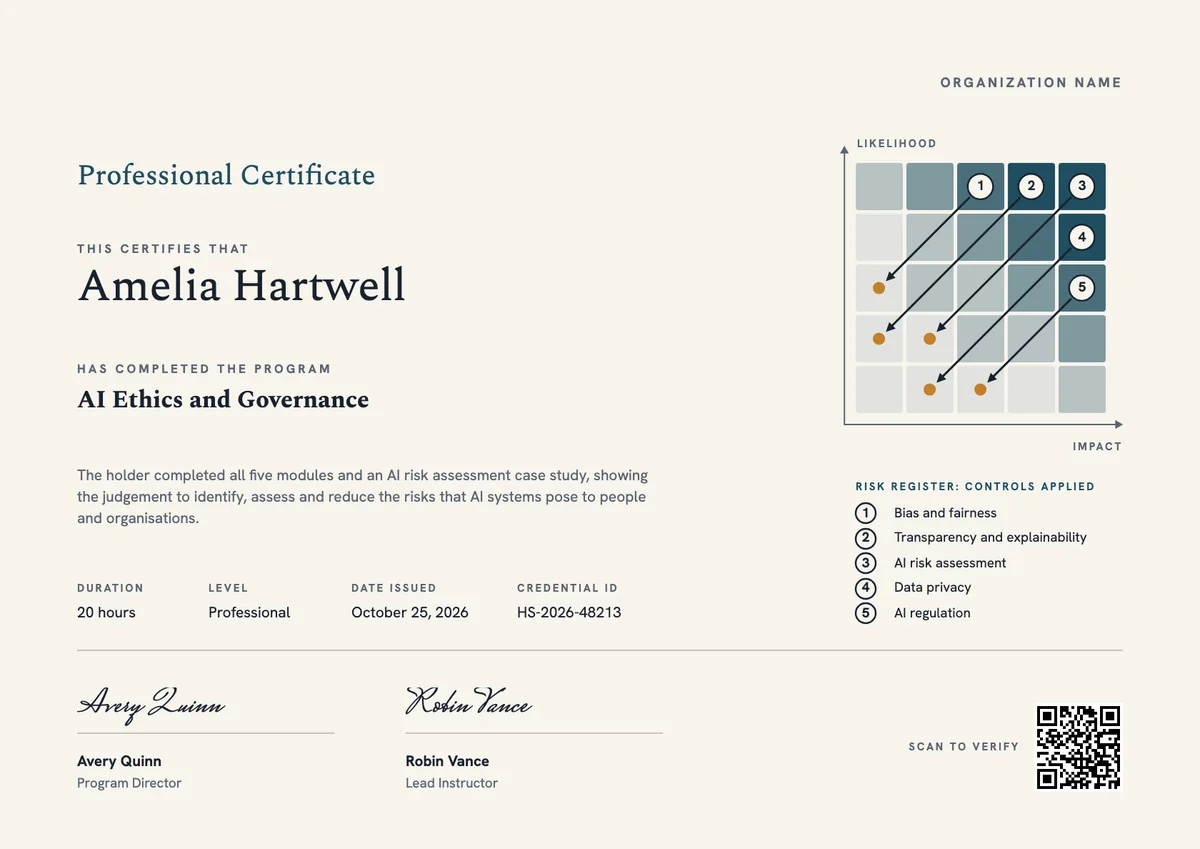
Your next cohort deserves better than a PDF
Set up in minutes, send your first credentials today, and only pay once you grow past 20 recipients a year.
Or open a live sample credential