Python Programming certificate templates and badges
3 free designs. A set is one design as a badge, a landscape or a portrait certificate, or all three.
Free for up to 20 recipients a year
Repl Session set
Badge · Landscape · Portrait
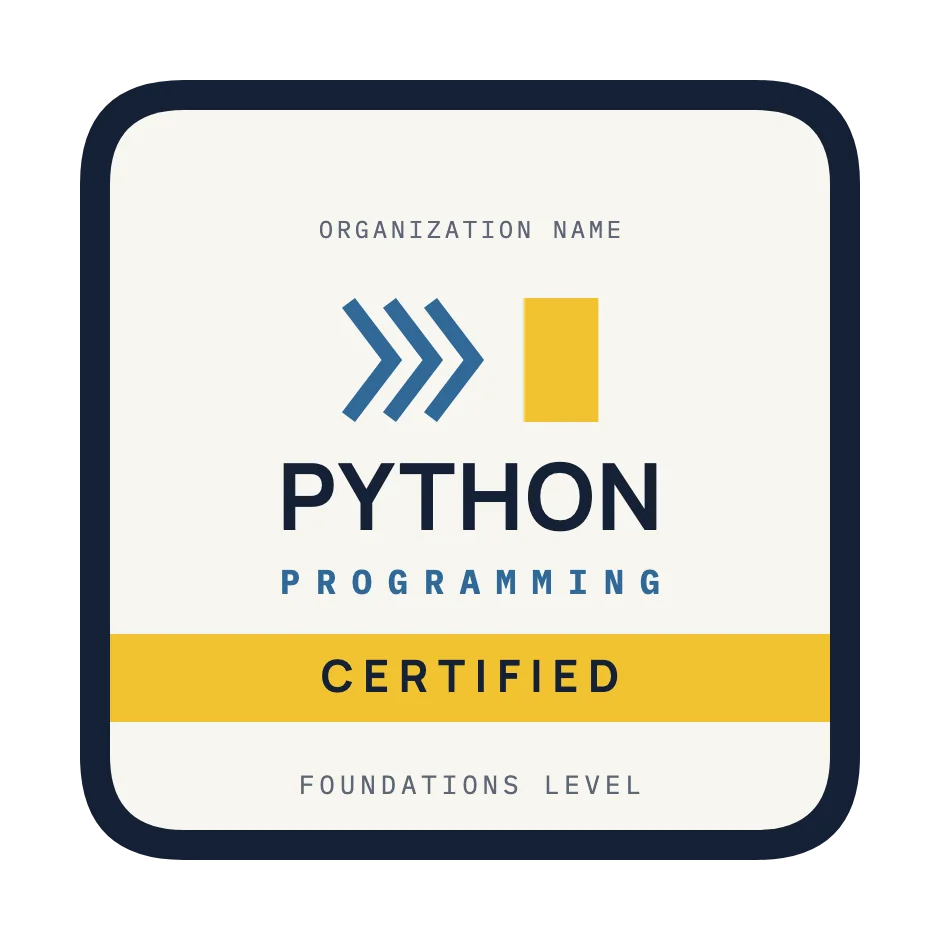

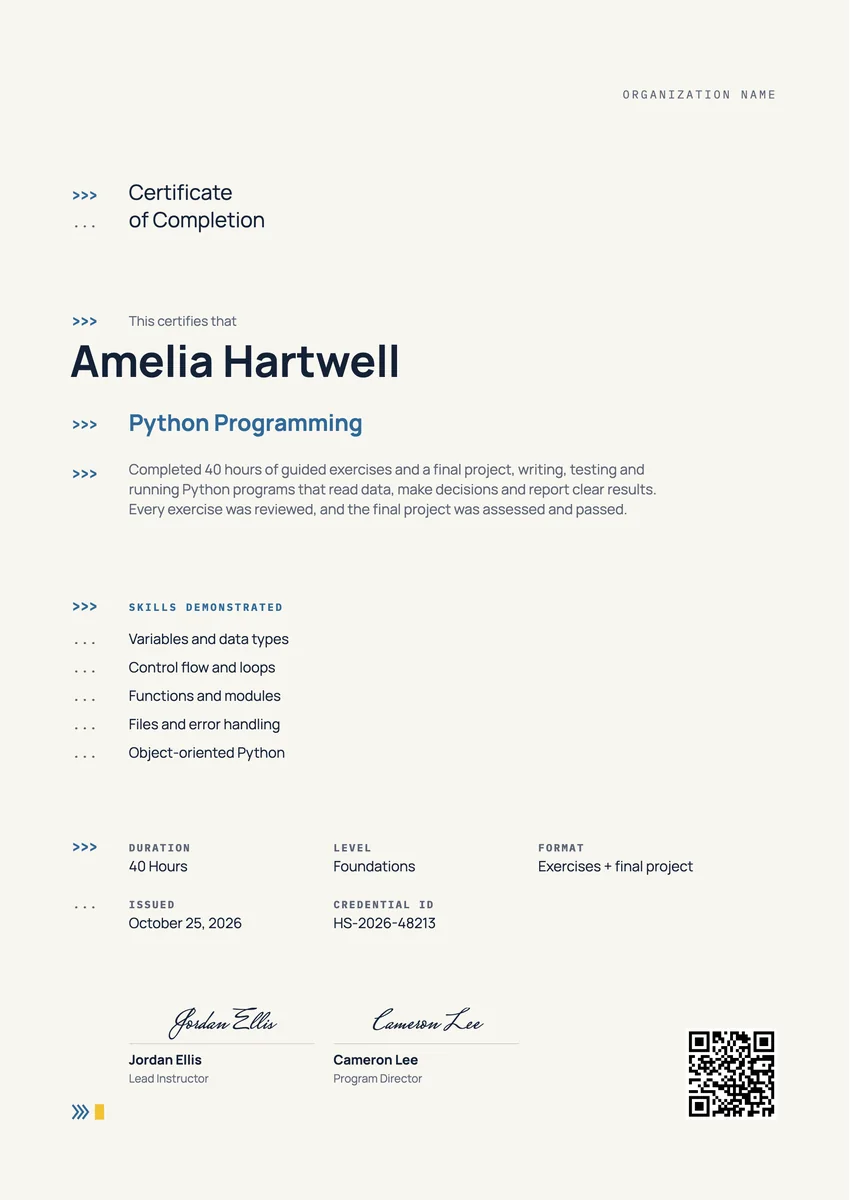
A Python certificate template gives course providers a finished layout for the moment a learner completes a Python program. Coding schools, universities, online academies and company training teams give one at the end of an introductory course, a data analysis track or a scripting workshop, usually once the exercises are done and the final project has been reviewed.
A good Python course certificate is specific. It names the program, the hours, the level and the topics practised, such as data types, control flow, functions, file handling and classes, and it is signed by the instructor or the program lead.
The designs here come as certificates in A4 and US Letter and as digital badges. Print the certificate for a folder or a wall, and send the same credential by email so learners can verify it and add it to their profile.
Wording
What to write on a python programming certificate
Use these lines as they are, or as a start for your own. Every template comes with wording you can change in the studio.
Wording for a Python course certificate of completion
- “Has successfully completed 40 hours of Python Programming, including all coding exercises and a reviewed final project.”
- “For completing Python Foundations: variables, control flow, functions, modules and object-oriented code.”
- “In recognition of completing the Python for Data Analysis course and its capstone project.”
Skill statements for a certificate for Python programming
- “Writes, tests and runs Python 3 programs that read files, handle errors and report clear results.”
- “Builds reusable functions and classes and organises code into modules.”
- “Uses lists, dictionaries and loops to clean and summarise real data.”
Short lines for the badge or the email
- “Python Programming, foundations level.”
- “First Python program to final project: complete.”
Why send it with Hyperstack
More than a PDF
Customize the template free. When it is ready, send it to everyone at once.
One design, every name
Upload a spreadsheet and Hyperstack makes a certificate of completion for each person on it, in one go.
Sent by email
Each recipient gets their own email and link. You see who opened it, downloaded it and shared it.
Anyone can verify it
The QR code opens a page that proves the certificate is real. Recipients add it to LinkedIn in one click.
FAQ
Questions, answered
No. PCEP and PCAP are exams run by the Python Institute, and passing them gives a vendor certification. A course certificate shows that someone completed your training. Some providers prepare learners for those exams and say so in the statement.
It can help. Python 2 reached its end of life in 2020, so courses today teach Python 3. Naming the version is most useful in courses that teach a specific library stack, such as pandas or Django.
The program name, the hours, the level, five or so topics practised, how the work was assessed (exercises, a project or a test), the date, a credential ID and the instructor's signature. That is enough for an employer to see what the course covered.
Yes, when the content differs. Keep one design and change the program name and skills, for example Python for Data Analysis or Python Automation, so each certificate describes what that learner actually did.
Yes. Many providers name the final project in the statement, and a digital credential can carry a link to the repository or a short project summary as evidence, so an employer can look at the actual code.
More certificate templates
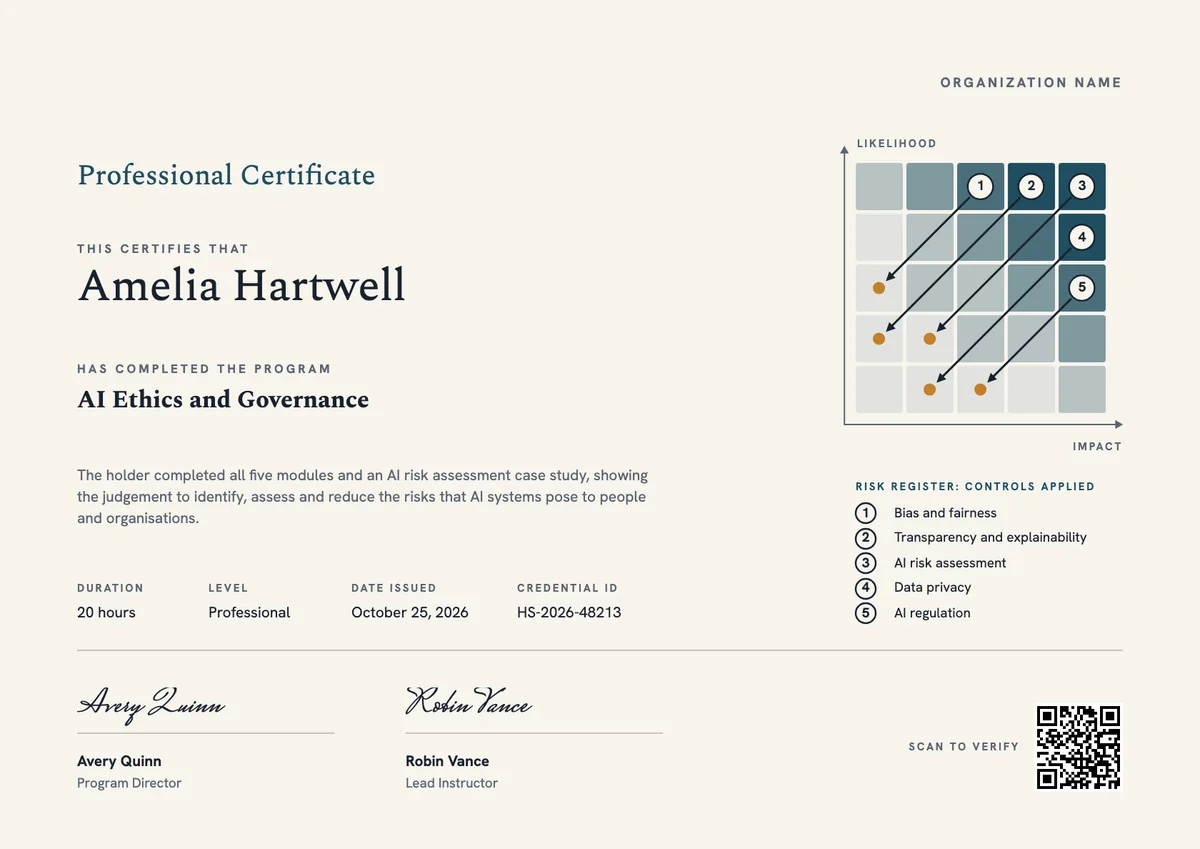
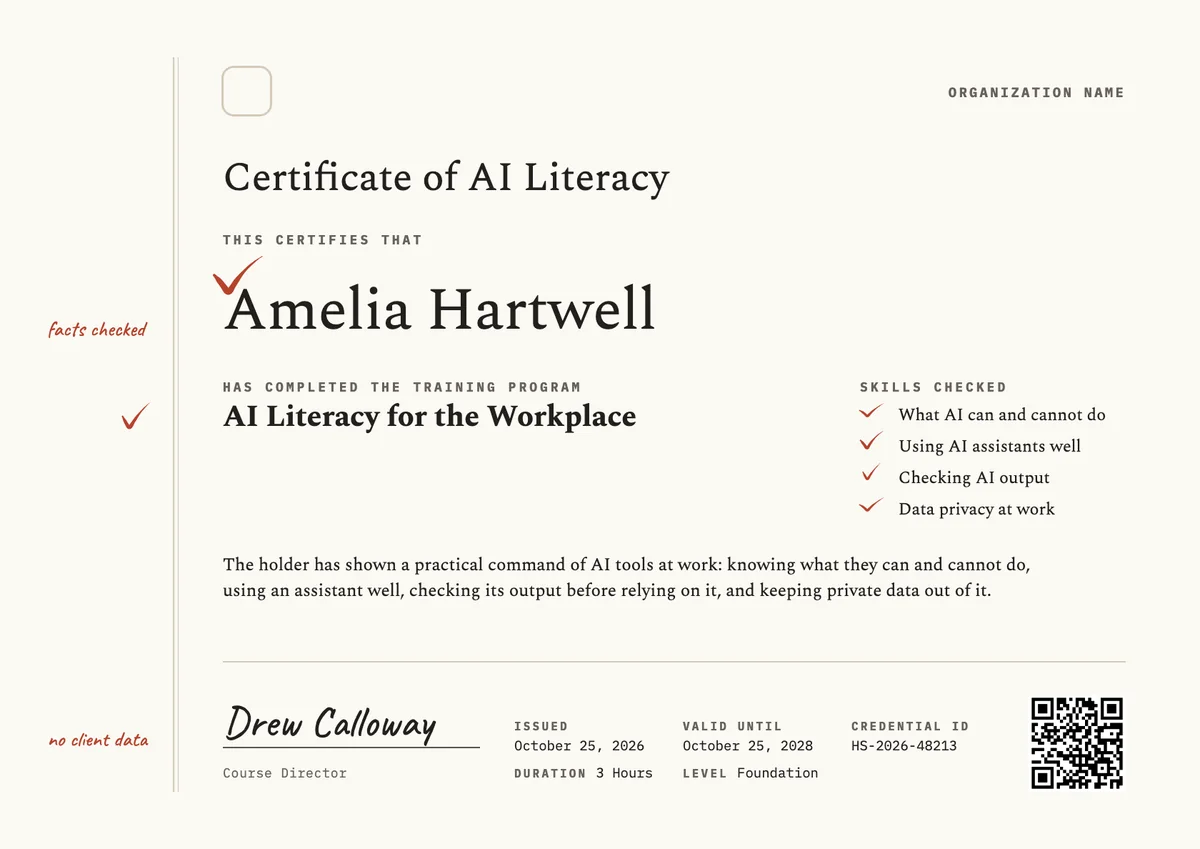
Your next cohort deserves better than a PDF
Set up in minutes, send your first credentials today, and only pay once you grow past 20 recipients a year.
Or open a live sample credential