Trauma-Informed Care certificate templates and badges
3 free designs. A set is one design as a badge, a landscape or a portrait certificate, or all three.
Free for up to 20 recipients a year
Window Of Tolerance set
Badge · Landscape · Portrait
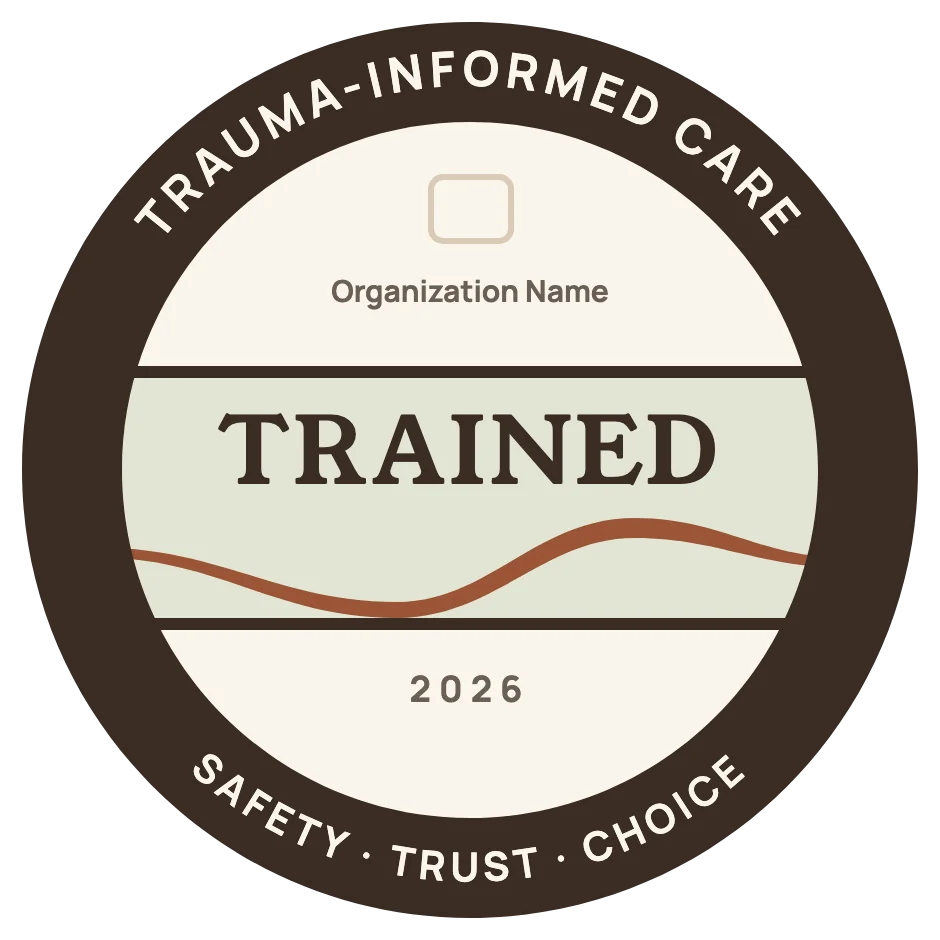
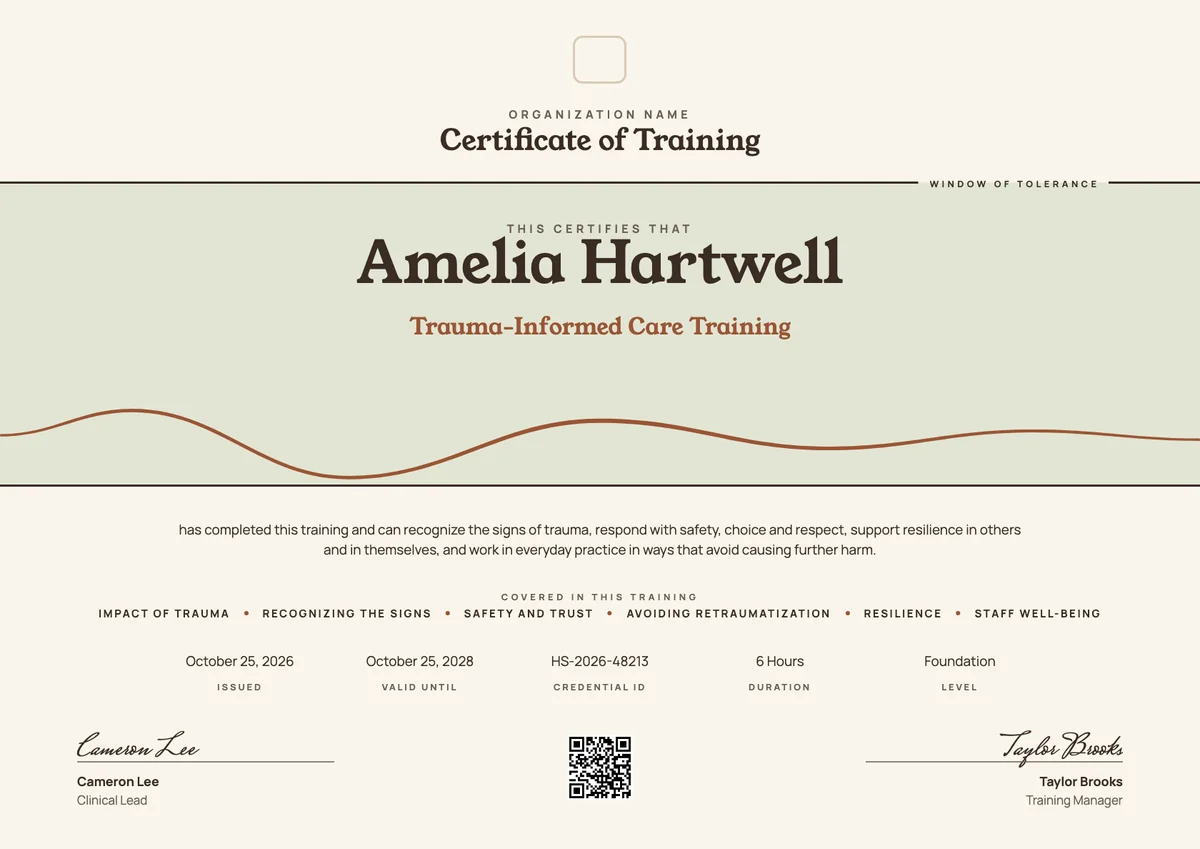
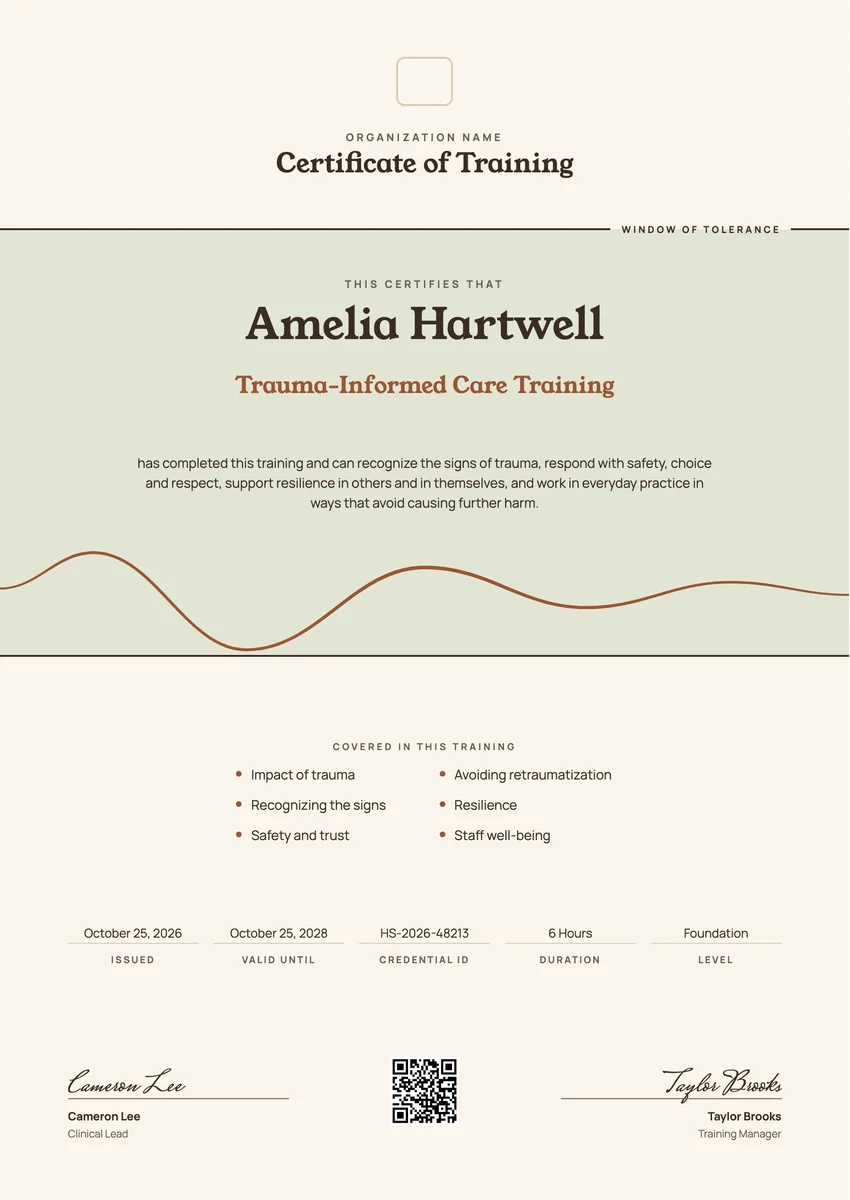
A trauma informed care certificate template gives you a ready layout for recording that someone has finished training in trauma-informed practice. Hospitals, schools, social care providers, shelters, police services and charities give it to staff and volunteers after an induction session, an annual refresher or an accredited course, and many keep it on file as proof of required training.
A good certificate of trauma-informed care names the course and its length, and lists what it covered: the impact of trauma, safety and trust, choice, avoiding retraumatization, resilience and staff well-being. It carries the issue date, a renewal date when the training must be refreshed, and the signature of a clinical lead or training manager.
The designs come as certificates in A4 and US Letter and as digital badges, so a trauma-informed certificate can hang on a wall and also be shared and verified online.
Wording
What to write on a trauma-informed care certificate
Use these lines as they are, or as a start for your own. Every template comes with wording you can change in the studio.
Wording for a trauma-informed care training certificate
- “For completing trauma-informed care training and putting safety, trust and choice at the centre of everyday practice.”
- “Has completed six hours of training in recognizing the effects of trauma and responding in ways that do not cause further harm.”
- “A certificate for trauma-informed care, awarded on completing the foundation course.”
Statements of what the learner can do
- “Can recognize the signs of trauma and respond with calm, respect and clear choices.”
- “Understands how to build trust, avoid retraumatization and support resilience in others.”
- “Knows how to notice stress in themselves and their team and where to seek support.”
Short lines for the badge or the email
- “Trauma-informed. Safety, trust and choice.”
- “Trained in trauma-informed care.”
- “Ready to meet every person with safety and respect.”
Why send it with Hyperstack
More than a PDF
Customize the template free. When it is ready, send it to everyone at once.
One design, every name
Upload a spreadsheet and Hyperstack makes a training certificate for each person on it, in one go.
Sent by email
Each recipient gets their own email and link. You see who opened it, downloaded it and shared it.
Anyone can verify it
The QR code opens a page that proves the certificate is real. Recipients add it to LinkedIn in one click.
FAQ
Questions, answered
Trauma-informed care is a way of working that every member of staff can use: it assumes anyone may have lived through trauma and keeps each contact safe, predictable and respectful. Trauma-specific care means treatment for trauma itself, such as trauma-focused therapy, and is given by trained clinicians. Most certificates in this area record the first kind of training.
Most courses build on six widely used principles: safety; trustworthiness and transparency; peer support; collaboration and mutuality; empowerment, voice and choice; and attention to cultural, historical and gender issues. Many also cover the impact of trauma on the brain and behaviour, avoiding retraumatization, and caring for staff who face secondary trauma.
Many services train everyone, not only clinicians, because the first person someone meets often sets the tone. A calm greeting, a clear explanation of what happens next and a choice about where to sit can matter as much as the clinical work, so a whole-team certificate is common.
Name what the learner can now do, not only that they attended: for example, recognize signs of trauma, respond with safety and choice, avoid retraumatizing practices and look after their own well-being. Add the hours, the level and any approval number from a professional body for continuing education.
Many employers, funders and regulators expect a refresher every one to two years, often as a shorter session that builds on the first course. Put a valid-until date on the certificate when your policy requires one, so managers can see who is due. For a one-time awareness session, the issue date alone is usually enough.
More certificate templates
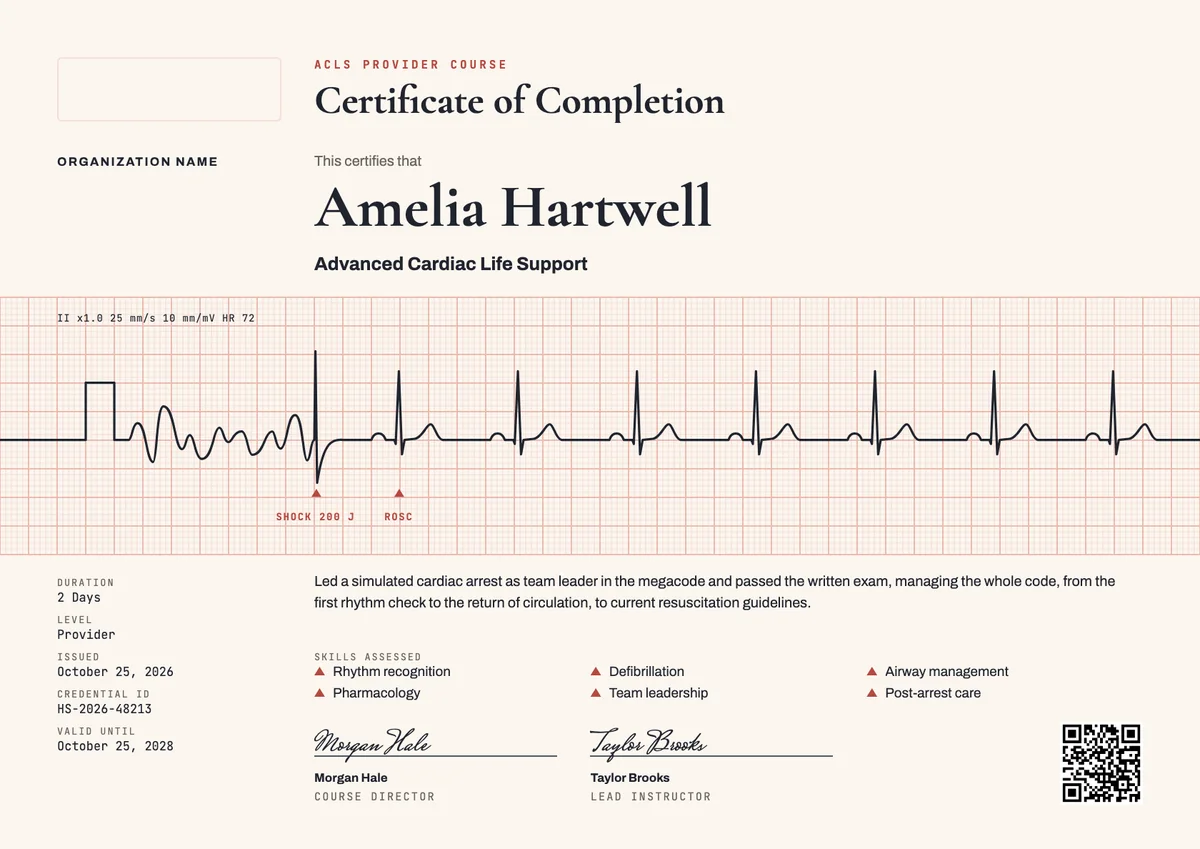
Your next cohort deserves better than a PDF
Set up in minutes, send your first credentials today, and only pay once you grow past 20 recipients a year.
Or open a live sample credential