Basic Life Support (BLS) certificate templates and badges
3 free designs. A set is one design as a badge, a landscape or a portrait certificate, or all three.
Free for up to 20 recipients a year
Algorithm Loop set
Badge · Landscape · Portrait
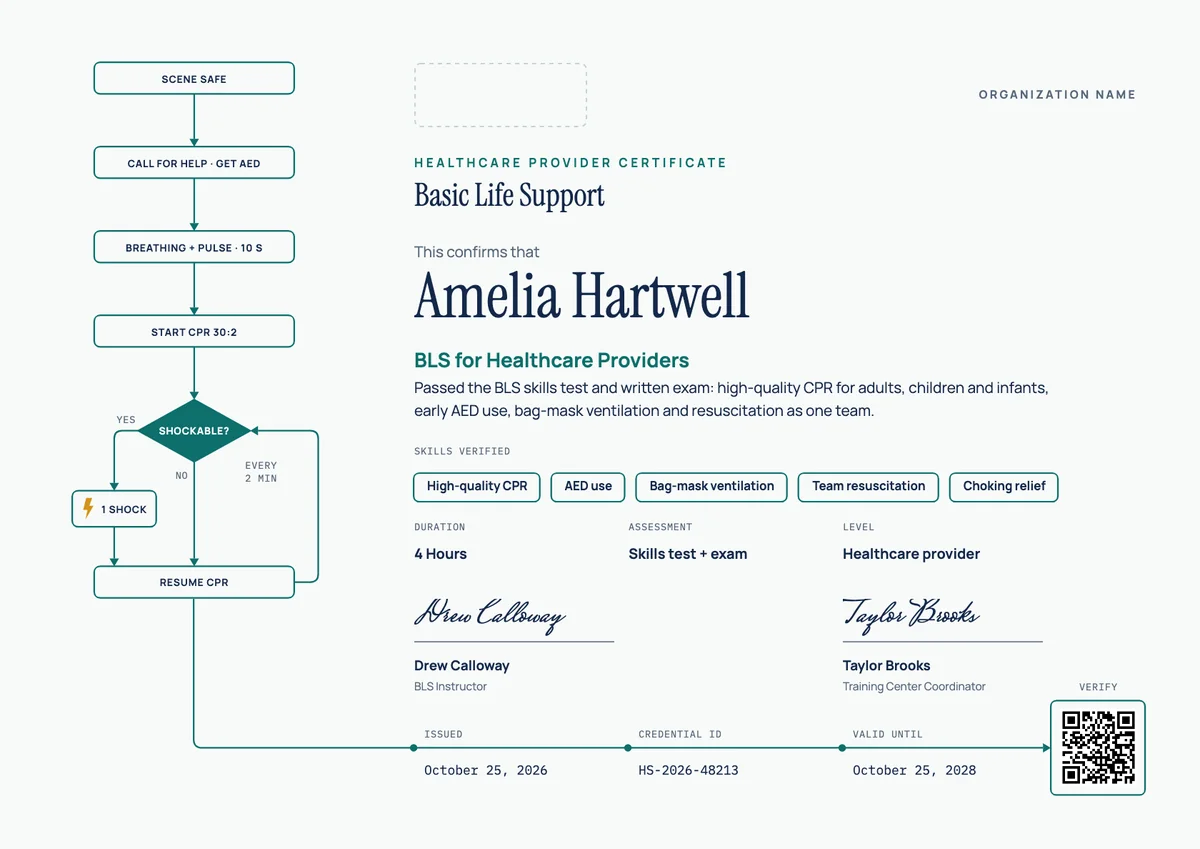
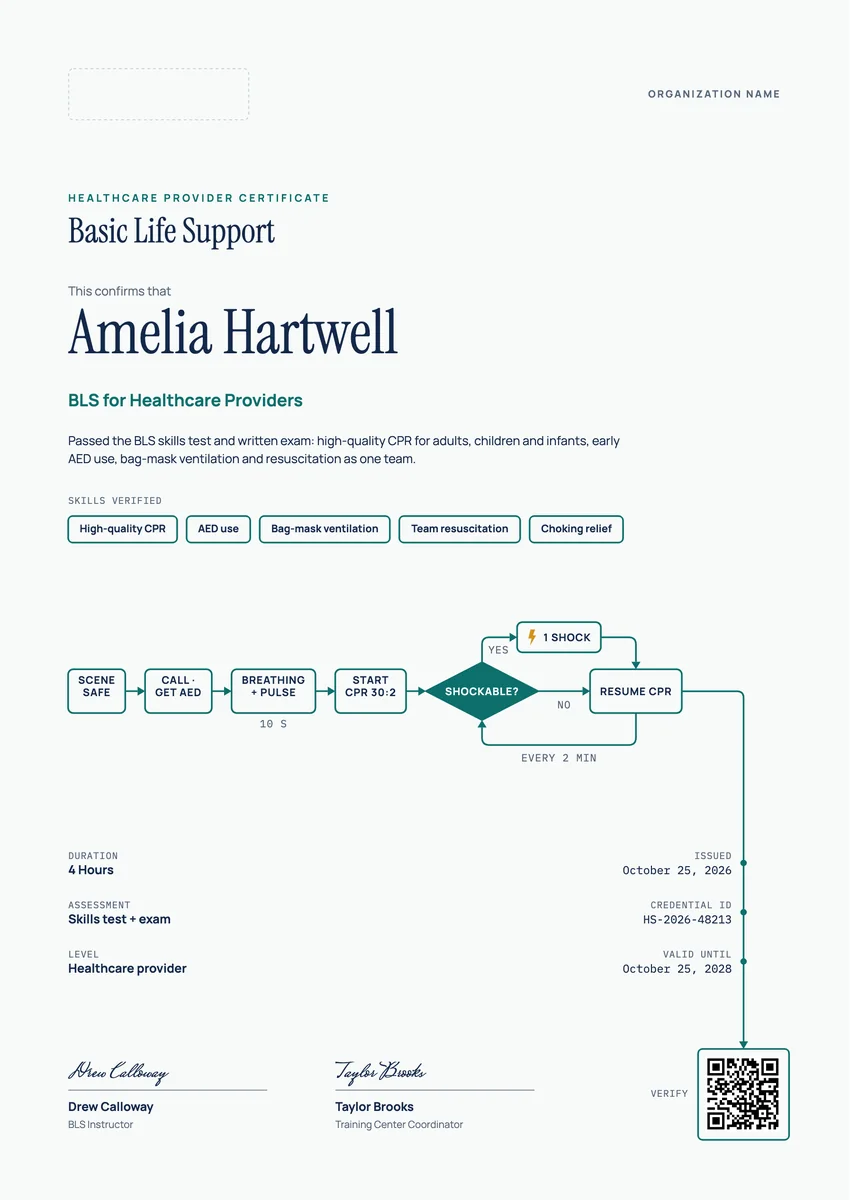
A BLS certificate template helps hospital education teams, EMS agencies, nursing and medical schools and independent training centres give a clear record to staff who pass a basic life support course. BLS is the provider-level course for nurses, physicians, paramedics, EMTs, dental teams and allied health staff. It covers high-quality CPR for adults, children and infants, AED use, bag-mask ventilation, choking relief and working as one team, and it ends with a hands-on skills test and often a written exam.
Most employers ask clinical staff to renew BLS every two years, so a good basic life support certificate shows the issue date, a valid-until date, the course name, the instructor who signed it and a credential ID that anyone can check. A certificate made from a template records your own course; it is not the provider card of any resuscitation council or heart association.
The designs come as certificates in A4 and US Letter and as digital badges for a profile or an email signature.
Wording
What to write on a basic life support (bls) certificate
Use these lines as they are, or as a start for your own. Every template comes with wording you can change in the studio.
Wording for a BLS provider certificate
- “Has successfully completed Basic Life Support for Healthcare Providers, including the skills test and the written exam.”
- “Demonstrated high-quality CPR for adults, children and infants, early AED use and bag-mask ventilation.”
- “Has met the course requirements for basic life support at the healthcare provider level.”
Wording for a BLS renewal course
- “Has completed the BLS renewal course and passed the skills check.”
- “Basic life support training renewed; valid until the date shown below.”
Short lines for a BLS provider badge
- “BLS provider, skills tested.”
- “Trained in CPR, AED use and team resuscitation.”
Why send it with Hyperstack
More than a PDF
Customize the template free. When it is ready, send it to everyone at once.
One design, every name
Upload a spreadsheet and Hyperstack makes a training certificate for each person on it, in one go.
Sent by email
Each recipient gets their own email and link. You see who opened it, downloaded it and shared it.
Anyone can verify it
The QR code opens a page that proves the certificate is real. Recipients add it to LinkedIn in one click.
FAQ
Questions, answered
BLS is aimed at people who work in clinical settings: nurses, doctors, paramedics, EMTs, dental teams, pharmacists, therapists and students on clinical placements. Members of the public and most workplace first aiders usually take a community course instead.
Yes, it can record that a person completed your course. If you teach a programme from a national resuscitation council or a heart association, that body may issue its own provider card too. Your certificate sits beside that card; do not present it as one.
Hospitals, agencies and credentialing offices usually ask for renewal every two years and track the date in staff files. With the date on the certificate, staff and managers can book a renewal class before it lapses.
Yes. Name the instructor who ran the skills test, with their role, and add the training centre coordinator or education lead if your policy asks for a second signer. A reader can then see who checked the skills.
Courses often test one-rescuer and two-rescuer CPR on adult and infant manikins, AED use, bag-mask ventilation and team roles during a code. The exact stations depend on the curriculum your centre follows, so list the ones you assessed.
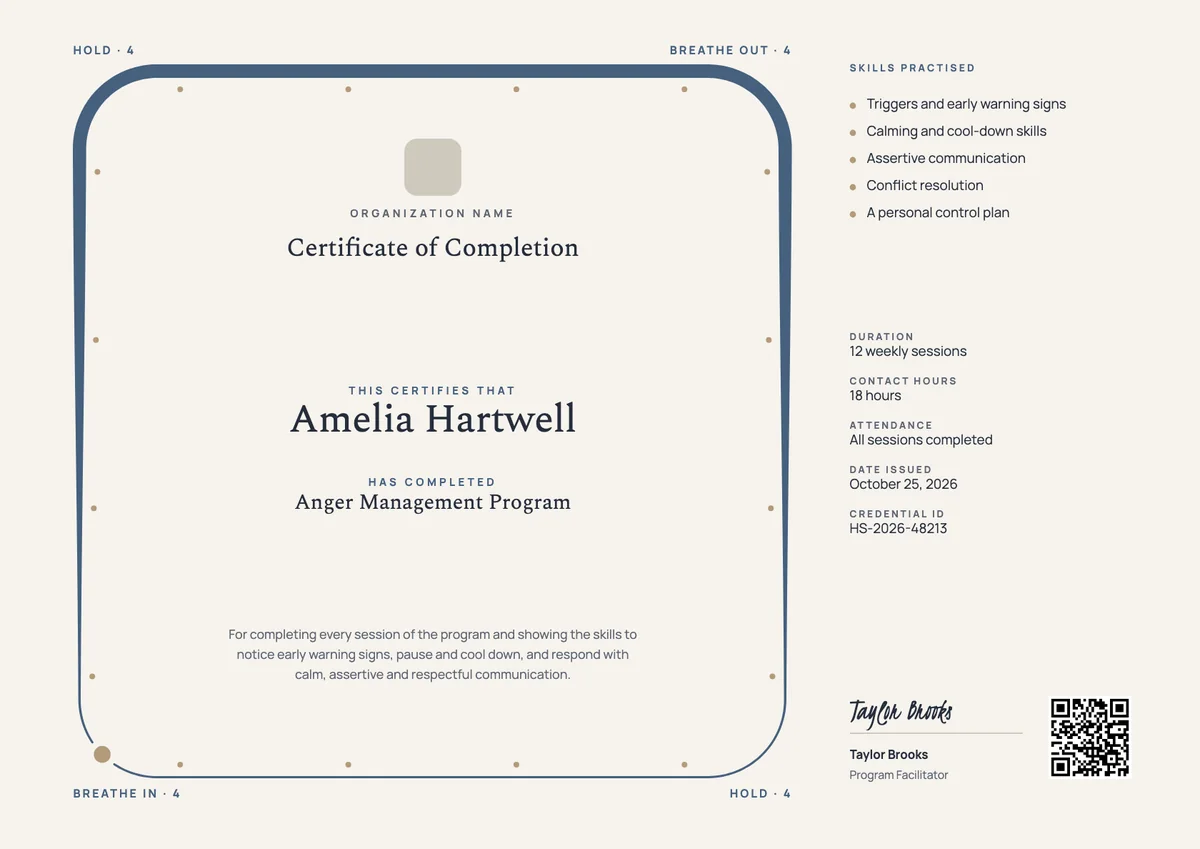
Your next cohort deserves better than a PDF
Set up in minutes, send your first credentials today, and only pay once you grow past 20 recipients a year.
Or open a live sample credential