Digital credential verification has quietly become an operations bottleneck for many institutions.
What once worked as a simple manual process is now slowing hiring workflows, admissions decisions, compliance checks, and learner follow-ups. As digital credentials scale across programs, geographies, and years, verification is no longer just about confirming authenticity. It is about whether verification itself can keep up.
I have noticed that in 2026, institutions are increasingly choosing between two models: manual credential checks that rely on staff and systems, or instant verification systems built on open standards like Open Badges. The difference between the two is not just speed. It is operational resilience.
This article breaks down how instant verification compares with manual checks, why open credential standards matter to everyday operations, and how platforms like Hyperstack are helping institutions move verification out of inboxes and into infrastructure.
Why digital credential verification now affects day-to-day operations
Digital credentials were adopted to reduce friction. And they did, at least at the point of issuance.
But verification changed the rules.
Today, credentials are verified inside fast-moving workflows. Recruiters are scanning profiles. Universities are processing applications across borders. Compliance teams are working against deadlines, not office hours.
In this environment, waiting for verification feels outdated.
When verification slows, operations feel it immediately. Decisions pause. Follow-ups increase. Teams start compensating with manual workarounds that were never planned for.
This is why we are seeing verification move out of the back office and into operations conversations. It is no longer about accuracy alone. It is about flow.
What manual credential checks really look like in practice
Manual credential checks are rarely designed as a system. They evolve over time.
A digital certificate is issued as a PDF.
Credential data lives in an LMS or internal database.
Verification requests arrive by email or through a form.
Someone checks the record and confirms manually.
From inside the institution, this feels under control. Records exist. People know the process. Verification is possible.
From the outside, it feels uncertain.
Response times vary. Older credentials take longer. Verification depends on who is available that day. The credential itself cannot prove anything without human intervention.
This gap between internal confidence and external experience is where operational drag starts to show up.
What instant verification changes, beyond speed
Instant verification removes people from the critical path.
Instead of requesting confirmation, a verifier interacts directly with the digital credential. Verification data is embedded into the credential and validated automatically through secure links or identifiers.
This changes more than just response time.
Verification becomes self-serve.
Operations teams stop getting pulled into routine checks.
Decisions move forward without waiting on inboxes.
The biggest win here is not speed. It is predictability.
When verification behaves the same way every time, teams can design workflows that assume it will not become a blocker. That is a huge operational unlock.
 Where Open Badges fit and why they matter to this conversation
At this point, it helps to be clear about what actually makes instant verification work long-term.
Open Badges are not just visual badges. They are an open credential standard.
Open Badges are visual symbols of accomplishments packed with verifiable metadata according to the Open Badges specification. The Open Badges 2.0 specification [OB-20] defines the properties necessary to define an achievement and award it to a recipient, as well as procedures for verifying badge authenticity and “baking” badge information into portable image files. It includes term definitions for representations of data in Open Badges. Source: IMS Global
In simple terms, the Open Badges standard defines how verification data is embedded directly into a digital credential so it can be verified independently of the issuing system.
The credential carries its own proof.
Issuer identity, criteria, evidence, and verification logic travel with the credential itself. Verification does not depend on a specific platform, inbox, or staff member being available.
This is why Open Badges are directly relevant to operations. They turn verification from a process into a property of the credential.
Why consistency matters more than being lightning fast
Verification is often framed as a speed problem. In practice, it is a consistency problem.
Manual checks might be quick today and slow tomorrow. Recent credentials verify easily. Older ones require digging. Different departments follow slightly different processes.
That very inconsistency forces teams to plan for exceptions.
Buffers have to be added. Follow-ups suddenly become normal. Verification ultimately stops being predictable.
Instant verification systems behave the same way every time. That reliability lets teams remove buffers instead of stacking them.
Over time, consistency does more for operational efficiency than shaving a few seconds off response times.
How manual verification starts breaking down as volume grows
Manual verification usually holds up at small scale.
Problems appear gradually.
More credentials mean more verification requests.
More programs introduce variation.
More time passing makes legacy records harder to access.
Nothing breaks overnight. The system just gets heavier.
Response times stretch. Staff involvement increases. Knowledge becomes siloed. Temporary fixes turn into permanent workflows.
By the time leadership notices, verification is already baked in as an operational constraint.
The hidden cost teams rarely measure
Manual verification creates interruptions.
Every request pulls someone out of planned work. Every clarification adds context switching. Every follow-up extends a task that should have ended instantly.
These costs rarely show up in reports, but they are felt daily by operations teams.
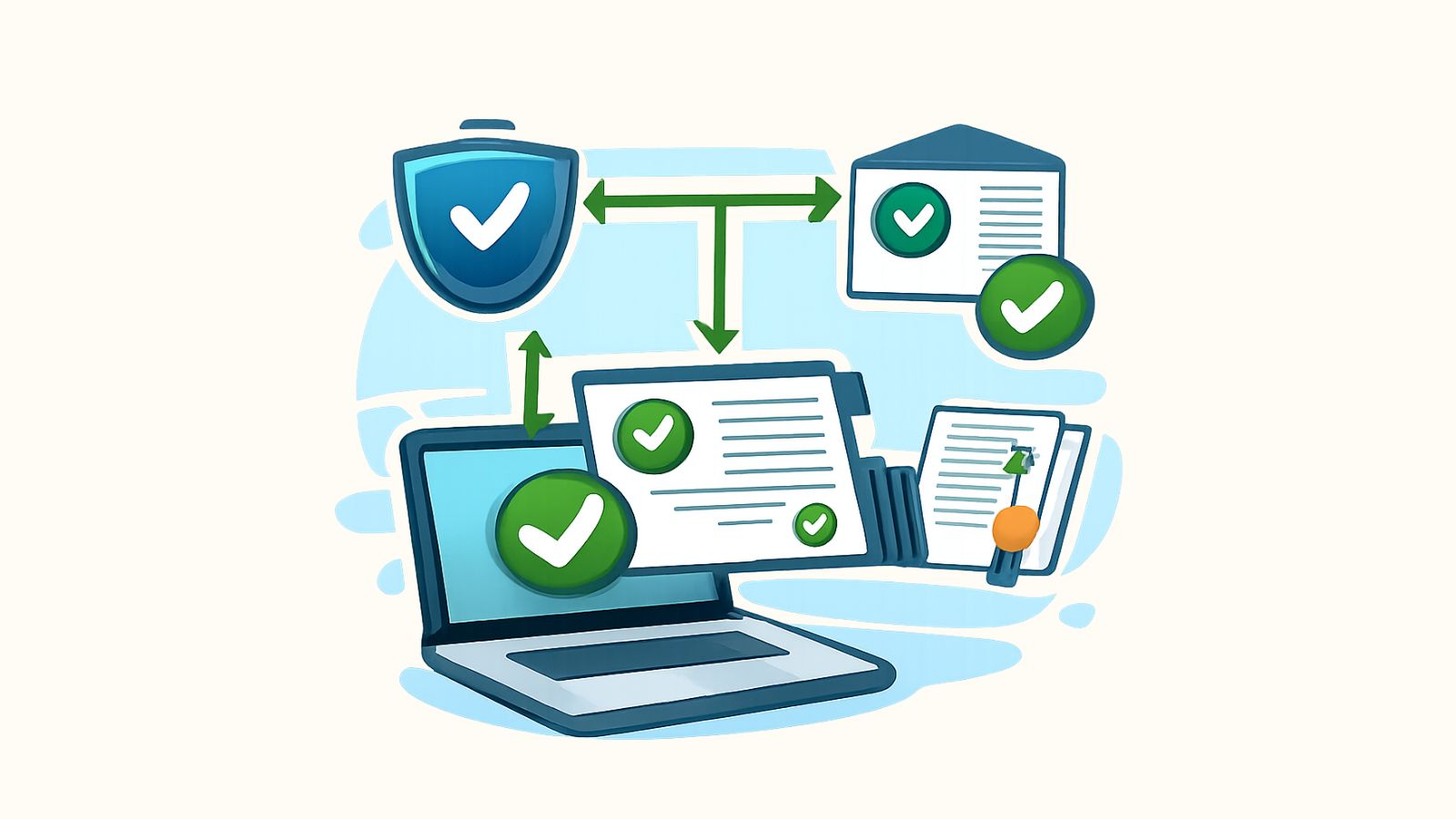 Instant verification removes those interruptions entirely. Verification happens without human involvement, freeing teams to focus on higher-impact work.
That is where the real operational ROI lives. And we have a whole blog based entirely on this, so if you're a budget freak, or simply have a tight-pocket for the coming year; then you'll probably want to read our in-depth analysis on: The Hidden Costs of Manual Certificate Issuance from our blog series.
This is where platforms designed around open standards start to matter.
For example, Hyperstack supports standards-based verification using Open Badges, so credentials remain verifiable even as internal systems, teams, and workflows change.
The point is not the platform name. It is the design approach.
When verification logic lives with the credential rather than inside a single system, operations become more resilient by default.
If you are already thinking about whether internal systems can scale, our earlier blog comparing Digital Credential Platforms and Internal Credential Systems connects directly to this problem.
Compliance, audits, and long-term verification integrity
Verification increasingly intersects with compliance.
Audits require traceability.
Regulations demand controlled access.
Accreditation bodies expect consistent evidence.
Manual verification struggles here. Documentation fragments. Evidence is reconstructed instead of retrieved.
Standards-based instant verification produces consistent, auditable records automatically. Verification events are logged. Evidence stays accessible.
For operations teams, this removes a significant amount of reactive work.
And if verification is already starting to feel like operational drag, it may be worth seeing how instant, standards-based verification works in a real workflow.
You can now Schedule a Free Demo at your convenience to explore how credentials are issued, shared, and verified at Hyperstack without manual checks slowing things down.
Seeing the end-to-end flow from our experts' perspective often makes the trade-offs very clear.
Why verification decisions are harder to undo than they seem
Verification choices stick.
Once digital credentials are issued under a certain model, changing that model retroactively is complex. Older credentials may not migrate cleanly. Expectations stay tied to past systems.
That is why many institutions delay the decision. Manual checks still work, so the urgency feels low.
The real cost shows up later, when volume increases and operational drag becomes unavoidable.
Choosing between instant verification and manual checks
This is not automation versus control.
Manual verification offers familiarity but creates dependency.
Instant verification requires upfront design but removes long-term friction.
Institutions adopting instant verification through open standards like Open Badges are not chasing speed. They are protecting scale, resilience, and operational flow.
By 2026, instant verification will not feel cutting-edge. It will feel expected.
The five-year test we always come back to
Here is the simplest way to evaluate your setup.
If this digital credential is verified five years from now, during a busy hiring or admissions cycle, will verification require human intervention?
If the answer is yes, that requirement becomes part of your ongoing operational cost.
Standards-based instant verification is designed to pass this test.
Closing perspective
Verification rarely fails loudly. It slows operations quietly.
Manual credential checks might work today, but they introduce friction that grows with scale, time, and institutional change.
Institutions that invest in instant, standards-based verification are not chasing efficiency for its own sake. They are protecting operational flow, trust, and credibility long after credentials are issued.
If you want to see how this works in practice for your own programs, you can Schedule a Demo at your convenience and get an expert's walk through, to understand a real verification workflow end to end.
That clarity usually answers the question faster than any checklist ever could, so why wait?
Frequently Asked Questions
1. What is the difference between instant verification and manual credential checks?
Manual credential checks rely on staff reviewing records and confirming credentials on request. Instant verification allows a digital credential to validate itself automatically using embedded verification data, without human intervention.
2. Why do manual credential checks become an operational problem at scale?
As credential volume grows, manual checks introduce delays, interruptions, and inconsistent response times. These issues compound across hiring cycles, admissions workflows, and compliance reviews, creating operational drag rather than isolated delays.
3. How do Open Badges enable instant verification?
Open Badges are an open credential standard that embeds issuer identity, criteria, evidence, and verification data directly into the credential. This allows credentials to be verified independently of the issuing platform or staff availability.
4. Are Open Badges only relevant for education?
No. Open Badges are widely used across education, corporate training, certification programs, and professional development. Any organization issuing digital credentials that need long-term verification can benefit from open standards.
5. Can institutions still use manual verification alongside instant systems?
Yes. Many institutions start with a hybrid approach, using instant verification for new credentials while maintaining manual checks for legacy records. Over time, most shift fully as operational volume increases.
6. How does instant verification support compliance and audits?
Instant verification systems produce consistent, traceable verification records automatically. This makes audits easier, reduces manual documentation, and supports regulatory requirements for transparency and evidence retention.
7. How does Hyperstack support instant verification in practice?
Hyperstack supports standards-based verification using Open Badges, allowing credentials to remain verifiable even as systems and teams change. Verification happens without staff involvement, helping institutions scale credential operations without added workload.